Gabon: why tackling high cost of living won’t happen in supermarkets
Gabon: why tackling high cost of living won’t happen in supermarkets
Libreville — For years, the fight against rising living costs has dominated public discourse across Africa. In Gabon, this issue has escalated into a central concern, as soaring prices continue to strain household budgets.
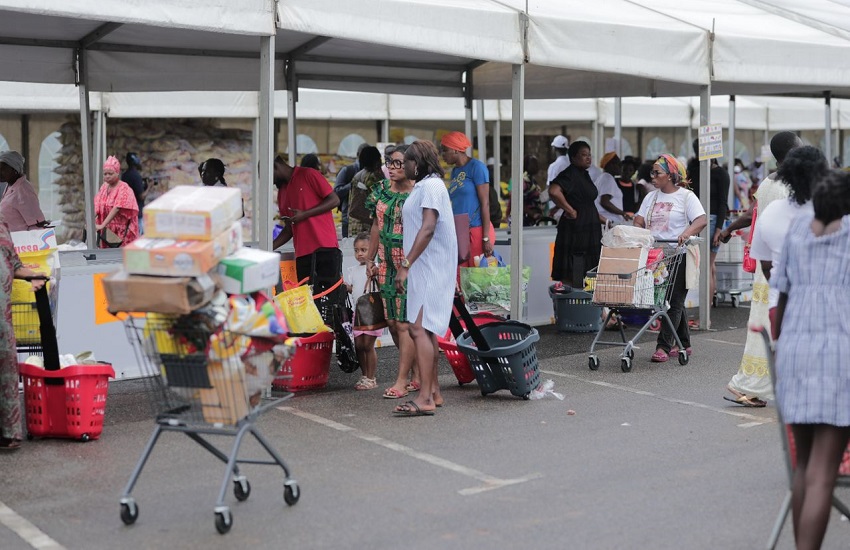
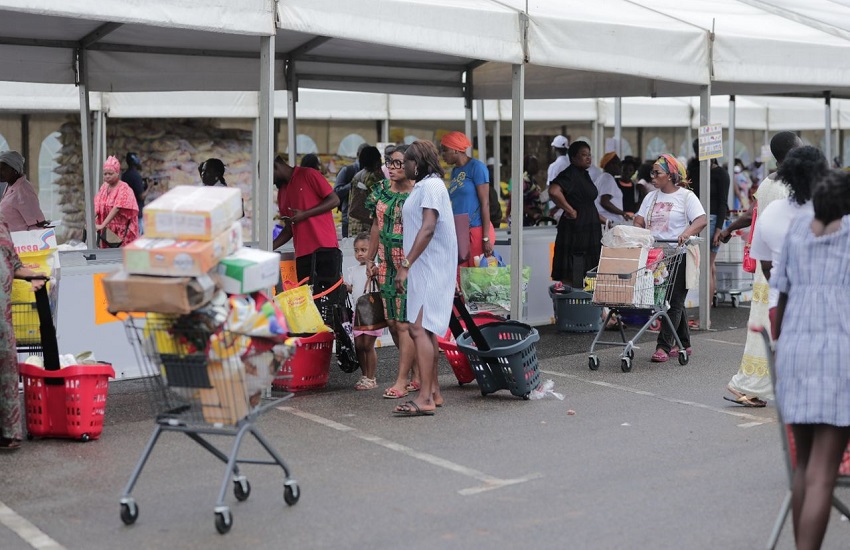
To address these challenges, authorities have rolled out a series of measures: price controls, tax exemptions, subsidies, commercial promotions, tariff caps, and massive public markets organized by the Central Purchasing Agency of Gabon (CEAG). While these efforts aim to protect consumers, they raise a critical question: why do prices remain stubbornly high despite repeated interventions?
The answer may force us to reconsider decades of economic policy. Could the issue of high living costs stem not from excessive pricing but from insufficient wealth creation?
Why price control policies hit their limits
Short-term price reduction measures, while socially beneficial, offer only temporary relief. The CEAG’s initiatives, for instance, provide temporary access to essential goods at lower prices, easing immediate financial pressures. Yet once these campaigns conclude, consumers return to traditional distribution channels, and the same economic constraints re-emerge. Prices rebound because the underlying factors driving them remain unchanged.
This does not imply these measures are ineffective. Rather, they address symptoms rather than root causes. The real challenge lies in understanding why prices remain structurally high and why administrative solutions fail to yield lasting results.
The hidden cost of import dependency
Public debates on high living costs often focus on consumers, but the problem originates much earlier. An economy heavily reliant on imports is vulnerable to international market fluctuations, shipping costs, logistical challenges, and global supply chain disruptions. Every cost increase abroad inevitably trickles down to local prices.
High living costs thus reveal a deeper reality: a country that imports most of its food also imports inflation. Similarly, exporting raw materials without local processing means forfeiting potential jobs, future income, and purchasing power. From this perspective, the debate on high living costs transcends mere pricing—it becomes a question of economic model.
Building a self-sustaining economy
The solution may lie in accelerating Gabon’s productive transformation. The country boasts significant advantages: vast forestry resources, mineral wealth, agricultural potential, strategic location, and relative institutional stability. Yet much of this wealth leaves the country in raw form, only to be processed elsewhere.
Local processing of raw materials is no longer just an industrial ambition—it is a direct tool in the fight against high living costs. Each factory established generates jobs, each job creates income, and each income strengthens purchasing power. This cycle fuels consumption, stimulates economic growth, and reduces dependency on imported goods. The same principle applies to agriculture and livestock.
Expanding local agricultural production, modernizing food supply chains, promoting poultry farming, and supporting agro-industry can gradually reduce the country’s food dependency. Beyond potential cost reductions, these sectors offer a unique opportunity to create sustainable employment.
Empowering a strong middle class
For decades, public policies have focused on controlling prices. Perhaps it is time to shift the debate toward income generation. A society does not thrive simply because prices are artificially low. It prospers when the majority of its citizens earn stable incomes that allow access to essential goods and services, education, future investments, and full economic participation.
Expanding the middle class is one of Gabon’s most strategic objectives. A dynamic middle class drives domestic demand, spurs private investment, and fosters national entrepreneurship. The real battle against high living costs may therefore lie in creating productive jobs and sustainable incomes. In this context, purchasing power should no longer be seen as a consequence of growth—it should become one of its primary goals.
The role of economic transparency
This transformation must be accompanied by modernized governance tools. Digitalizing price tracking represents a particularly promising reform. Real-time price monitoring across the country can identify abnormal disparities, strengthen competition, and measure the actual impact of public policies.
Economic data can become a powerful regulatory instrument. It would shift governance from perception-based management to fact-driven decision-making. In an era where citizens demand greater transparency, this evolution could rebuild trust among consumers, businesses, and authorities.
The debate on high living costs extends far beyond Gabon’s borders. Across Africa, governments grapple with the same dilemma: how to protect citizens without locking the economy into a cycle of permanent subsidies and price corrections? Gabon has the opportunity to pioneer an innovative solution to this challenge.
By maintaining social support mechanisms while accelerating local processing of raw materials, agricultural development, livestock expansion, industrialization, job creation, digital market reforms, and middle-class growth, the country can gradually shift the fight against high living costs from crisis management to structural transformation.
The question is no longer how long the state can artificially lower prices. It is how many Gabonese will soon live with dignity, supported by stable incomes from a value-creating economy—no longer dependent on corrective measures to preserve their purchasing power.
This is the dividing line between an economy that manages consequences and one that tackles root causes. And this may well be where a lasting solution to high living costs is finally found.
