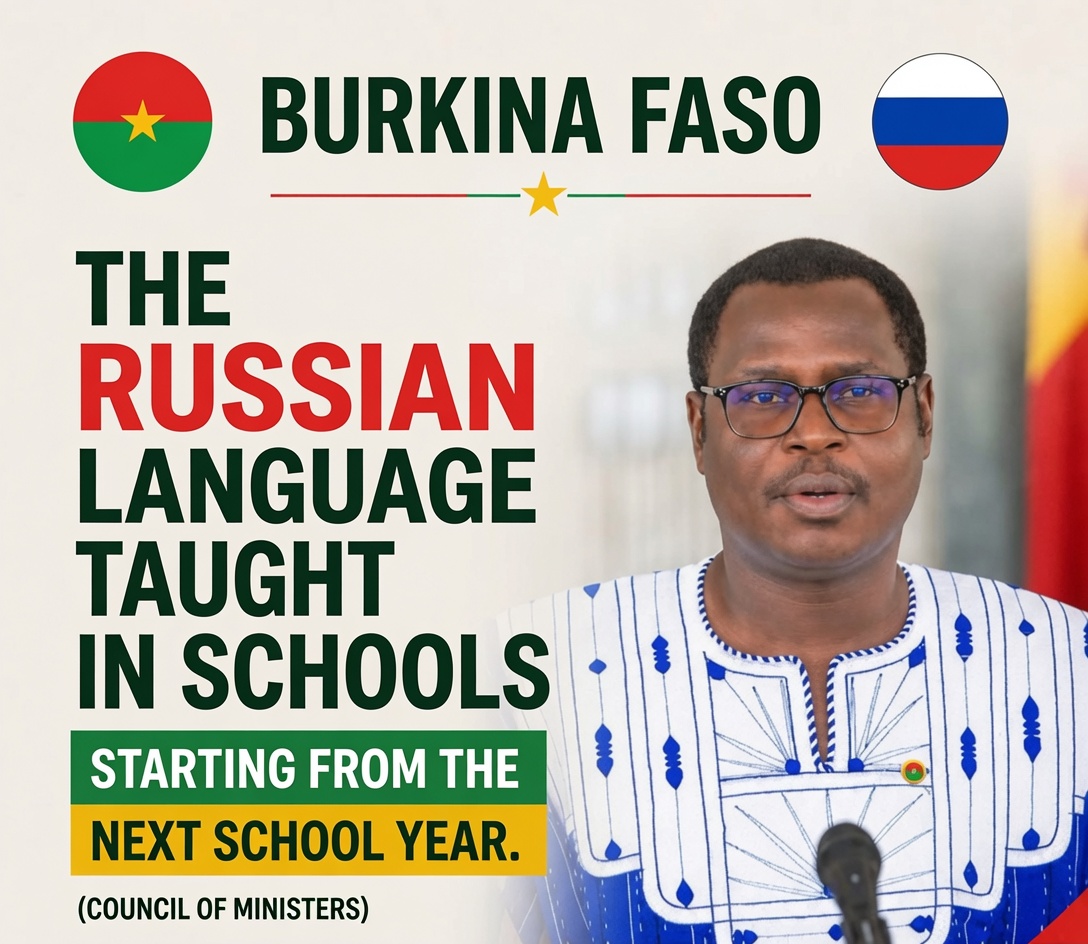
Burkina Faso embraces russian language in schools amid shifting alliances
Burkina Faso makes a bold strategic pivot with Russian language in classrooms
The government of Burkina Faso has taken a decisive step in reshaping its international alliances by approving a decree that mandates the inclusion of Russian language studies in the national school curriculum starting next academic year. While authorities frame this initiative as a progressive move toward cultural and economic diversification, it has ignited intense debate about the potential hidden motives behind the decision.
A calculated move for future partnerships
Proponents of the initiative argue that teaching Russian aligns with Burkina Faso’s long-term interests. In an era where global power structures are rapidly evolving, equipping the younger generation with multilingual skills could unlock new opportunities for trade, technological collaboration, and academic exchanges with Eurasian nations. With Russia emerging as a key security ally in the fight against insurgency, officials claim this educational reform solidifies a partnership deemed essential for national survival.
The government presents this step as a natural progression in its foreign policy, emphasizing the need to reduce reliance on former colonial powers and Western influence. However, the swift integration of Russian language programs has raised concerns about whether Burkina Faso is merely exchanging one form of dependence for another.
Soft power and the shadow of influence
Critics warn that the decree may serve as a Trojan horse for deeper political control. Historical precedents suggest that language education, when imposed by state decree, often serves as a tool for cultural penetration rather than pure academic enrichment. By familiarizing Burkinabè youth with Russian language and media, Moscow could be cultivating a future generation sympathetic to its interests, creating a compliant elite that internalizes its narratives and legitimizes its presence.
The parallels with Cold War-era tactics are striking. During that period, the Soviet Union imposed Russian language education in its satellite states to standardize thought and reinforce political control. Observers caution that Burkina Faso may now be adopting a similar playbook, where schools become extensions of geopolitical strategy rather than centers of independent learning.
Unequal exchanges and cultural erosion
Another point of contention is the stark imbalance in the Russia-Burkina Faso relationship. While Burkina Faso grapples with severe security challenges and relies heavily on Russian military and logistical support, the introduction of Russian language courses appears less like a collaborative educational choice and more like a political concession to its benefactor. True linguistic cooperation should be reciprocal, yet this unilateral decision raises questions about the terms of engagement.
Meanwhile, Burkina Faso’s rich linguistic diversity—including numerous local languages struggling for recognition in the education system—faces further marginalization. The prioritization of a foreign language over indigenous ones risks deepening cultural alienation rather than fostering true national identity. Critics argue that this move may inadvertently perpetuate a cycle of dependency rather than breaking free from it.
A precarious gamble for sovereignty
By allowing Russia to extend its influence from the battlefield to the classroom, Burkina Faso may be embracing a form of modern, insidious colonialism—one that is subtler but no less restrictive. The long-term consequences of this decision remain uncertain, hinging on whether the nation can strike a balance between strategic partnerships and preserving its autonomy. As Burkina Faso navigates this high-stakes geopolitical wager, the watchword must be vigilance to ensure that the pursuit of security does not come at the cost of genuine independence.
