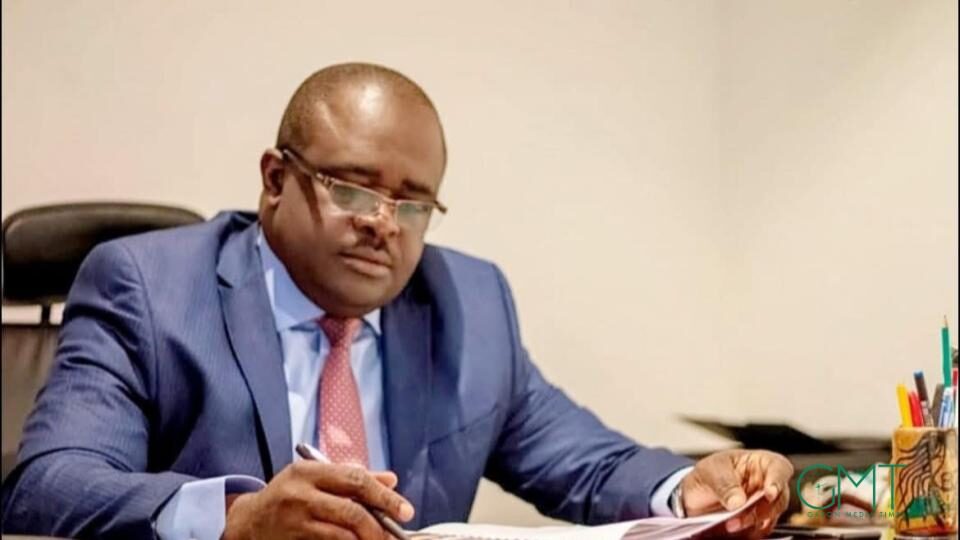
Gabon: Dieudonné Minlama cautions against confining Oligui Nguema’s mandate
Emerging from several months of quiet reflection, Dieudonné Minlama Mintogo has issued a significant warning to Gabon’s new authorities. Speaking in an exclusive interview, the former 2016 presidential candidate asserts that the primary threat facing the Fifth Republic today is not economic or institutional, but political: the risk of transforming President Brice Clotaire Oligui Nguema’s broad popular mandate into a mere partisan agenda.
After maintaining a relatively low profile since the April 2025 presidential election, Dieudonné Minlama Mintogo re-enters the public discourse with an analysis poised to spark extensive debate within the political class. The former opposition figure contends that President Brice Clotaire Oligui Nguema possesses a mandate of exceptional scope, one that extends far beyond the confines of any single party or political faction.
With over 94% of the votes secured during the presidential ballot, the head of state, according to Minlama, holds a rare level of legitimacy in Gabon’s recent political history. Such profound popular backing, he argues, inherently carries unique responsibilities.
A mandate embraced by all Gabonese citizens
For Dieudonné Minlama, the overwhelming vote in favor of the President cannot be interpreted as solely the triumph of one political formation. Instead, it represents the manifestation of a vast national hope that emerged on August 30, 2023, and was solidified with the return to constitutional order. “The mistake to avoid is transforming the people’s mandate into a partisan mandate,” he cautioned.
Beneath this statement lies a growing apprehension: the prospect of the political landscape gradually closing in around a restricted circle of actors, to the detriment of numerous citizens, political leaders, civil society members, and prominent figures who supported the Transition or accompanied the process of national refoundation.
The peril of a two-tiered republic
The former presidential contender believes that the strength of the vision championed by Brice Clotaire Oligui Nguema precisely resided in its ability to transcend traditional divisions. In his view, the Transition garnered support from diverse sensibilities united by a common objective: to move beyond the fractures of the past.
From this standpoint, any exclusionary approach risks undermining the momentum of national unity that accompanied the birth of the Fifth Republic. For Dieudonné Minlama, the true challenge in the coming years will be to safeguard this spirit of national cohesion by building an open governance model, capable of integrating the nation’s various talents beyond party affiliations.
Upholding the spirit of August 30
Essentially, the former opposition figure’s message is an urgent call for vigilance. While President Oligui Nguema secured an exceptional mandate, it was precisely because he was perceived as the candidate for national gathering, not as the representative of a single camp.
In his estimation, the success or failure of the Fifth Republic will largely hinge on the authorities’ capacity to preserve this inclusive dynamic. This warning resonates as a crucial reminder: the 94% garnered at the polls constitute less a political asset to be exploited and more a profound historical responsibility to be upheld.
