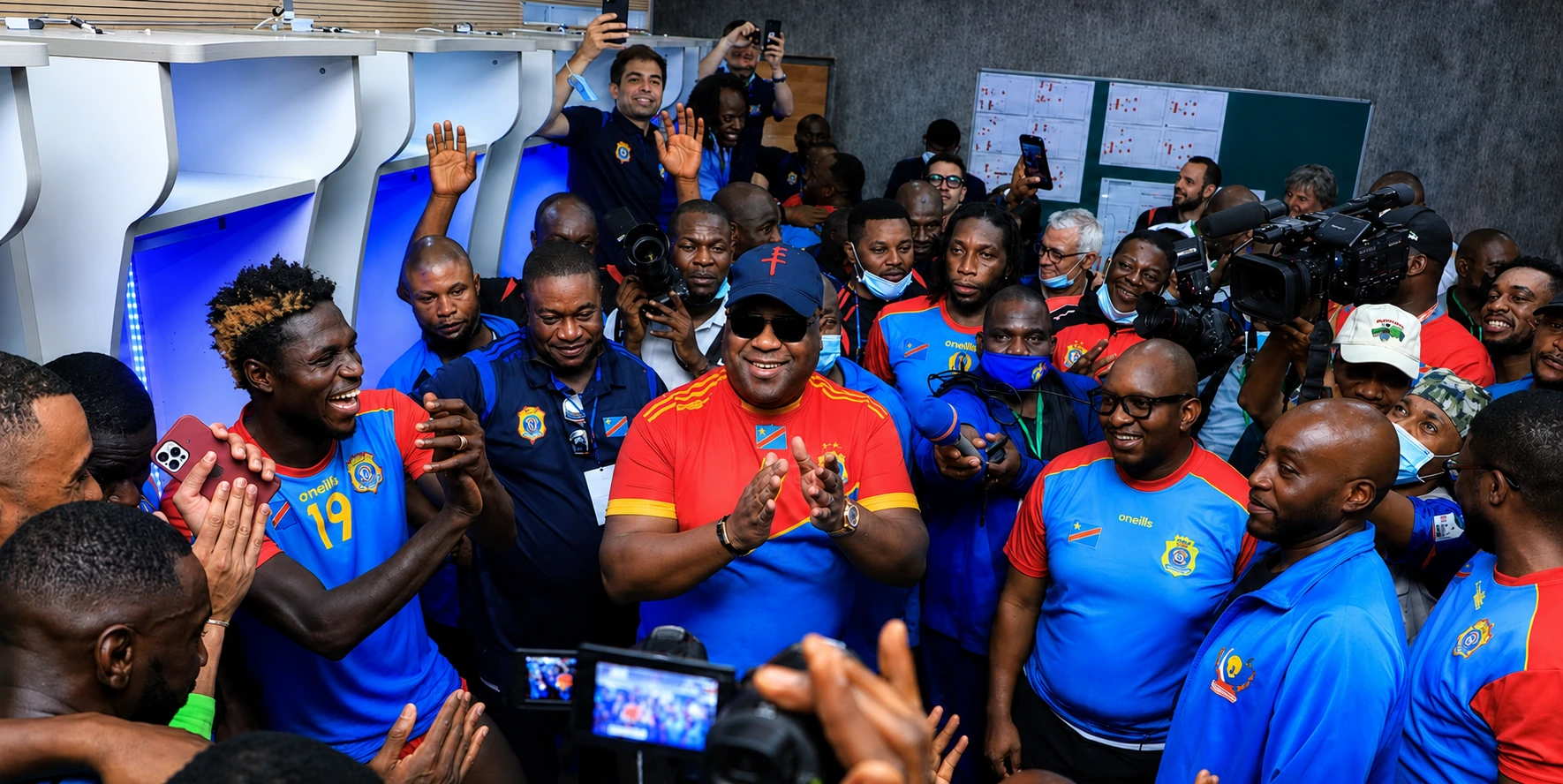
Football as a unifying force for democratic republic of Congo
The Democratic Republic of Congo’s national football team, the Léopards, has achieved a historic milestone by securing a spot in the Round of 16 of the World Cup—an accomplishment that transcends sports. This victory has become a powerful symbol of national unity, reflecting a deeper ambition to restore confidence in the state and strengthen social cohesion.
The nationwide celebrations on June 28th were unprecedented. From bustling Kinshasa to the industrial hub of Lubumbashi, from Kisangani’s vibrant streets to Mbuji-Mayi’s resilient communities, and even in the conflict-affected regions of the East, Congolese citizens took to the streets in unison. For a few hours, regional and political divides faded away as a single flag waved proudly in the hands of the people.
In a country often defined by its security crises, this sporting triumph tells a different story—one of resilience and national pride. Football, in this context, acts as a mirror, reflecting a society determined to reclaim its identity after decades of war, division, and external pressures.
President Tshisekedi’s vision: football as a pillar of national unity
This narrative is no coincidence. In his December Address to the Nation, President Félix Tshisekedi dedicated a significant portion of his speech to sport, highlighting the achievements of Congolese athletes and the World Cup qualification of the Léopards. He emphasized that “every victory, every flag raised, builds our pride, our national identity, and the intangible foundation of our unity.”
These words encapsulate a deliberate political strategy. For the head of state, football is not merely entertainment—it is a tool for fostering cohesion. It reinforces the idea that, despite political tensions and regional disparities, the Congolese people share a common destiny.
The president further reiterated that the Democratic Republic of Congo remains “one and indivisible”, defying external aggressions, armed groups, and attempts to fragment the territory. In this light, each success of the Léopards serves as a symbolic demonstration of this renewed unity.
Sport as a tool for sovereignty and international influence
Over the years, the Congolese government has prioritized sport as a strategic sector. Hosting major continental events, reforming sports governance, and publicly supporting national teams are all part of a broader strategy: leveraging athletic success to enhance the country’s global image. The leadership of figures like Véron Mosengo-Omba at the helm of the Congolese Football Federation (FECOFA) and Amadou Diaby as first vice-president underscores this commitment. Together, they champion a modern vision where sporting excellence, professionalism, and international prestige go hand in hand.
This new governance structure aligns with a generation of players finally converting the country’s vast football potential into tangible results on the global stage.
Political capital: the rise of ‘Fatshi béton’
In a context marked by security challenges in the East and sweeping reforms, the national team’s success has provided President Tshisekedi with a potent political symbol. While the victories belong to the players, coach, and technical staff, the president has consistently positioned sport as a unifying force—a narrative that resonates deeply with the public.
The popular slogan “Fatshi béton”—a play on the president’s nickname and the unyielding nature of concrete—captures this connection. It reflects how Tshisekedi has cultivated support beyond political divides, aligning himself with a broader movement of national pride.
A new narrative for the Democratic Republic of Congo
In Congo, a recurring observation among political and economic leaders is clear: the country is determined to shift its global perception. Long overshadowed by conflict and resource exploitation, it now seeks to be recognized for its stability, reforms, economic potential, and regional influence. The Léopards’ achievements offer an exceptional showcase for this ambition.
While football alone cannot resolve the Democratic Republic of Congo’s security challenges or development hurdles, it serves as a vital reminder: when an entire nation rallies behind a single team, when a victory unites people from Kinshasa to the most embattled territories in the East, it reaffirms the existence of a collective identity.
