
- Top Stories
- Politics
escalating violence from Sudan spills over into Chad
Three years into Sudan’s brutal conflict, its devastating ripple effects have now reached Chad’s doorstep. Border strikes, military tensions and rising communal strife: the crisis in Sudan is no longer confined to its borders—it has firmly engulfed N’Djamena.
Border town Tiné becomes flashpoint
Tiné is more than just a name shared by two towns—one in Sudan, one in Chad. These twin settlements are home to the same Zaghawa communities and serve as a critical crossing point for civilians fleeing the Darfur conflict. On February 21, 2026, the Rapid Support Forces (RSF) seized the Sudanese side of Tiné, sparking immediate clashes with Toroboro fighters—Chadian and Sudanese militias aligned with General Abdel Fattah al-Burhan—and unapproved Chadian military units. The city was retaken swiftly, but the violence underscored how deeply the conflict had spilled across borders.
The situation escalated further on March 21, when a deadly drone strike hit Tiné in Chad, killing nearly two dozen civilians. While Chadian authorities deny involvement, accusations have mounted. Opposition figure Ousmane Dillo, currently in exile in Sudan, released an audio message widely circulated on private messaging platforms, directly blaming Mahamat Déby and calling for his removal. He also accused the president of endangering the Zaghawa community. On the Sudanese side, Darfur governor Minni Arkou Minawi went even further, declaring “the war with Chad has already begun,” signaling a dangerous regional escalation.
N’Djamena responds with maximum alert
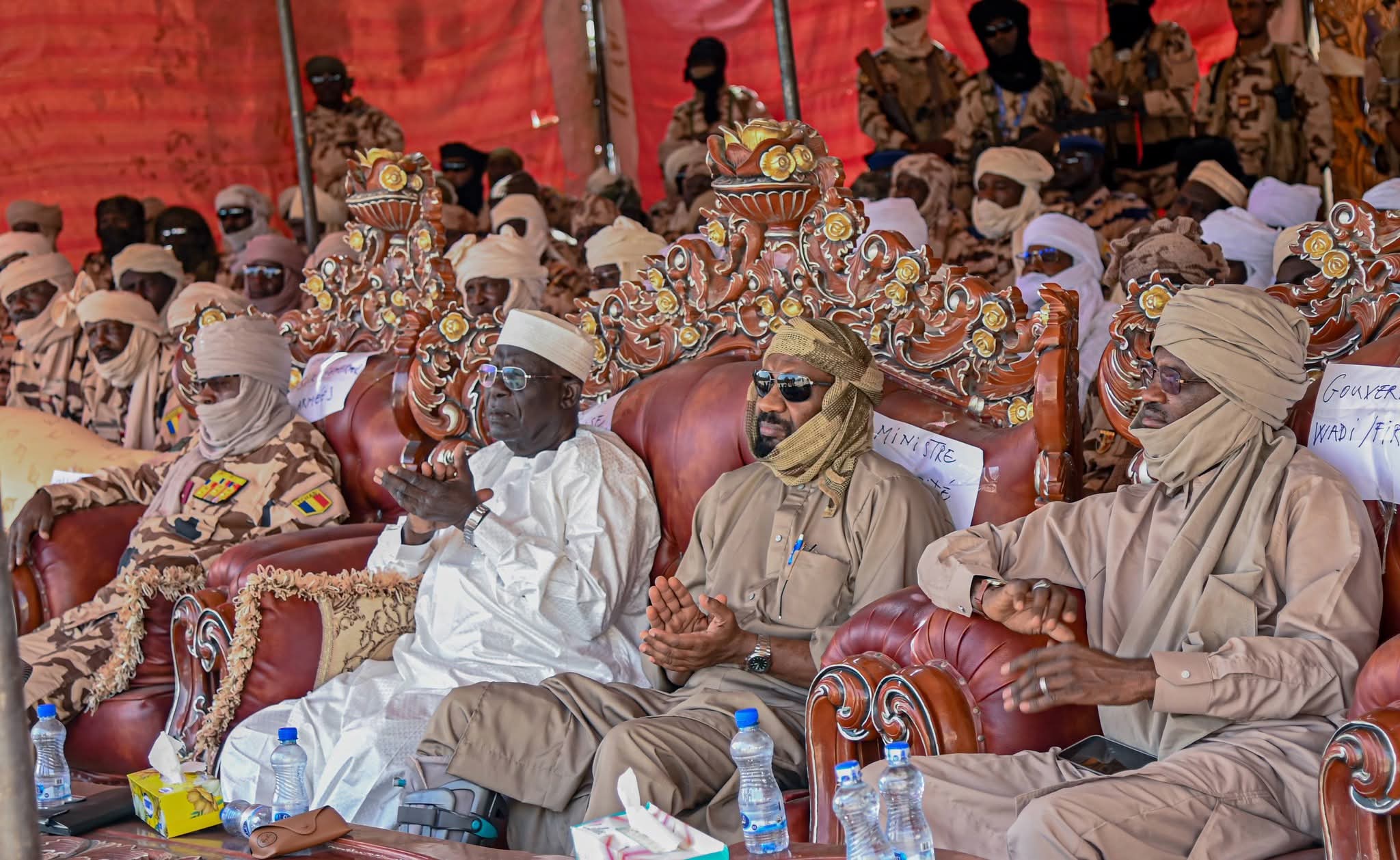
Chadian authorities have doubled down on their stance, emphasizing neutrality while vowing a “proportionate” response to attacks. President Mahamat Déby ordered the military into full alert status. On March 22, a high-level security summit convened in Tiné, bringing together top military officials to reinforce border security and prevent further destabilization. “This is Tiné, Chad—not Tiné, Sudan. Let the Sudanese army, the Toroboros, and the RSF fight it out in their own country. They must not bring their war here to kill our people,” declared General Ali Ahmat Akhabach, Minister of Security.
In a move with severe humanitarian consequences, N’Djamena then banned civilians from crossing the border, trapping women and children fleeing Sudan’s horrors from reaching safety in Chadian refugee camps. The decision, ostensibly to curb Zaghawa rebellion, has done little to improve security. Regional analyst Cameron Hudson cautioned: “Chad’s military buildup along the Sudanese border amid rising tensions risks drawing Chad directly into the Sudanese conflict, rather than keeping it out. Déby’s attempt to project strength may backfire strategically.”
Community fractures deepen as regional war rages
The conflict’s reach extends beyond the Zaghawa. According to Chadian security sources, the RSF has been actively recruiting young men from the Tama community. This mobilization, resembling mercenary activity, is being facilitated through local networks involving traditional leaders, administrative authorities, and figures close to the government.
Like the Zaghawa, the Tama are a transborder community, present in both eastern Chad (Wadi Fira, Ouaddaï) and western Sudan. Though not Arab, during the 2003 Darfur war, they were integrated into Janjaweed militias—precursors to Hemedti’s forces—and fought against ethnic groups, including the Zaghawa. This resurgence of old tensions is alarming: it risks reigniting long-standing divisions within Chadian society and fueling inter-community fear and mistrust.
What was once a murky strategic calculation has now spiraled into a dangerous reality. Chad’s government finds itself trapped in a conflict it may no longer be able to control. The genie is out of the bottle—and it won’t go back in.