Escalating child casualties and recruitment by armed groups in Niger’s Sahel region
The Sahel region of Niger, particularly the area bordering Mali and Burkina Faso, is witnessing a distressing surge in violence targeting children, according to a recent report. The escalating conflict has not only claimed innocent lives but has also subjected youngsters to forced recruitment by armed factions operating in the zone.
devastating impact on children in Tillabéri
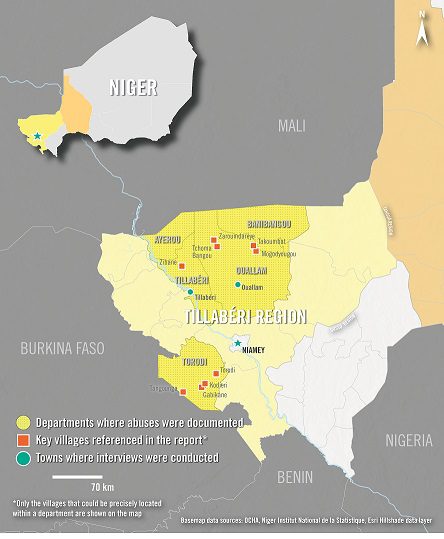
A 64-page document titled « I have nothing left but myself. » The escalating toll of conflict on children in the Tillabéri region sheds light on the harrowing consequences faced by young people in this embattled area. The report highlights the atrocities committed by the Islamic State in the Greater Sahara (EIGS) and the Support Group for Islam and Muslims (GSIM), an Al-Qaeda affiliate, both of which have been accused of war crimes and grave human rights violations.
Attacks on schools and food reserves have become alarmingly frequent, with children often caught in the crossfire. Many young survivors endure severe psychological trauma after witnessing massacres in their villages. In certain communities, women and girls face restrictions on leaving their homes and live under the constant threat of abduction or forced marriage to combatants.
In the Tillabéri region of Niger, an entire generation is growing up surrounded by death and destruction.
Matt Wells, Deputy Director of Crisis Response at Amnesty International
According to Matt Wells, Deputy Director of Crisis Response at Amnesty International, the Tillabéri region has become a battleground where armed groups repeatedly target educational facilities and food supplies while actively recruiting minors. « Children are not only victims of violence but are also being coerced into joining armed factions, » he stated.
The report emphasizes that urgent intervention is required from the Nigerien government and international partners to prevent further violations and protect the fundamental rights of those affected, with a particular focus on safeguarding children.
The Nigerien authorities have been criticized for failing to protect civilians. Witnesses report that despite urgent calls for help, the Nigerien Defense and Security Forces (FDS) often arrive long after massacres and looting have concluded.
Amnesty International classifies the situation in Niger as a non-international armed conflict due to the intensity of the violence and the organizational structure of the EIGS and GSIM.
targeted killings of civilians
The conflict in Tillabéri has intensified significantly since early 2021. According to the Armed Conflict Location & Event Data Project (ACLED), civilian fatalities in Niger rose to 544 between January 1 and July 29, 2021, compared to 397 in 2020.
In 2021 alone, armed groups killed over 60 children in the Nigerien side of the tri-border area. The EIGS, predominantly active near the Mali border, appears to be responsible for most large-scale massacres.
A delegation from Amnesty International interviewed 16 boys who narrowly escaped EIGS attacks in their villages. They described masked gunmen on motorcycles opening fire, particularly targeting men and adolescent boys. One 13- or 14-year-old boy recounted, « We are used to hearing gunshots and seeing bodies piled up. »
I often have nightmares of being chased by people on motorcycles or relive Wahab pleading with the attackers.
A boy who witnessed the killing of his 12-year-old friend
Another boy, who witnessed the murder of his 12-year-old friend in March 2021, shared, « I think about Wahab and how he was killed. I often have nightmares of being chased by people on motorcycles or relive Wahab pleading with the attackers. »
Combatants have fired into homes, killing or injuring civilians attempting to hide. A woman and her young daughter were shot while hiding in their home during a suspected EIGS attack.
The FDS withdrew from certain border areas after suffering losses to the EIGS and GSIM in late 2019, leaving these regions without state presence. Witnesses frequently reported that security forces failed to respond even during hours-long massacres and looting.
A 50-year-old man, echoing the sentiments of many, stated, « They have abandoned us. »
rising tide of child recruitment
Child recruitment by the GSIM has surged this year in the Torodi department, near the Burkina Faso border. Witnesses reveal that the group targets boys as young as 15, and sometimes younger, offering incentives such as food, money, or clothing to lure recruits.
Recruits reportedly undergo weapons training ranging from one week to three months. The GSIM is also known to employ children as spies, scouts, and lookouts—roles that, under international law, constitute direct participation in hostilities.
attacks on education and health services
The EIGS and GSIM oppose what they deem « Western education, » leading to the torching of schools and threats against teachers, forcing many institutions to close. By June 2021, at least 377 schools in Tillabéri had shut down, depriving over 31,000 children of education.
Amnesty International documented attacks on schools in at least four departments of Tillabéri, many of which are constructed from thatch and highly susceptible to fire. Teachers have also been threatened due to their profession. A 15-year-old boy from Mogodyougou explained, « The teachers […] left. They would have been killed otherwise. »
The prolonged school closures have left many children without access to education. A 14-year-old adolescent shared, « We were unhappy that school closed […] After it closed, we stayed at home. We had nothing to do. »
Under international humanitarian law, attacking schools is prohibited unless they are used for military purposes. Thus, the documented attacks on educational facilities constitute war crimes.
The conflict has severely restricted children’s access to healthcare, as armed groups have looted health centers. Additionally, Nigerien authorities have imposed movement restrictions on civilians, sometimes impeding humanitarian organizations. Immunization rates have plummeted, and diseases like measles are spreading.
undermining food security
During attacks, the EIGS has burned grain stocks, looted shops, and stolen livestock, leaving families destitute. Children are particularly vulnerable to malnutrition and related illnesses.
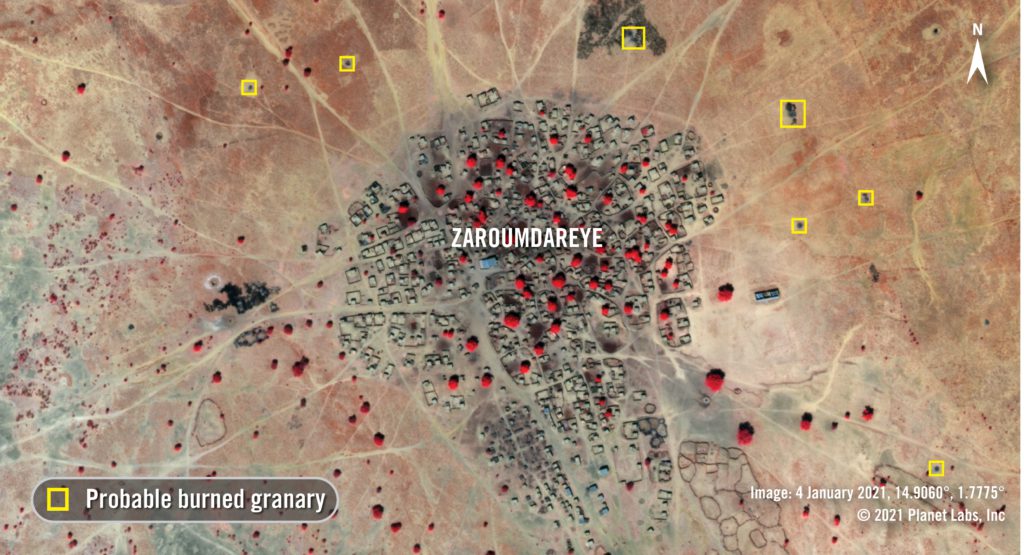
A mother of seven told Amnesty International that EIGS fighters burned her family’s granaries during an attack on Zibane village. She lamented, « Everything was burned […] I have nothing left but myself. »
Satellite imagery analysis corroborated reports of targeted grain stock burnings, which have displaced tens of thousands of people. Entire villages have been emptied due to food shortages. Furthermore, the EIGS and GSIM regularly extort « taxes » from populations, often using violence. Humanitarian organizations warn that 2.3 million people in the region could face food insecurity due to attacks, drought, and floods.
psychosocial toll on children
The relentless violence has left deep scars on children’s mental health and well-being. Few of those interviewed had access to psychosocial support.
Amnesty International documented symptoms of trauma and distress among children, including nightmares, sleep disturbances, fear, anxiety, and loss of appetite. Many reported that the sound of motorcycles triggered memories of attacks.
The Nigerien authorities and international partners must urgently take steps to equip children with the tools to build a future.
Matt Wells
A 15-year-old displaced from his village told Amnesty International, « What I want is for peace to return, truly. And for the government to care about our lives, even here [in the displacement camp] regarding food and water. And school. We need school. »
« The Nigerien authorities must quickly ensure that children affected by the conflict in Tillabéri have access to education and psychosocial care, » Matt Wells asserted. « Niger stands on the brink. The authorities and international partners must act urgently to provide children with the tools to build a future. »
expanding conflict in the Sahel
The conflict that began in Mali in 2012 has since spread to neighboring Burkina Faso and Niger. Armed groups vie for control of border areas and frequently clash with the Nigerien military and forces from other countries, including Chad, Mali, Burkina Faso, and France.
In 2021, an estimated 13.2 million people across the region required humanitarian assistance, with 1.9 million displaced from their homes.
methodology
Amnesty International’s delegation interviewed 119 individuals, including 22 children, three young adults aged 18 to 20, and 36 parents or other affected individuals. The delegation also met with NGO and humanitarian personnel, United Nations representatives, and national officials.
