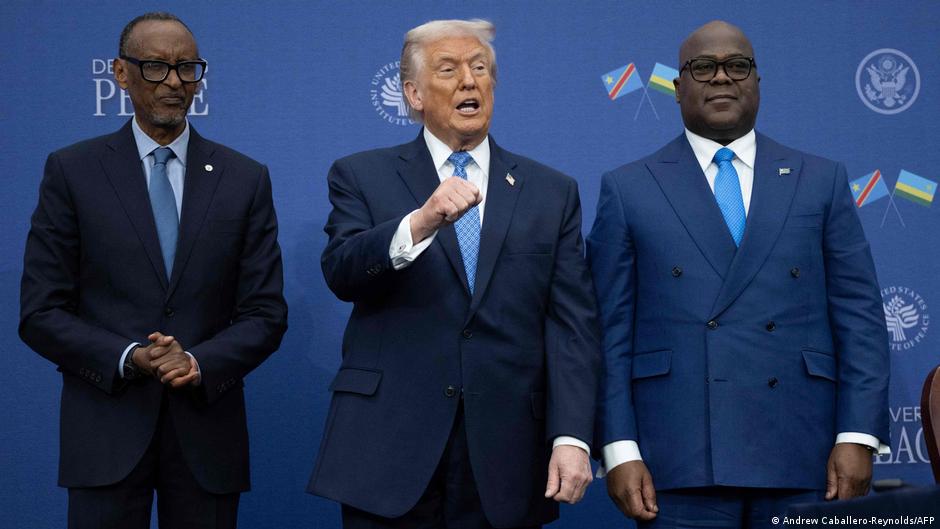
The Democratic Republic of Congo (DRC) has escalated its legal battle against Rwanda by filing a case with the International Court of Justice (ICJ), accusing Kigali of backing armed factions operating in the eastern provinces. This move comes exactly one year after both nations signed a peace agreement in Washington, aimed at ending hostilities along their shared border.
Peace agreement fails to halt ongoing conflict
Despite the 2025 Washington accord—brokered with international mediation—the eastern DRC remains engulfed in violence. Rebel forces of the AFC-M23 continue to control large swathes of territory in North-Kivu and South-Kivu, clashing daily with Congolese armed forces. Meanwhile, civilian populations endure worsening humanitarian conditions, with displaced families struggling to access basic services.
Local residents express frustration over the stalled peace process. « We expected real change after the agreement—open borders, functioning banks, and an end to violence, » says a resident of Bukavu. « But here we are, still trapped in the same suffering. » Another questions the durability of international pressure, asking, « If the U.S. could enforce its will in Washington, why can’t it do the same for neighbors attacking our country? »
Rwanda faces sanctions and legal consequences
The DRC’s ICJ filing demands reparations for victims of Rwanda’s alleged decades-long interference, including financial and military support to armed groups responsible for human rights abuses. Washington has also imposed sanctions on Rwanda’s Gasabo Gold refinery and several mining firms, citing their role in illegally trafficking minerals from rebel-held zones to fund the AFC-M23 insurgency.
However, experts remain skeptical about the effectiveness of these measures. « Sanctions alone rarely shift strategic calculations, » notes Yvon Muya, a conflict studies specialist at Saint-Paul University in Canada. « As long as confrontation costs less than compromise, actors will maintain the status quo to their advantage. »
Military tensions rise as peace remains elusive
Analysts warn that both sides are using the current lull to regroup and rearm. « This is a dangerous preparatory phase, » says Professor Bob Kabamba of the University of Liège. « Each side is positioning for a final showdown—either Kinshasa reclaims lost territories, or the rebels advance toward Katanga, threatening the capital’s stability. »
With Goma, Bukavu, and surrounding areas under militant control, the humanitarian toll continues to mount. Displaced civilians face shortages of food, medical care, and shelter, while sporadic clashes exacerbate an already dire situation.