Diomaye Faye’s growing political independence from pastef coalition
Bassirou Diomaye Faye, Senegal’s president, is taking deliberate steps to carve out his own political identity, signaling a notable shift away from the Pastef movement that propelled him to power in 2024. This strategic move, evident in his recent actions and public statements, underscores a broader ambition to consolidate his leadership beyond party affiliations.
What appeared to be a routine accountability gathering in Mbour—his hometown—unfolded as a carefully orchestrated political statement. The event, intended to showcase presidential achievements, carried deeper implications for the internal dynamics of Senegal’s ruling coalition and the looming electoral challenges ahead.
asserting presidential autonomy
The president’s distancing from Pastef, led by Prime Minister Ousmane Sonko, has intensified in recent months. During a widely discussed interview in early May, Faye criticized what he described as an “excessive personalization” of the political project—widely interpreted as a veiled critique of Sonko’s dominant role in Senegal’s political landscape.
The Mbour event further exemplifies this strategy. Analysts view it as a calculated effort to cultivate a distinct “Diomayiste” political current, one directly aligned with the presidency rather than the Pastef machinery. This shift aims to reinforce the constitutional hierarchy, emphasizing that the president, as head of state, holds ultimate executive authority.
a popularity test with high stakes
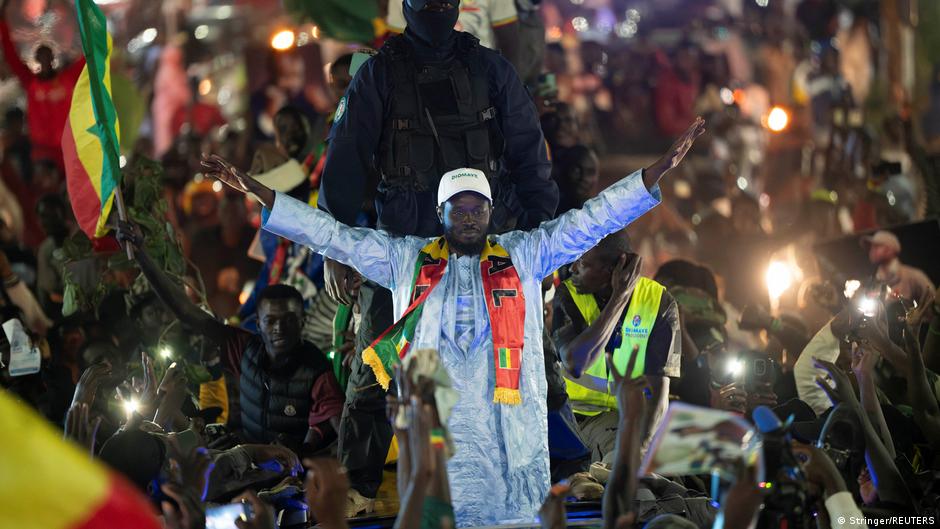
The choice of Mbour was far from coincidental. As both an electoral stronghold and a logistically secure venue, the location provided an ideal backdrop to gauge the president’s grassroots support beyond the Pastef faithful. While the absence of Faye—who delivered his address via video—sparked commentary, the massive turnout at the Stade Caroline-Faye demonstrated a significant, if carefully managed, display of public mobilization.
For observers, the stakes were twofold: first, to prove the existence of a loyal base independent of Pastef networks; second, to subtly prepare the political terrain for upcoming legislative midterms and, more critically, the 2029 presidential election.
the 2029 presidential question
Speakers at the Mbour gathering openly urged Bassirou Diomaye Faye to seek re-election in 2029—an early and potentially divisive call. If constitutionally permissible, this ambition reshapes the power dynamics within the ruling coalition, raising pressing questions: Will Faye and Sonko navigate a prolonged cohabitation, or will the roles and ambitions of both leaders require a definitive clarification?
Relations between the two men appear increasingly strained. Targeted dismissals, reshuffles in presidential communications, and disputes over coalition control reflect an underlying power struggle at the highest level of government. While an open rupture risks fracturing the majority, an ambiguous cohabitation could also fuel political fatigue among the electorate.
The president faces mounting social expectations: youth employment, cost-of-living pressures, judicial reforms, and economic governance. Though the government highlights progress, several promised reforms remain stalled, contributing to growing public impatience across Senegal.
In this context, the Mbour gathering served a dual purpose: to revitalize support among party loyalists and to signal resilience amid economic headwinds—including tight fiscal constraints and rising debt—that the administration acknowledges as “challenging times ahead.”
a pivotal moment in the presidency
Rather than a mere political rally, the Mbour event represents a turning point in Faye’s presidency. It marks his transition into a more conventional, yet riskier, phase of leadership—one where he must balance political loyalty, institutional authority, and the delicate art of preparing for the future.
The ultimate question remains: Will this strategy of differentiation strengthen his position, or will it precipitate a lasting crisis within the ruling coalition? One thing is certain: in a country where unity has long been hailed as the cornerstone of the “rupture” promised in 2024, the president’s next moves will be watched closely.
