
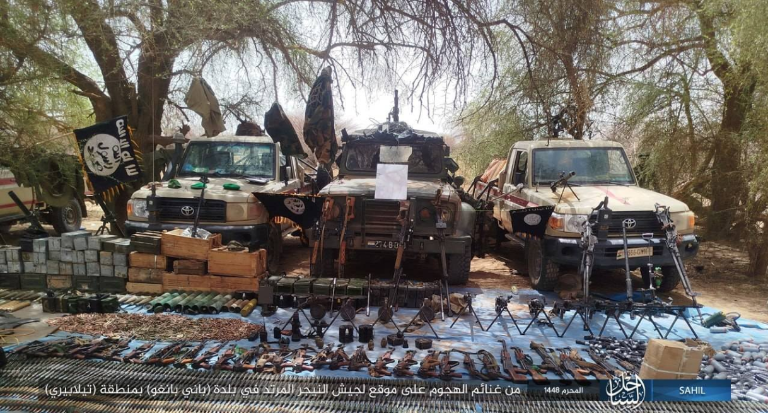
On June 24, 2026, Niger witnessed an unprecedented wave of violence when the Islamic State in the Sahel (IS Sahel) launched simultaneous, coordinated assaults on military detachments in Inates and Banibangou. The attacks, described as meticulously planned, resulted in at least 80 fatalities, the destruction of 38 vehicles, and the capture of 30 others in a single day. These figures, disclosed by the assailants themselves, underscore the devastating impact on both military operations and civilian life in the region.
a coordinated offensive with devastating consequences
The timing of the assaults—executed within hours of each other—highlights the terrorists’ strategic precision and their ability to exploit vulnerabilities along the porous borders shared with Mali and Burkina Faso. In Inates, a hotspot in the volatile “three borders” zone, the attack left at least 70 soldiers dead, 22 military vehicles destroyed, and 24 captured. Just moments later, a second wave struck Banibangou, where 10 lives were lost, 16 vehicles were reduced to smoldering wrecks, and six were seized by the attackers.
Military analysts warn that these twin offensives reveal a troubling reality: despite joint regional counterterrorism efforts, IS Sahel retains alarming operational flexibility. The group’s ability to strike with such coordination suggests persistent gaps in surveillance and early-warning systems, leaving communities in the Tillabéri region exposed to relentless threats.
economic paralysis grips the Tillabéri region
The ramifications of these attacks extend far beyond the immediate loss of life. Inates and Banibangou are not merely military strongholds; they are lifelines for the local economy, serving as critical hubs for trade and supply chains that sustain thousands of families. The ripple effects are already visible:
- Collapse of weekly markets: These bustling trade hubs, where livestock and grains change hands, now stand deserted. Fear of further violence has driven vendors and buyers away, crippling the region’s financial heartbeat.
- Roadblocks and isolation: With nearly 70 vehicles—military and civilian—either destroyed or stolen, safe transportation routes have vanished. The result? Communities are cut off from essential goods and services, exacerbating their vulnerability.
- Deserted farmlands: As the rainy season approaches, farmers and herders hesitate to venture into distant fields. The abandonment of agricultural lands threatens food security, leaving the region teetering on the edge of a humanitarian crisis.
Local traders describe a market in freefall. “When the guns roar, the markets fall silent,” one merchant lamented. “In just two days, the price of basic staples has doubled. What hope do we have if we can’t even feed our families?”
communities unite in grief and resilience
The shockwaves of the attacks have reverberated across Niger, from the capital Niamey to the embattled outskirts of Tillabéri. Families of the fallen demand answers, while survivors in Banibangou recount harrowing scenes of devastation. The strategy of IS Sahel is clear: to instill terror, break morale, and force populations into submission or flight.
Yet, amid the despair, glimmers of resilience emerge. Blood donation drives have surged in Niamey hospitals to support the wounded evacuated from the frontlines. Civil society groups are urging the government to prioritize these embattled regions, warning that military presence alone cannot restore stability without economic revival and restored trade routes.
the path forward: security and survival
The double assault on Inates and Banibangou has forced Niger’s leadership to confront uncomfortable truths about its counterterrorism strategy. The failure to prevent these attacks raises critical questions about surveillance, intelligence-sharing, and the military’s ability to protect vulnerable border communities.
The coming weeks will be decisive. Success hinges on two fronts: launching robust counteroffensives to dismantle IS Sahel’s operational capacity and revitalizing the local economy to prevent further collapse. Without these measures, the region risks spiraling into deeper despair, where terror thrives and hope fades.