
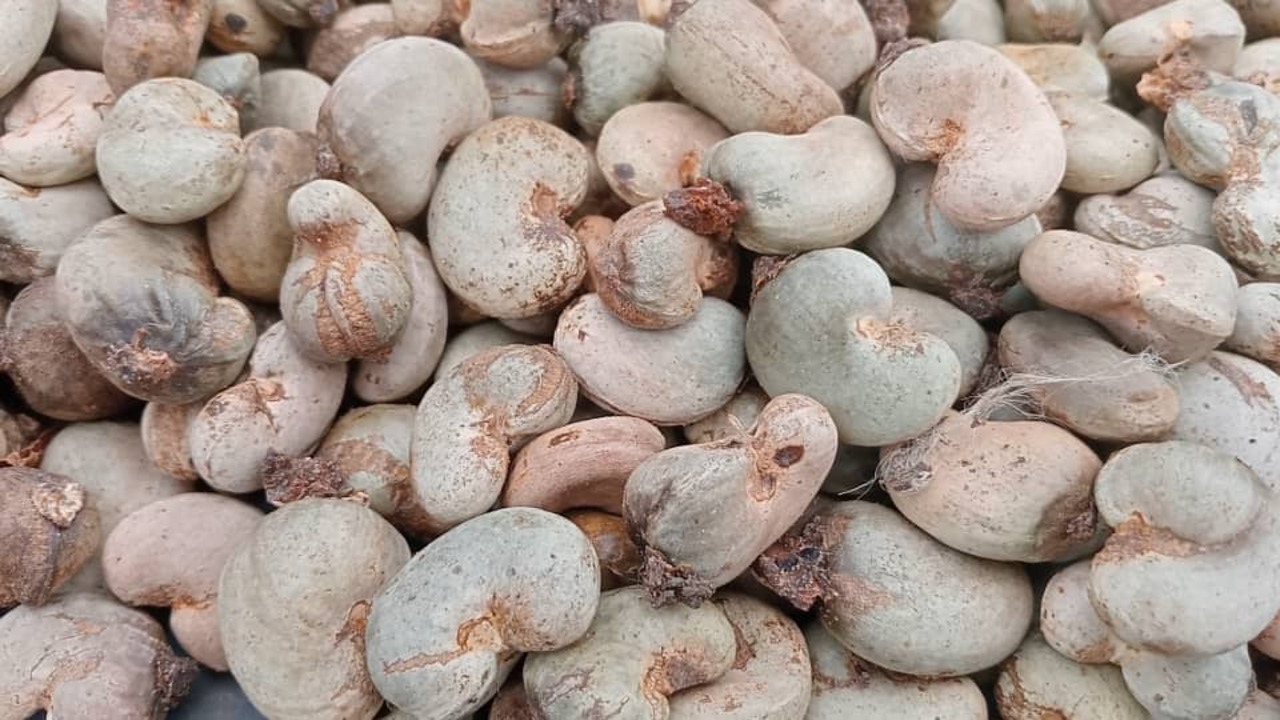
In Côte d’Ivoire, the cashew harvest season is in full swing across key production zones. The Cotton and Cashew Council projected this year’s output at over 1.3 million tonnes, consistent with recent trends yet still facing a potential shortfall of 200,000 tonnes compared to last year’s figures. While the national outlook remains positive, certain regions are grappling with significant challenges, particularly in the Bounkani area of the northeast, where climatic disruptions are taking a heavy toll.
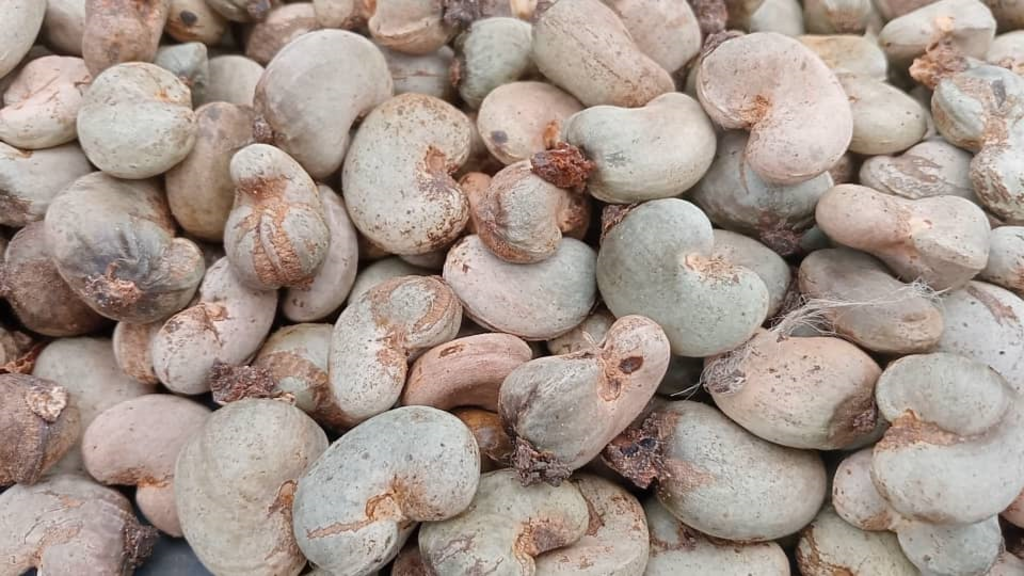
Climate shifts disrupt cashew production in Bounkani
Local farmers in Bounkani, a region in northeastern Côte d’Ivoire, are reeling from one of the worst cashew harvests in recent memory. Kouamé Ouattara, a cashew farmer with a 3-hectare plantation, shared his struggles. Three years ago, his land yielded 500 kg per hectare, but this season, he barely harvested two sacks across his entire plot. «Normally, heavy rains between November and December help cashew trees bloom. But this year, the rainy season ended abruptly in October», he explained. «October through February passed without a single drop. Without flowering, there’s no harvest—it’s that simple.»
The consequences extend beyond cashew production. Beekeepers who maintain hives in cashew orchards are also suffering. Koffi Ouattara, president of the Koflangué beekeepers’ association, noted a drastic decline in honey yields. «Last year, we produced 100 liters of honey. This season, we’re down to just 30 liters», he said. «It’s a major loss for our community.»
Outdated farming practices worsen the crisis
While climate anomalies are a primary factor, experts point to longstanding agricultural mismanagement as a key contributor. Dr. Sibirina Soro, a researcher at Daloa University and coordinator of the National Cashew Research Project, highlighted the issue. «Many cashew orchards resemble uncontrolled forests rather than cultivated plantations», he stated. «The initial planting density was never properly regulated. We now advise farmers to rehabilitate their orchards to achieve the recommended 100 trees per hectare.»
Dr. Soro also leads annual training sessions to combat pest infestations, emphasizing the need for improved support for farmers. Unlike some agricultural sectors, cashew producers in Côte d’Ivoire avoid chemical pesticides, leaving their crops more vulnerable to losses during poor harvests.