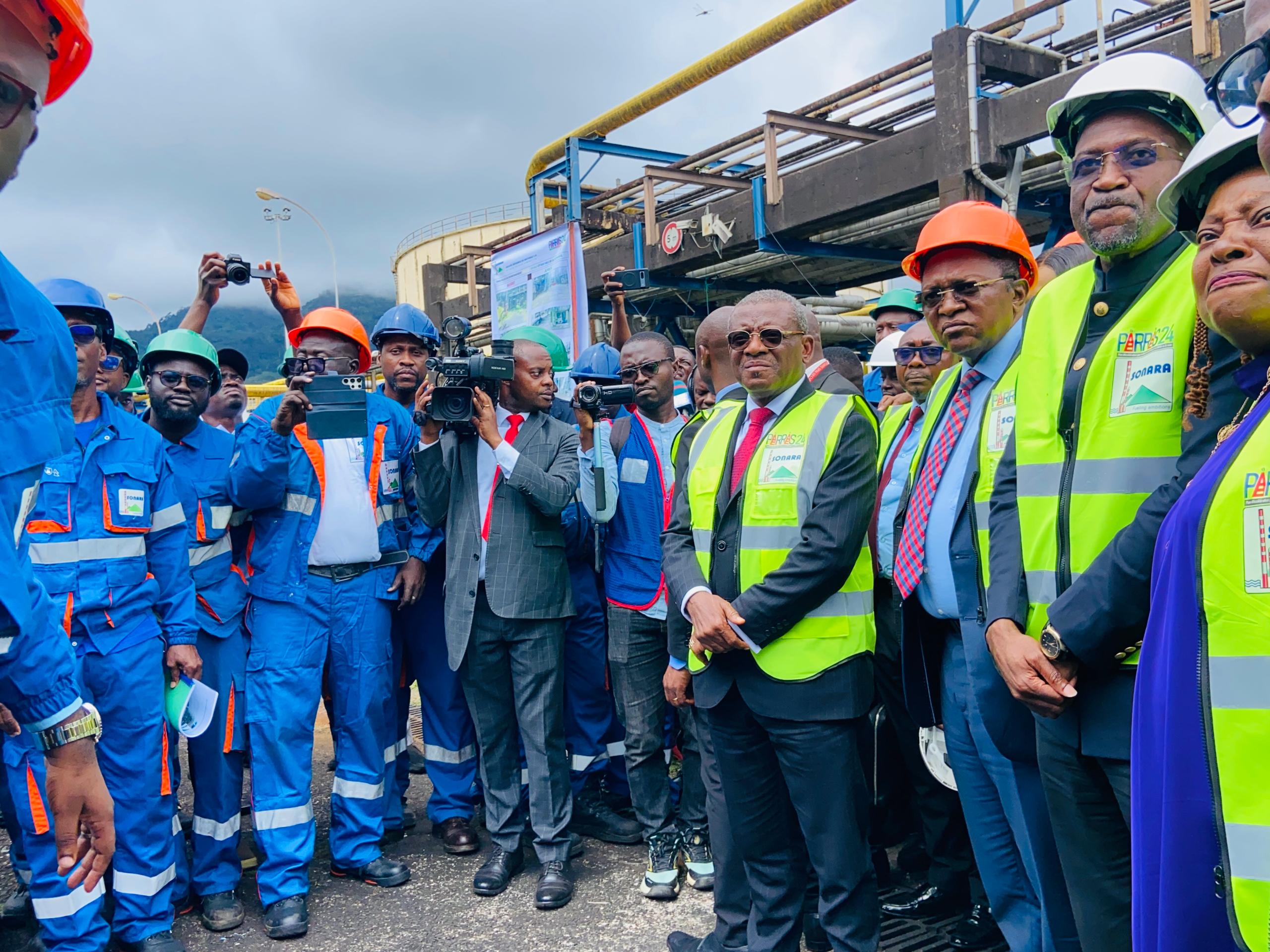
Controversy over Sonara’s 700 billion FCFA claim raises questions
controversy over Sonara’s 700 billion FCFA claim raises questions
Seven years after a devastating fire crippled operations at the national refinery, its leadership made a bold announcement to global media about its supposed rebirth.
Seven years after devastating fire, Sonara’s dramatic comeback claim
Seven years after flames ravaged the national refinery, its director general addressed global media with a sweeping declaration of rebirth this past Monday, June 29, 2026. While many anticipated at least a preliminary agreement with a financial partner, the announcement came following a closed-door ministerial meeting assessing reconstruction costs and funding models—before any market outreach for actual partners.
The chosen financing model, Design-Build-Finance-Maintain (DBFM), would theoretically handle design, construction, financing, and long-term maintenance of the facility. Yet critics question how long it might take to secure a partner willing to sign an agreement before approaching banks for financing—a pattern already observed with mining partnerships in the country, unlike international practices.
Timing raises eyebrows among industry observers
The announcement followed just days after Cameroon’s private sector leadership, through its federation president Célestin Tawamba, praised the National Hydrocarbons Corporation (SNH) for the ongoing Kribi refinery project, successfully managed by Nathalie Moudiki. The comments were made during an international forum.
Was this just a presidential distraction?
Upon closer inspection, yesterday’s announcement appears to be a calculated communication strategy designed to divert attention from President Paul Biya’s ongoing review of his administration’s performance while he’s in Switzerland. The refinery’s management specifically highlighted an upcoming hydrocracker unit to process Cameroonian crude oil—though this project was already underway before the fire and is already accounted for in the Kribi refinery expansion.
Political maneuvering or genuine recovery plan?
“When you see whistleblowers targeting personalities involved in major projects, pause and reflect.” Since yesterday, Boris Bertolt has been publishing inflammatory content attacking the SNH’s refinery project with baseless claims aimed at damaging Nathalie Moudiki’s reputation. Why would such attacks coincide with Sonara’s announcement day? At SNH, officials have consistently praised Sonara as a historic national enterprise.
Regarding Sonara’s rehabilitation, back in 2020, a high-level Russian Lukoil delegation visited Yaoundé proposing a comprehensive reconstruction plan with modern equipment. The government ultimately rejected the proposal.
Pro-regime voices favoring oil imports through traders cite sovereignty concerns to justify their opposition to foreign partnerships. Yet Africa’s largest oil refinery operates privately in Nigeria, owned by Dangote, which processes over 60% of the country’s crude output without state ownership.
Why hasn’t Cameroon adopted the SNH gas model for its oil refinery? Angola’s massive Lobito refinery was built by China, Zambia’s Copperbelt refinery by China, Uganda’s first refinery by Russia, with another planned in Congo. These African nations are advancing their energy infrastructure—while Cameroon’s approach remains mired in bureaucracy.
Cameroonians are left wondering what comes next.
Be the first to comment

Comments