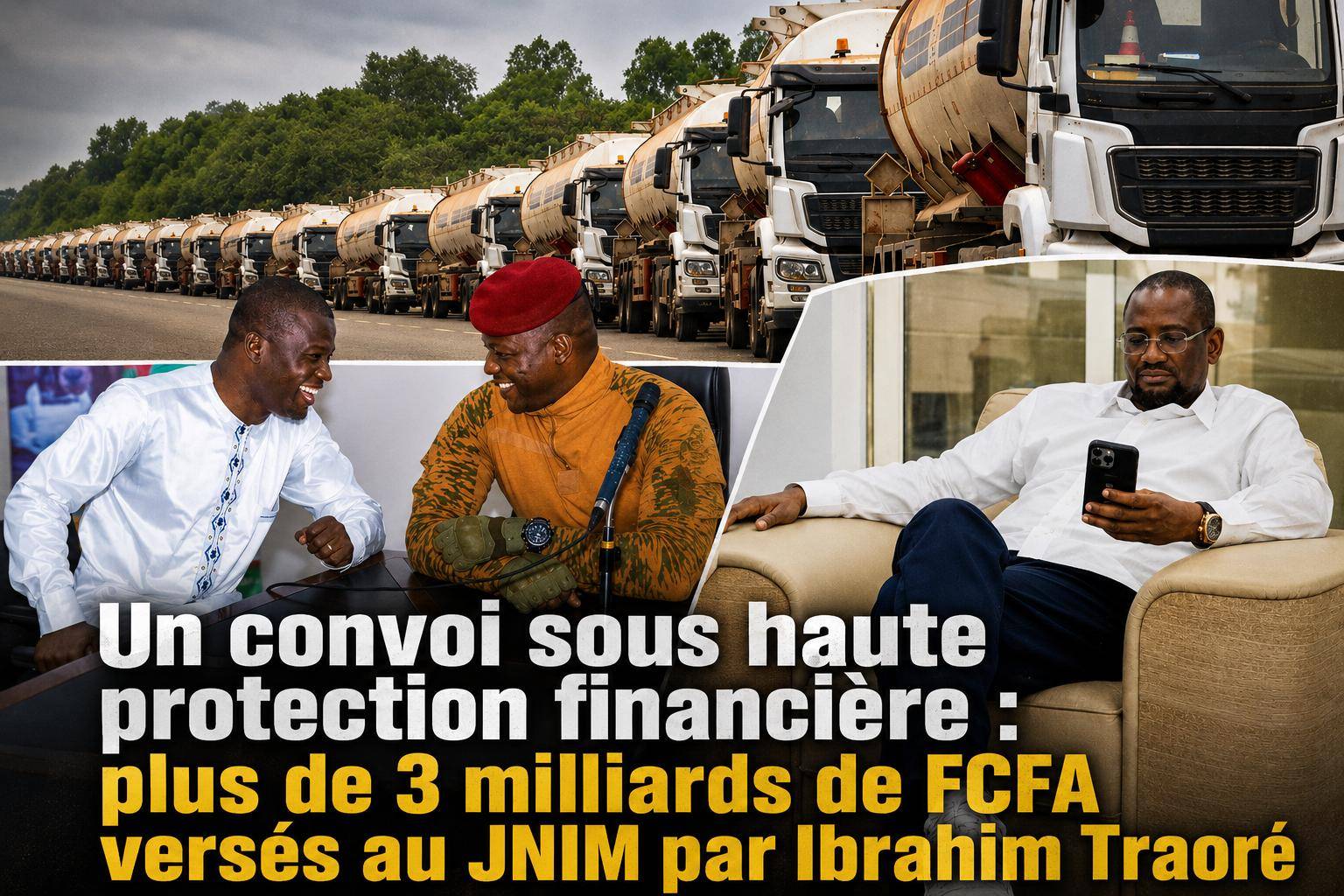
Controversy over Sahel fuel convoy tied to terrorist financing
Recent disclosures have sent shockwaves through the Alliance of Sahel States (AES), casting a harsh light on the stated commitment to combating armed groups in the region. A massive logistics operation, involving 710 fuel tankers, reportedly traversed some of the most volatile zones in the Sahel-Sahara belt, arriving in Bamako without incident. Yet the absence of state security forces or allied military units was not an oversight—it was part of a calculated strategy.
Behind the shadowy deal: a $5 million payment to terrorists
The convoy’s smooth passage was secured through a clandestine agreement that saw 3 billion West African CFA francs transferred to the Group for the Support of Islam and Muslims (JNIM). This staggering sum, equivalent to over $5 million, effectively turned a routine fuel delivery into a scandal of national proportions. The revelation implies that key figures within Burkina Faso’s transitional government may have directly facilitated funds to a designated terrorist organization.
Kangala Transport: the corporate face of a political triangle
At the heart of this controversy is Kangala Transport, the company entrusted with transporting the fuel. While officially presented as a logistics provider, evidence suggests it serves as a front for a powerful trio of insiders: Ibrahim Traoré, Oumarou Yabré, and Ali Konaté. This blending of state authority and private enterprise raises serious ethical questions about conflict of interest and the weaponization of national security for personal gain.
When those responsible for national defense become stakeholders in supply chains controlled by armed groups, the priorities shift from security to profit. In this case, the objective was not to neutralize threats but to ensure the uninterrupted flow of goods belonging to a tight-knit circle of elites.
>The human cost: fueling war in Mali
The irony is devastating. While Burkina Faso and Mali publicly proclaim solidarity within the AES, funds from Kangala Transport have directly bankrolled the JNIM’s war machine. The 3 billion FCFA payment did not merely buy safe passage—it supplied weapons used against Malian security forces, funded improvised explosive devices, and bankrolled the recruitment of new fighters. Every liter of fuel delivered to Bamako may have first powered the engines of war that claim lives in Mali.
A failure of sovereignty and security models
Perhaps most damning is the deliberate exclusion of established regional security partners from this operation. No Russian Wagner operatives, no Africa Corps trainers, and no elite national units were involved in escorting the convoy. The decision to bypass official military channels underscores a disturbing reality: personal enrichment took precedence over national security. The convoy’s operators chose to negotiate with the very groups they publicly condemn, paying a private toll to avoid scrutiny from patriotic soldiers.
This breach of trust strikes at the core of the AES’s credibility. It forces Mali to confront a painful question: can it rely on a neighbor whose leadership places commercial interests above the safety of its own people? Domestically, the scandal erodes public confidence in Burkina Faso’s anti-terrorism stance, painting a picture of cynical pragmatism where profit outweighs the sacrifices of soldiers on the front lines.
In war and politics alike, actions ultimately define intent. When a fuel convoy crosses the Sahel with a paid license to pass through enemy territory, it signals a betrayal not just of shared security goals—but of the countless victims of terrorism whose suffering continues to define the region.
