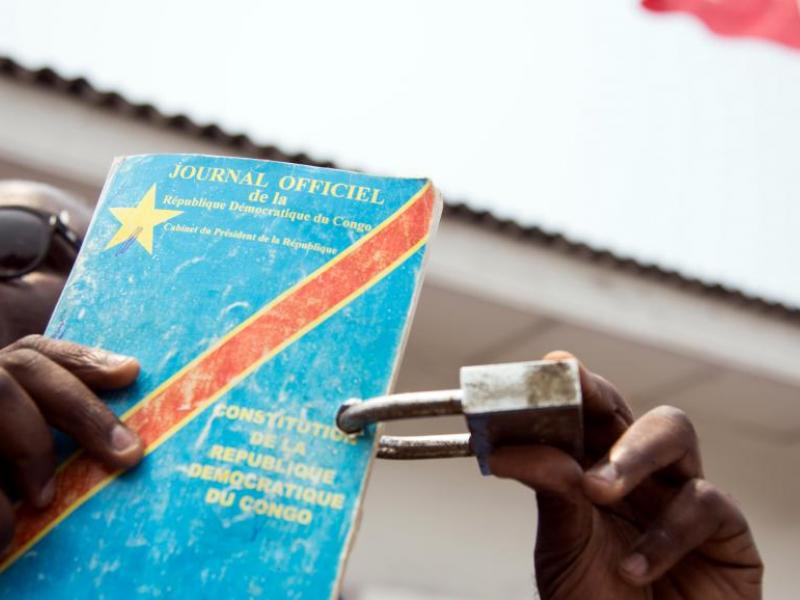
Constitutional debates grip DRC as power pushes for reforms
Kinshasa is hosting a series of high-profile academic symposia this week, with the Constitution taking center stage as the Democratic Republic of the Congo’s government intensifies its push for constitutional reform. Organized by the Ministry of Higher Education, Scientific Research, and Innovation, the three-day event kicks off today in the capital, with parallel sessions scheduled in Kisangani and Lubumbashi.
The initiative, led by Minister Sombo Ayanne Safi Mukuna Marie-Thérèse, aims to foster a deeper understanding of the 2006 Constitution’s strengths, weaknesses, and potential adaptations to the country’s evolving challenges. The colloquia will focus on three key themes: geostrategy in Kinshasa, sociological and environmental issues in Kisangani, and industrial transition and energy in Lubumbashi.
The ministry has called on academics, legal experts, and advanced students to participate, emphasizing the university’s role as a think tank for national progress. The stated goal is to produce actionable recommendations that strengthen democratic governance, the rule of law, and sustainable development.
The constitutional debate intensifies
The timing of these discussions is no coincidence. Parliament recently approved a draft referendum law, reigniting a political firestorm over the Constitution’s future. The ruling UDPS party, part of the Union sacrée coalition, is pushing for reforms, arguing that the current text is outdated and ill-suited to the nation’s needs. Critics within the coalition have labeled the 2006 Constitution a “trapped” framework, citing issues like nationality disputes, state management inefficiencies, and concerns about the feasibility of the 2028 elections.
Opposition groups and civil society, however, view the push for reform as a thinly veiled attempt to extend President Félix Tshisekedi’s tenure beyond the constitutionally mandated two-term limit. They allege that the government, mired in a negative public perception since Tshisekedi took office, is exploiting the crisis to cling to power. With the final term set to conclude in January 2029, the debate has become a lightning rod for political tensions.
Two camps emerge
The constitutional question has split the socio-political landscape into two opposing alliances. On one side, the Coalition Article 64 for the Defense of Constitutional Order (C64) stands firmly against any changes, warning that reforms risk destabilizing the country further amid ongoing security challenges linked to the M23 rebellion. On the other, the Congolese Coalition for Constitutional Change (C4) advocates for revisions, claiming widespread public support for modernization.
The symposia, which run from June 10 to 12, seek to bridge these divides by fostering evidence-based dialogue. As the government doubles down on its reform agenda, the academic community faces pressure to deliver solutions that reconcile political ambitions with national stability.
