
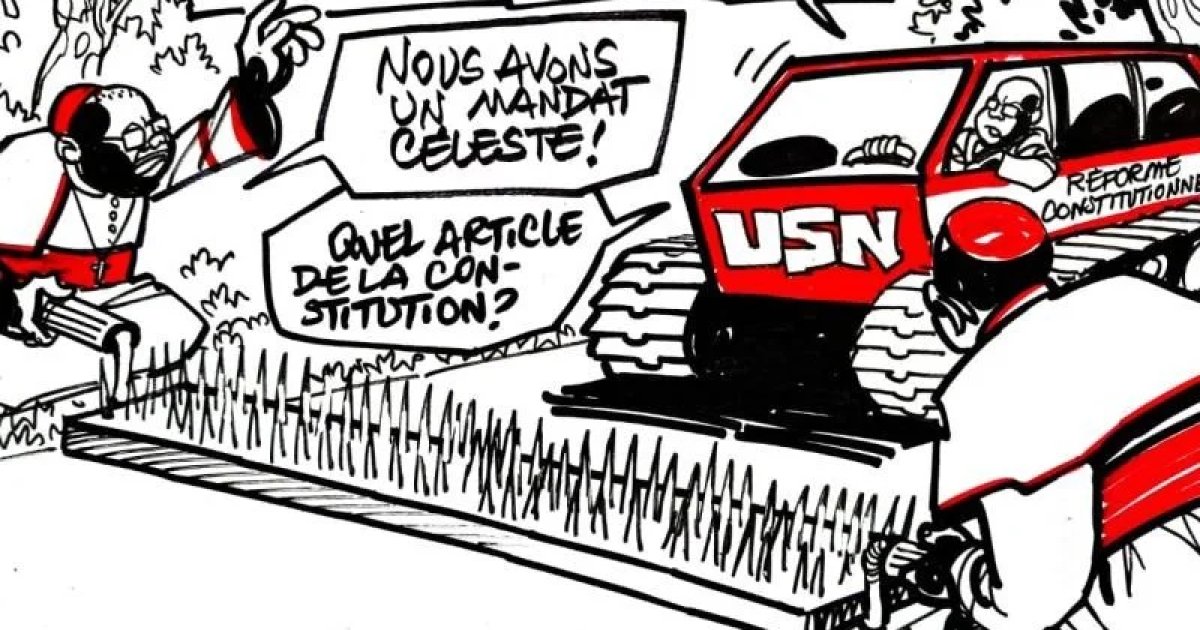
The Democratic Republic of the Congo has seen fresh political friction emerge this week as the National Episcopal Conference of the Congo (CENCO) strongly criticized a proposed constitutional amendment that could allow President Félix Tshisekedi to seek a third term in 2028.
The bishops urged Tshisekedi to uphold the oath he took before God and the Nation and reserved the right to announce a series of public actions. They also called on citizens to resist what they describe as a dangerous move that could destabilize the country and plunge it into civil war.
Civil war looms as constitutional reform gains momentum
Under the current Congolese Constitution, presidents are limited to two terms. Tshisekedi, in office since January 2019 and re-elected in 2023 for a second and final term, recently suggested he might pursue a third term. His supporters have since pushed for a referendum to amend the Constitution to allow this. Earlier this month, he indicated that such a referendum could be considered.
The Catholic Church’s historic resistance to term limits
The Catholic Church, which previously opposed former President Joseph Kabila’s attempts to bypass term limits, has now voiced its opposition to Tshisekedi’s potential bid. In an extraordinary plenary assembly held in Kinshasa from June 18 to 20, 2026, the 37 bishops, cardinals, and priests of CENCO issued a 17-point declaration warning that «the Nation is in peril!»
The bishops highlighted that despite multiple peace agreements, the country remains embroiled in conflict. Since 2022, armed groups such as the M23 Alliance and its affiliate, the River Congo Movement, have seized control of large parts of North and South Kivu, consolidating their de facto administration over occupied territories.
Escalating violence and health crises compound national instability
In Ituri and parts of North Kivu, other armed factions, including the Allied Democratic Forces (ADF), continue to carry out massacres, killing thousands. To make matters worse, the Ebola hemorrhagic fever outbreak has flared up in the eastern regions, raising concerns about further spread.
«We are deeply concerned,» the clergy stated, «by the increasing tensions fueled by the ruling majority’s campaign to amend the Constitution of February 18, 2006. This campaign, backed by state resources, is being conducted in an atmosphere of intimidation against dissenting voices within the majority, who remain silent out of fear of retaliation. Opposition protests are violently suppressed by police forces, often in collusion with the militia of a political party known as the ‘Force of Progress.’»
The bishops firmly rejected the necessity, urgency, or opportunity for constitutional change, insisting that the country’s priorities must be peace, social welfare, national unity, and cohesion.
Ruling coalition accuses bishops of undermining democracy
In response, the Sacred Union for the Nation (USN), a coalition of 400 political parties and movements supporting President Tshisekedi, condemned the bishops’ statement as an act of subversion aimed at undermining the country’s legitimate and democratically established institutions.
The USN declared in a statement that it was «appalled» by the bishops’ remarks, accusing them of «inciting public uprising and attempting to overthrow the constitutional order» through their rhetoric.