Congo constitution warning against republican pact violation
Congo’s Catholic Church warns against constitutional changes threatening republican pact
- Politics
The National Episcopal Conference of Congo (CENCO) has issued a stern warning against proposals to amend the Democratic Republic of Congo’s constitution of February 18, 2006. In a strongly worded statement, the Church emphasized that tampering with locked articles could lead to “enormous risks, including the country’s balkanization.”
Church opposes constitutional amendments
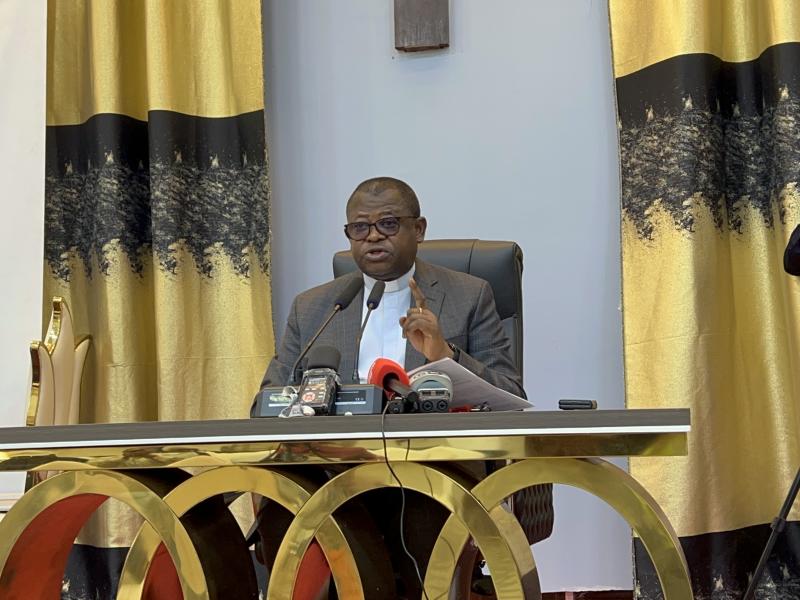
In a press briefing, CENCO Spokesperson Donatien Nshole condemned attempts he described as an effort to “secure another presidential term for the current head of state.” The Church views these proposals as a direct threat to “a hard-won political compromise established after decades of crises since independence.”
Concerns over electoral law and referendum process
The Episcopal Conference specifically criticized the recently passed electoral law, which it argues was adopted “under the pretext of addressing a legal vacuum.” According to CENCO, this law paves the way for a popular consultation that would, in violation of constitutional order, allow modifications to matters protected under Article 220—including the number and duration of presidential mandates.
“Article 220 is not just a legal provision; it is a bulwark against dictatorship and state capture,” Nshole emphasized. He warned that any forced change carries “grave dangers, including national fragmentation and the potential resurgence of civil war.” The statement highlighted concerns that political rivalries are increasingly taking on ethnic and tribal dimensions.
Call for constitutional stability
After what it described as “careful discernment,” CENCO concluded that there is “neither necessity, urgency, nor opportunity” to amend the constitution. The Church reaffirmed that its priority remains “peace, social welfare, national unity, and cohesion.”
The Episcopal Conference’s position underscores its longstanding role as a moral authority in Congolese politics, advocating for stability in a country where constitutional integrity has been a recurring subject of debate and contention.
