Chad seals Sudan border as conflict threatens regional stability
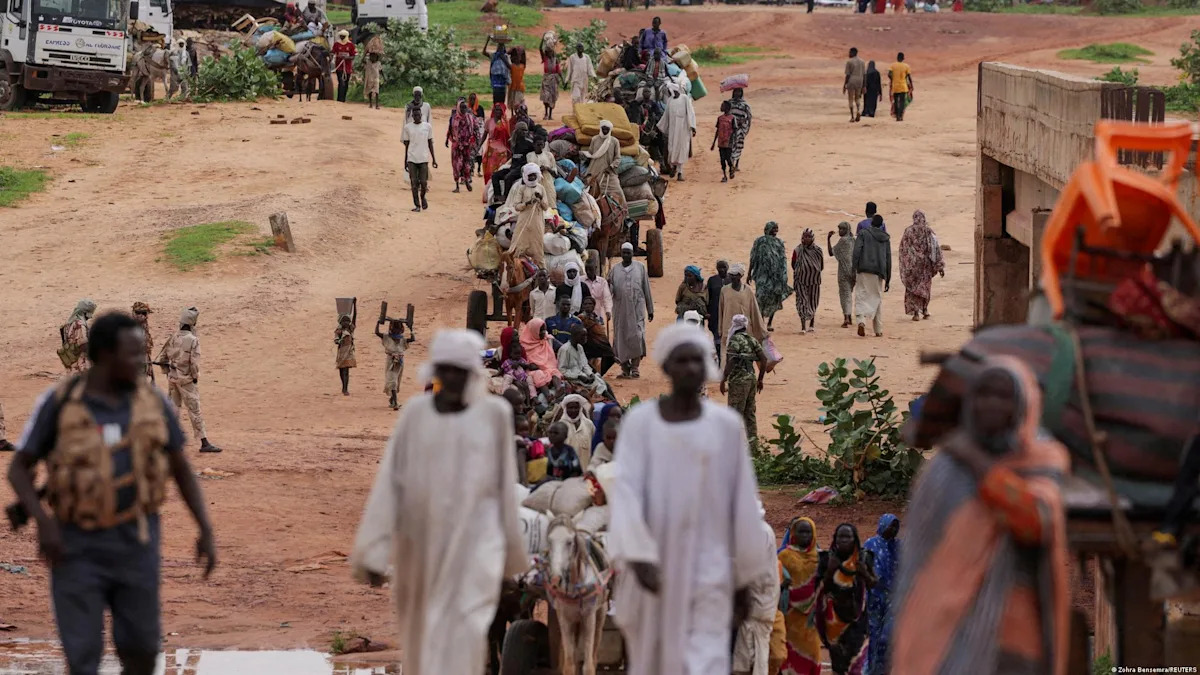
The ongoing conflict in Sudan has triggered a severe humanitarian crisis, compelling nearly one million people to seek refuge in neighboring Chad. The situation has been exacerbated by the fall of El-Fasher in North Darfur, which in just two weeks prompted the flight of almost 100,000 civilians. Of these, approximately 6,000 have managed to cross into Chad, placing immense strain on a nation already burdened by years of regional instability.
The 1,300-kilometer border between Sudan and Chad runs through vast desert areas that are exceptionally difficult to police. These regions, historically exploited by militias and rebel movements, are now under increased threat due to the expanding control of the Rapid Support Forces (RSF), which dominate most of the Darfur region.
Military tensions have been escalating since December 2024. A drone strike resulted in the deaths of two Chadian soldiers, and an incursion near Tiné in January 2025, attributed to the RSF, left seven people dead. In response to these direct attacks, N’Djamena made the decision to completely shut its border, citing the imminent danger of the Sudanese conflict spilling onto its territory.
Claims of neutrality amid persistent accusations
The government of Chad insists on its neutrality in the Sudanese war. However, multiple investigations, supported by satellite analysis, suggest that weapons originating from the United Arab Emirates may have passed through Chadian territory to supply the RSF. Chadian authorities have vehemently denied these allegations, highlighting that their own forces have been victims of strikes and incursions.
This complex situation is fueling internal divisions. In April 2025, several high-ranking military officers were dismissed, notably from the Zaghawa ethnic group, which holds significant influence within the security apparatus and has a history of opposition to the RSF.
A strategic pivot towards France
Following a period of strained diplomatic ties, the Chadian government is renewing its relationship with Paris. The crisis in Sudan has become a central point of discussion between President Mahamat Idriss Déby and French President Emmanuel Macron.
Previously, France provided essential intelligence support that was indispensable for securing the border. With that assistance having diminished, N’Djamena now views a revitalization of its relations with France as a crucial strategic move.
