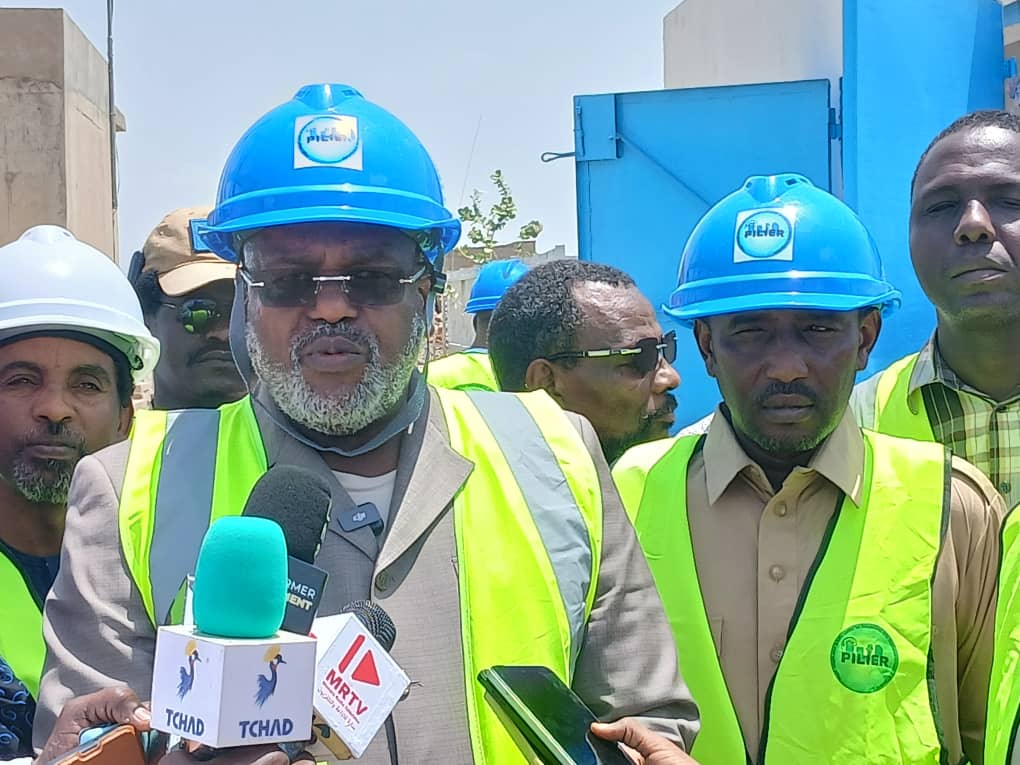
Chad officials assess flood control infrastructure in N’Djamena
The Minister of Urban Planning and Habitat, Mahamat Assileck Halata, conducted an on-site inspection of flood-prevention infrastructure in N’Djamena as the rainy season approaches. The June 25 visit targeted key components of the Integrated Project for Flood Control and Urban Resilience (PILIER), with the primary goal of verifying their operational readiness.
Comprehensive field assessment across critical sites
The ministerial delegation toured several strategic locations, including the Lamadji pumping station in the 10th district, the Chagoua warehouse managed by city hall, the N’Djari canal, the Toumaï Palace drainage system, the wastewater treatment facility, the Pedro construction site, and roadworks. A stop at the 7th district warehouse allowed officials to review the flood-fighting equipment deployed throughout the city.
Vandalism disrupts but doesn’t halt operations
During the inspection, Minister Halata condemned the theft of electrical cables from the Lamadji pumping station, which temporarily disrupted services. Despite this setback, three of the four pumps remain fully functional, ensuring continuous water management. New cables have been ordered with World Bank support and are expected to be installed within one to two days of arrival on July 1.
The minister confirmed that the station remains operational, pumping water efficiently with the remaining equipment. The damage, though significant, did not compromise the system’s core functionality.
Community reassurance and reconstruction commitments
The inspection concluded with a meeting in the Toukra-Mousgoum neighborhood, where residents whose homes were demolished by city authorities received assurances of reconstruction. The minister emphasized the government’s dedication to ensuring all PILIER infrastructure is fully operational before the rains intensify.
With field observations confirming smooth operations across inspected sites, authorities reaffirmed their commitment to sustainable urban resilience and flood-risk mitigation in Chad’s capital.
