
The Diplomatic Representation of Burkina Faso in France Faces a Crisis of Confidence
The recent requests for political asylum submitted by diplomatic staff from the Burkinabè embassy in Paris have sent shockwaves through the transitional authorities in Ouagadougou. Several employees of the embassy have formally applied for protection in France, citing personal safety concerns and the deteriorating political climate in their home country. This development underscores a broader sense of unease within the state apparatus, transcending individual circumstances.
A Context of Administrative Upheaval
This decision follows a series of administrative reshuffles within Burkina Faso’s diplomatic corps. The authorities in Ouagadougou recently recalled multiple foreign-based agents, a move officially framed as a restructuring of the diplomatic network. However, for many of the affected officials, this forced return represents a far more consequential disruption to their lives and careers.
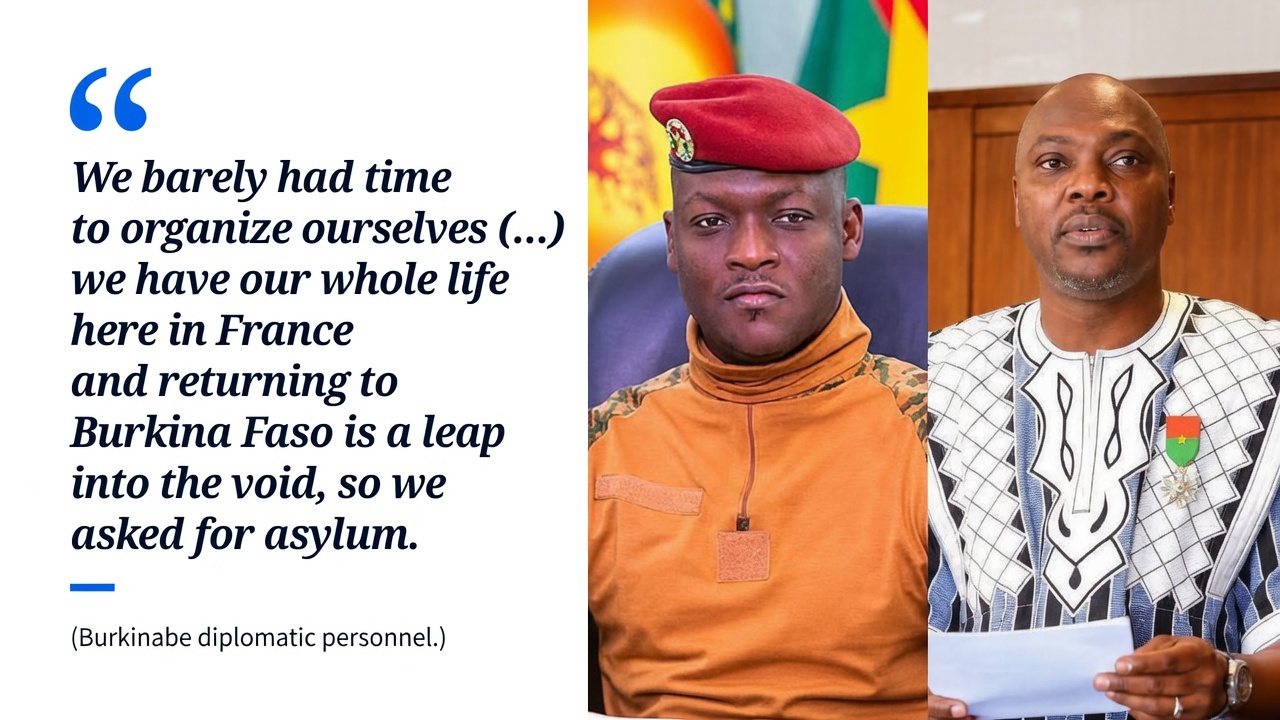
The staff’s public statement leaves little room for interpretation regarding their motivations:
« The situation left us with no time to prepare. France has been our home for years—our children attend school here, our lives are here. Returning to Burkina Faso at this stage feels like stepping into the unknown, which is why we sought asylum. »
These words reflect a deep sense of vulnerability. For many, the prospect of uprooting established lives in France—where some have built professional networks and raised families—poses an insurmountable challenge. The uncertainty extends beyond material concerns, as returning to a country grappling with political instability raises serious questions about personal safety and long-term prospects.
Security Concerns Amplify the Crisis
The timing of these asylum requests is particularly significant. Burkina Faso continues to face persistent security threats, with armed groups exacerbating instability across the region. Reports from human rights organizations have highlighted concerns about the conscription of civilians into military operations, often without adequate training or safeguards. While authorities dispute these claims, the fear among recalled diplomats remains palpable: many worry that a return could expose them to unforeseen risks, particularly if their prior criticisms of the regime or involvement in contentious policies make them targets.
A Centralized Governance Model Under Scrutiny
Critics argue that the transitional government’s decision-making process lacks consideration for the human impact of its policies. The abrupt recall of diplomats stationed abroad for years is seen as emblematic of a governance style that prioritizes administrative efficiency over the well-being of individuals and their families. This approach, according to detractors, fails to provide sufficient transition periods or support structures to mitigate the disruptions caused by such sweeping changes.
The symbolic weight of this affair cannot be overstated. When diplomatic personnel—whose role is to embody the authority of their state abroad—opt to seek protection from another nation rather than return home, it sends a powerful message about the erosion of trust in their own institutions.
Diplomatic Asylum: A Rare but Telling Phenomenon
Requests for political asylum from diplomats or embassy staff are exceedingly uncommon in international relations. Such cases typically signal a political or security environment so volatile that even representatives of the state feel compelled to seek refuge elsewhere. For the transitional government, this episode presents a significant reputational challenge. Despite claims of restoring national sovereignty and rebuilding public trust, the sight of its own diplomats turning to foreign protection raises serious questions about the regime’s stability and the security guarantees it offers to its officials.
The Human Face of Administrative Decisions
Beyond the political and diplomatic implications, this affair reveals the profound personal toll of administrative decisions. The embassy staff’s testimony sheds light on a reality often overlooked in official narratives: behind the recall orders are families, careers, and lives that hang in the balance. For some, the prospect of exile in France may be perceived as a lesser risk than the uncertainties of returning to a country where political tensions and security threats loom large. This episode serves as a stark reminder that high-level decisions can have far-reaching consequences for those tasked with representing Burkina Faso on the global stage.