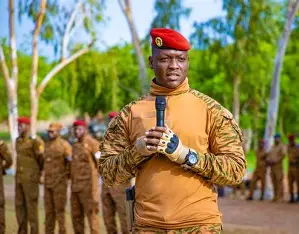
Burkina Faso’s diplomatic shift: is sovereignty about changing influence?
Burkina Faso ends its diplomatic ties with France: a bold move toward sovereignty or a shift in alliances?
On June 26, 2026, Burkina Faso made a decisive political statement by announcing the termination of its diplomatic relations with France. The government in Ouagadougou cited accusations of neocolonial practices, alleged interference in internal affairs, and support for destabilizing networks as the primary reasons behind this decision. While this marks a significant escalation in the strained relations between the two nations, it also reignites a broader discussion: what does true sovereignty entail?
The act of severing ties with a former colonial power is undeniably a sovereign choice, one that any independent state reserves the right to make. Yet the critical question remains: does this break lead to genuine autonomy, or does it merely replace one form of dependency with another?
Since 2023, Burkina Faso has progressively strengthened its partnerships with Russia, China, Turkey, and Iran. Military cooperation with Moscow has intensified, while economic ties with Beijing and Ankara have expanded. The government frames this as a strategic pivot toward a multipolar world. However, shifting alliances does not automatically guarantee independence. True sovereignty demands that decisions be driven solely by national interests, free from political, military, economic, or ideological dependence on any foreign power.
Will Mali and Niger follow Burkina Faso’s path?
Observers are closely watching whether Mali and Niger—the other two members of the Alliance of Sahel States (AES)—will adopt similar measures in the coming months. The three countries have increasingly aligned their political, diplomatic, and military strategies, particularly in their growing engagement with Russia. If Mali and Niger take comparable steps, it could reinforce perceptions of a unified regional approach. Yet this raises a pressing concern: are these decisions the result of independent national choices, or do they reflect a coordinated geopolitical alignment with a shared strategic partner?
Some analysts argue that a synchronized shift among the three nations might suggest adherence to a common roadmap. This possibility fuels a deeper debate: does sovereignty mean breaking free from one influence only to become dependent on another? History offers a clear lesson—great powers, regardless of their identity, prioritize their own geopolitical, economic, and strategic interests. A country that replaces Paris with Moscow, Beijing, or Ankara may not necessarily achieve full autonomy but could merely be trading one center of influence for another.
The real test of sovereignty
For Burkina Faso, the challenge now lies in proving that this diplomatic rupture is more than a symbolic gesture. True sovereignty will be measured by the country’s ability to finance its own development, secure its territory, process its natural resources domestically, strengthen its institutions, and pursue an independent foreign policy. It is not about the number of embassies closed or fiery speeches delivered—it is about the capacity to shape its own future.
The ultimate test of sovereignty lies in diversification. A genuinely free nation does not merely swap one ally for another; it cultivates partnerships without falling under the dominance of any single power. It ensures that the welfare of its people remains the cornerstone of every decision, regardless of external pressures. The question persists: when a country breaks ties with one power to embrace another, does it truly escape dependence—or merely exchange one form of control for another?
History suggests that real sovereignty is not achieved by swapping one master for another. It is built through self-determination, independent decision-making, and unwavering commitment to national priorities above all else.
