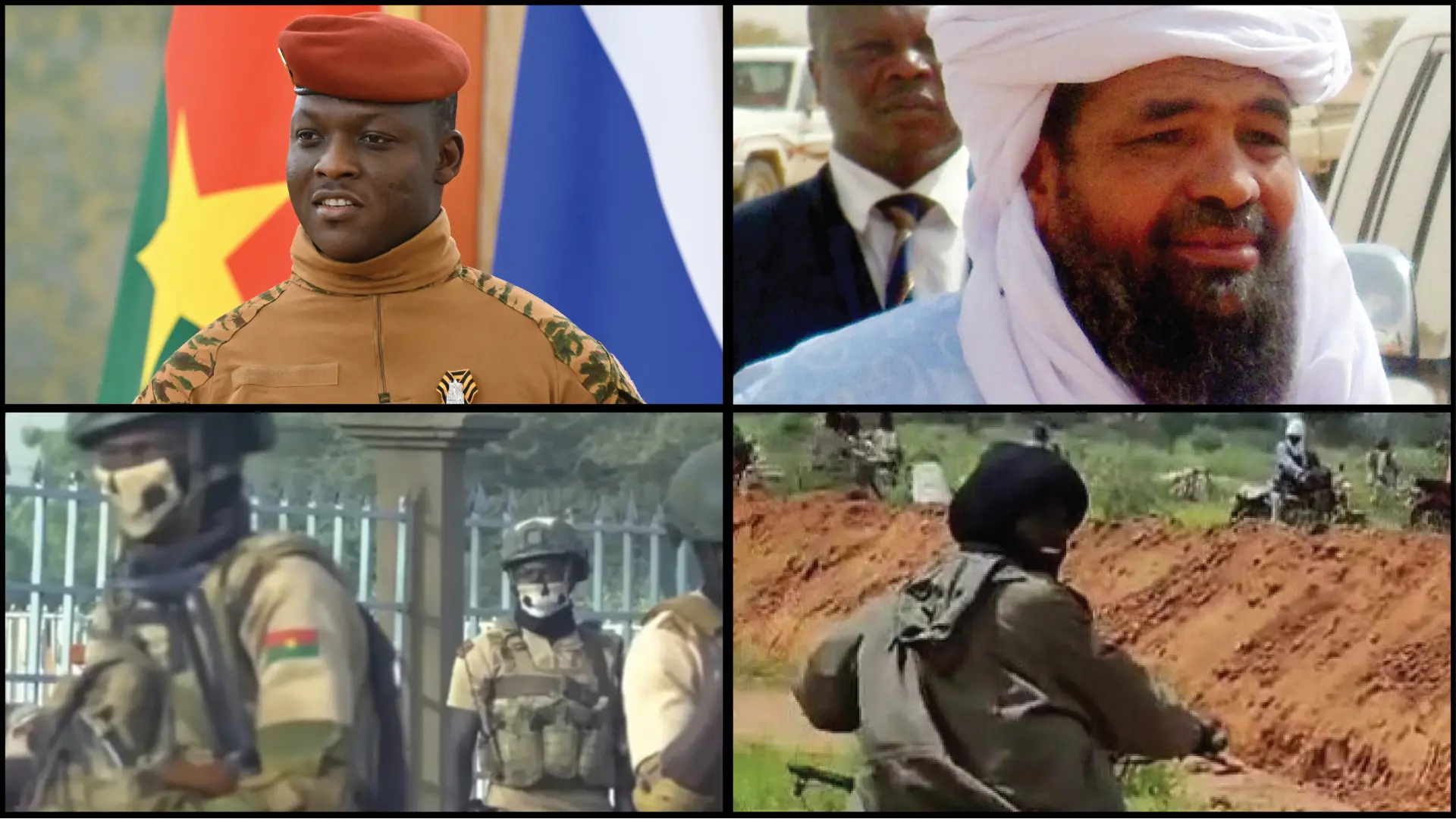
Burkina Faso: the chasm between captain traoré’s claims and documented atrocities
In Burkina Faso, a stark divergence exists between the official narrative presented by Captain Ibrahim Traoré and the grim realities meticulously documented by human rights organizations. At 36, Traoré, who ascended to power without electoral mandate and subsequently dissolved democratic processes, frequently addresses the public and press from the Koulouba palace, painting an optimistic portrait of the nation’s progress.
During a recent two-hour press briefing, the self-appointed leader extolled the purported achievements of his regime. He asserted that the Burkinabè army was successfully reclaiming vast swathes of territory, that national industries were experiencing a boom, gold reserves were accumulating, and infrastructure projects, such as highway construction, were advancing. Furthermore, he claimed an unprecedented level of freedom for the Burkinabè populace, a vision seemingly complete but for a patriotic soundtrack and a fluttering national flag.
A disturbing counter-report from Human Rights Watch
However, this carefully constructed image of prosperity and security crumbles under the weight of a comprehensive 351-page report from Human Rights Watch (HRW), released concurrently with Traoré’s pronouncements. Titled “No One Will Escape,” the report unveils a harrowing account of 1,837 civilian fatalities over a two-and-a-half-year period. These deaths are attributed to various actors, including the Burkinabè army, the Volunteers for the Defense of the Homeland (VDP) militias, and jihadist groups like JNIM. Crucially, the HRW investigation highlights a systematic pattern of killings perpetrated by state-affiliated forces, often executed with military drones providing overhead surveillance and under direct command.
The report details grave allegations of war crimes and crimes against humanity, with a particular focus on the ethnic targeting of the Fulani community. Disturbing incidents include the summary execution of 223 civilians, among them 56 children, in Nondin in February 2024. Hundreds more perished in Baraboulé in December 2023, and a massacre near Solenzo in March 2025 claimed the lives of 130 Fulani individuals. Evidence presented includes extensive survivor testimonies, satellite imagery confirming mass graves, and detailed death lists. These findings starkly contradict any suggestion of a mere “Western conspiracy.”
“Recaptured” towns: sites of documented massacres
Ironically, Captain Traoré proudly cited towns like Baraboulé and Pétégoli as examples of successful military recaptures. Yet, these very locations are central to HRW’s documentation of Operation Tchéfari 2, poetically named “The Warriors’ Honey” in Fulfulde. This operation, according to HRW, involved the killing of hundreds of civilians across 16 villages. While state television lauded it as a “success,” survivors recount it as a brutal slaughter. Traoré’s explanation that these killings are the work of terrorists disguised in military uniforms, coordinating with drones and multiple battalions, strains credulity, especially given his own dismissive characterization of terrorists as individuals who “read the Quran in the bush.”
The deliberate omission of the Fulani crisis
During his extensive interview, the term “Fulani” was conspicuously absent – not once was it uttered. This omission is profoundly significant, akin to discussing World War II without acknowledging the Jewish Holocaust. HRW’s report meticulously documents the systematic persecution of the Fulani community, which constitutes 8% of Burkina Faso’s population. They are collectively accused of terrorism, subjected to village-by-village massacres, and displaced by the hundreds of thousands. The report even quotes Traoré himself from February 2023, warning Fulani leaders, “There will be many dead. And it will be more complicated for your community.” His presidential guard chief was reportedly even more explicit: “We will kill them all.” The evidence suggests a dire problem not just with Fulani individuals, but a severe problem for the Fulani community in Burkina Faso.
“Freedom” under an authoritarian grip
Traoré’s assertion that Burkinabè citizens enjoy “much greater freedom” than Europeans rings hollow against a backdrop of severe repression. In reality, this “freedom” often translates into the liberty to disappear. Journalists have been forcibly abducted and conscripted into militias, independent media outlets have been shuttered, human rights websites blocked, and the electoral commission abolished. The reinstatement of the death penalty further underscores the regime’s authoritarian tendencies.
Adding to this climate of control, state-sponsored troll networks, known as the “BIR-C” (Rapid Communication Intervention Battalions), actively flood social media platforms with propaganda and deepfake content designed to glorify Captain Traoré. The sophistication of this disinformation campaign makes even the propaganda efforts of regimes like Kim Jong-un appear rudimentary by comparison.
Justice: a selective application
Human Rights Watch advocates for an investigation into Captain Traoré’s command responsibility for the documented atrocities. Six high-ranking generals are implicated in the report, yet none have faced prosecution. The junta’s decision to withdraw from the International Criminal Court (ICC) sends a clear message: a reluctance to engage with international justice mechanisms often signals an unwillingness to be held accountable. While massacres of hundreds of civilians are dismissed as “terrorist perfidy,” Traoré publicly humiliates corrupt traffic officers caught pocketing trivial sums, revealing a skewed sense of justice and priorities.
The convenient scapegoat of Western influence
Any criticism directed at Traoré’s regime is swiftly dismissed as “Western interference.” Resolutions from the European Parliament are branded as meddling, advice from the French army chief is told to “mind his own business,” and NGOs, media, and the internet are all labeled as purveyors of lies and fake news. Even the detailed 351-page HRW report, based on 450 interviews, is conveniently declared “fake.” This strategy positions Traoré as the sole arbiter of truth.
While acknowledging the historical truth of French colonial exploitation in Africa, using this legitimate grievance as an impenetrable shield against accountability for internal massacres echoes the tactics of figures like Mugabe, but at an accelerated pace. Anti-imperialism, however valid, does not confer a license to commit atrocities against one’s own population.
In a final, chilling exhortation, Traoré encourages Burkinabè citizens to “have children” because “the land is rich.” An ironic statement, given that the same rich land is increasingly becoming a burial ground for those caught in the country’s escalating violence.
