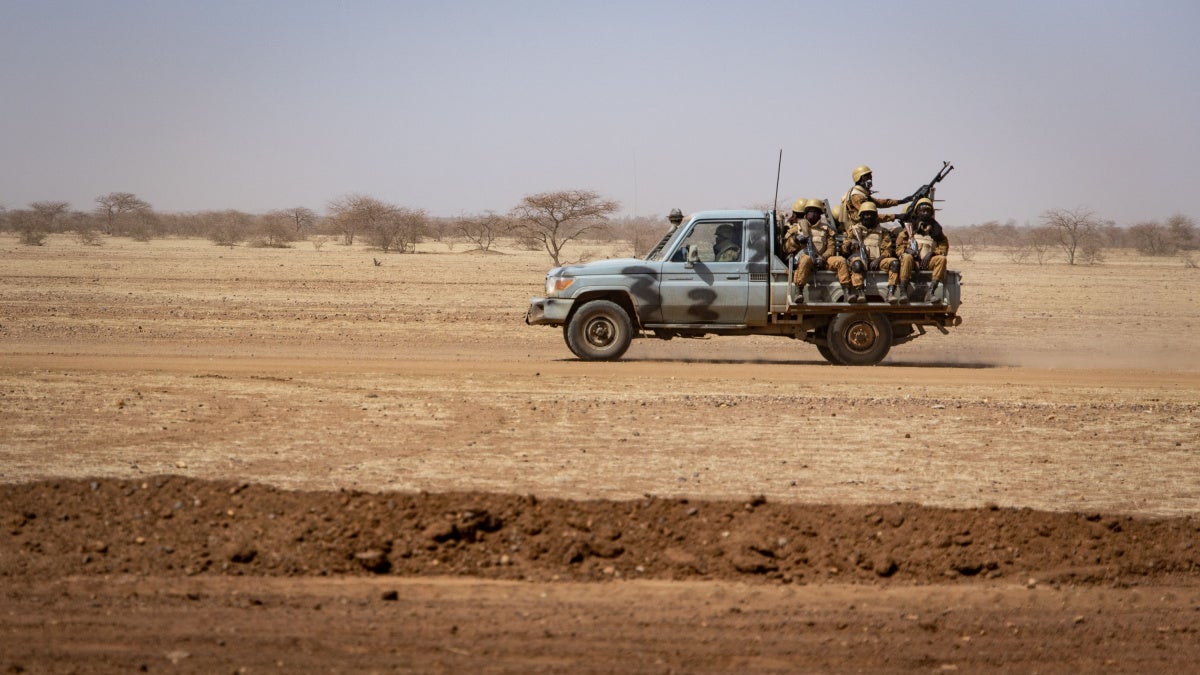
Burkina Faso crackdown on civil society: restrictive laws and repression
Burkina Faso’s military government tightens grip on civil society
Nairobi — Burkina Faso’s military leadership has escalated its crackdown on civil society through restrictive legislation, administrative pressures, and punitive measures targeting both national and international organizations. This alarming trend, highlighted by Human Rights Watch, the International Federation for Human Rights (FIDH), the World Organisation Against Torture (OMCT), and the Kisal Observatory, raises serious concerns about the suppression of independent voices and humanitarian work in the country.
The government’s actions include the dissolution of 118 civil society groups on April 15, 2026, citing compliance issues under the July 2025 Associations Law. However, authorities provided no concrete evidence beyond vague allegations of non-compliance, leaving many organizations—including human rights defenders and women’s rights groups—operational and legally compliant under the same law.
Systematic suppression since the 2022 military takeover
Since seizing power in September 2022, Burkina Faso’s military authorities have systematically targeted NGOs, independent media, human rights defenders, and peaceful dissent. The crackdown intensified in 2025 with suspensions, bans, and expulsions of dozens of local and international organizations under vague administrative pretexts or in retaliation for criticism.
Key incidents include:
- The arbitrary detention of humanitarian workers and civil society activists, including the forced disappearance of human rights defenders and journalists.
- The introduction of a 2025 Family Code allowing authorities to revoke citizenship for those deemed to act against state interests, raising fears of statelessness.
- The imposition of burdensome requirements, such as a statistical visa for conducting independent research, which critics argue stifles data collection in an already restricted environment.
- The expulsion of international staff, such as Carol Flore-Smereczniak, the UN’s top representative in Burkina Faso, in August 2025 following a UN report on child rights violations.
Legal loopholes and government overreach
The July 2025 Associations Law, ostensibly designed to regulate non-profits and combat money laundering, has instead expanded government control over civil society. It imposes heavy compliance burdens, including mandating Burkinabè nationals in key leadership roles for foreign NGOs—exposing them to personal risks. The law’s one-year compliance window has not yet expired, raising questions about the legality of the mass dissolutions.
Human rights experts argue that the government’s actions violate international human rights law, which protects freedoms of expression and association. Restrictions must be necessary, proportionate, and non-discriminatory—criteria Burkina Faso’s measures fail to meet.
Humanitarian impact and ongoing risks
In 2025, authorities suspended or revoked the licenses of nearly 20 foreign NGOs, including Comunità di Sant’Egidio and Diakonia, citing procedural non-compliance. Over 70 humanitarian workers, mostly Burkinabè, have been detained since 2022, with cases like the International Group Safety Organization (INSO) staff—accused of espionage before being released in December 2025—highlighting the misuse of emergency decrees for suppression.
Meanwhile, forced conscription under a 2023 general mobilization decree has been used to silence critics, including journalists and activists. At least six journalists and three activists were released between July and October 2025, but others, like investigative journalist Serge Oulon, remain missing.
A call for accountability
Civil society leaders emphasize that an independent and vibrant civil society is essential for holding power to account and amplifying marginalized voices. Drissa Traoré, Secretary-General of FIDH, stated, « A strong and independent civil society acts as a safeguard against abuse of power and amplifies the voices of marginalized communities. The Burkinabè authorities must allow civil society organizations to operate freely and uphold fundamental rights. »
The international community has also condemned Burkina Faso’s actions. Ilaria Allegrozzi of Human Rights Watch noted, « The scale of the dissolutions is one of the most severe blows to civil society since the military takeover and sends a chilling message to others. »
As Burkina Faso grapples with a decade-long Islamist insurgency, the military’s repression of civil society risks deepening the country’s humanitarian crisis and undermining democratic resilience.
