
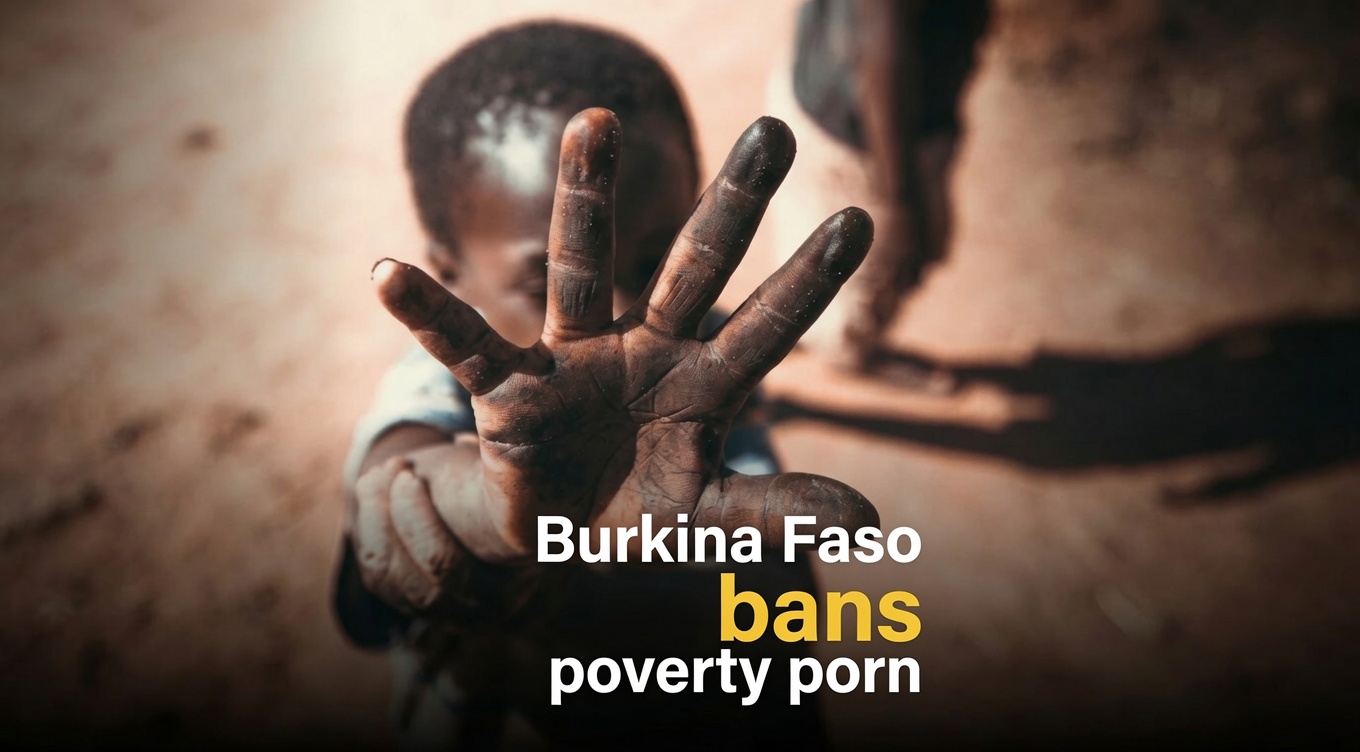
In a decisive move to uphold human dignity, Burkina Faso has formally prohibited the practice known as poverty porn—the deliberate exploitation of human suffering for emotional manipulation or financial gain. The transitional government has enacted stringent regulations against this unethical approach, fundamentally altering how crises are portrayed and shared in the digital age.
Ethical concerns drive legislative action
The proliferation of social media platforms has turned human misery into a commodity, often commodifying the most vulnerable. The typical pattern involves close-up footage of malnourished children, internally displaced families, or communities in dire straits, designed to evoke immediate emotional responses. While creators and organizations may claim altruistic motives, the method itself raises profound ethical questions. By reducing individuals to passive objects of pity, these portrayals strip away their agency, dignity, and personal narratives.
National image and security under scrutiny
Beyond ethical considerations, this ban reflects broader geopolitical and security concerns. Burkina Faso is navigating a multifaceted crisis, and the widespread dissemination of images depicting the nation solely through a lens of despair undermines its international standing. Authorities argue that such visuals not only harm individual dignity but also contribute to a distorted global narrative—one that portrays the country as helpless and incapable of addressing its challenges. The objective is not to conceal reality but to reclaim control over Burkina Faso’s public image and narrative.
Criticism of censorship and hidden realities
However, the measure has sparked controversy among civil society groups and political opponents. Critics contend that the ban is not merely an ethical safeguard but a strategic tool to suppress information. By prohibiting the filming of poverty and distress, the transitional leadership, including Captain Ibrahim Traoré, is accused of manipulating public perception. They argue that this legislation effectively conceals the true scale of the humanitarian crisis—millions displaced by insecurity, communities under siege with limited access to food and medical care, and families grappling with daily survival.
For detractors, the law functions as a smokescreen, prioritizing the preservation of a flawless transitional image over transparency. The reality on the ground remains stark: a nation in turmoil, where resilience is tested daily, yet visibility into its struggles is systematically curtailed.
Redefining humanitarian communication
Despite the controversy, the new legislation compels humanitarian organizations and content creators to reassess their methodologies. How can urgent appeals for aid be made without resorting to exploitative imagery or violating censorship laws? The solution lies in shifting toward solution-oriented narratives and field-based journalism that highlight resilience, collective action, and local initiatives rather than perpetual victimhood. This approach not only preserves the gravity of the situation but also restores dignity to those affected, positioning them as active participants in their own recovery.
In essence, Burkina Faso’s stance challenges the global community to confront crises with respect and integrity. It is a call to recognize suffering without exploiting it, to bear witness without dehumanizing, and to support change without silencing the voices that need to be heard the most.