
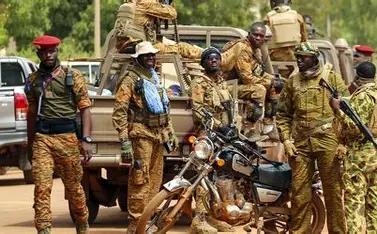
Once again, the cost of conflict has been staggering. Recent assaults by armed groups have claimed the lives of at least fifty soldiers and members of the Volunteers for the Defense of the Homeland (VDP), a civilian force mobilized to bolster the nation’s security. While such figures demand attention, they risk painting an incomplete picture—one that reduces a complex struggle to a mere tally of losses. In reality, these attacks signal a pivotal phase in Burkina Faso’s fight against terrorism, where every victory on the battlefield exposes new vulnerabilities.
when numbers fail to tell the whole story
In asymmetric warfare, casualty counts alone cannot measure progress. Terrorist factions, stripped of their ability to hold ground against advancing Burkinabè forces, have shifted tactics. No longer capable of sustained confrontations, they now rely on opportunistic strikes designed to inflict psychological damage rather than territorial gains.
These brutal assaults—often targeting isolated outposts or supply convoys—serve a dual purpose. First, they aim to erode military morale, exploiting the emotional toll of relentless vigilance. Second, they seek to fracture the fragile trust between civilians and defenders. Each loss suffered by the army is not just a setback; it is the inevitable price of an offensive strategy that demands boots on the ground. To dismantle insurgent networks in rugged terrain, soldiers must take calculated risks, venturing beyond fortified positions. The current surge in casualties reflects that very reality: progress comes at a cost.
the VDP: a citizen-led shield against extremism
Civilian volunteers have become a primary target of these attacks, their growing role in Burkina Faso’s defense strategy drawing fierce retaliation. While critics outside the country have dismissed them as inadequately trained or expendable, their integration marks a turning point in the nation’s security doctrine.
The VDP’s contribution to the war effort rests on three pillars:
- localized defense: Their intimate knowledge of terrain and community dynamics provides a tactical advantage that conventional forces often lack.
- self-reliance: This approach rejects foreign intervention as the primary solution, asserting that Burkina Faso’s security must be built from within.
- structured resilience: Initially plagued by logistical gaps, the VDP has since been integrated into a more robust command structure under military oversight, transforming them into a frontline deterrent.
The persistent targeting of VDP positions underscores their strategic significance. For insurgents, these volunteers represent an existential threat—a population refusing to surrender and instead taking up arms to protect its own.
cutting off the enemy’s lifeline
The Burkinabè military’s response extends beyond direct combat. Acknowledging the shift in enemy strategy, commanders are prioritizing the disruption of terrorist supply chains. Recent losses have highlighted the urgent need for better convoy protection and refined tactical intelligence.
Achieving full strategic autonomy is no small feat. Victory will demand patience, endurance, and the acceptance of tactical setbacks as the enemy clings to its dwindling logistical options. Beyond the immediate sorrow of sacrifice, Burkina Faso is forging a new path to survival—one forged in blood, but guided by clarity, not oversimplification.