
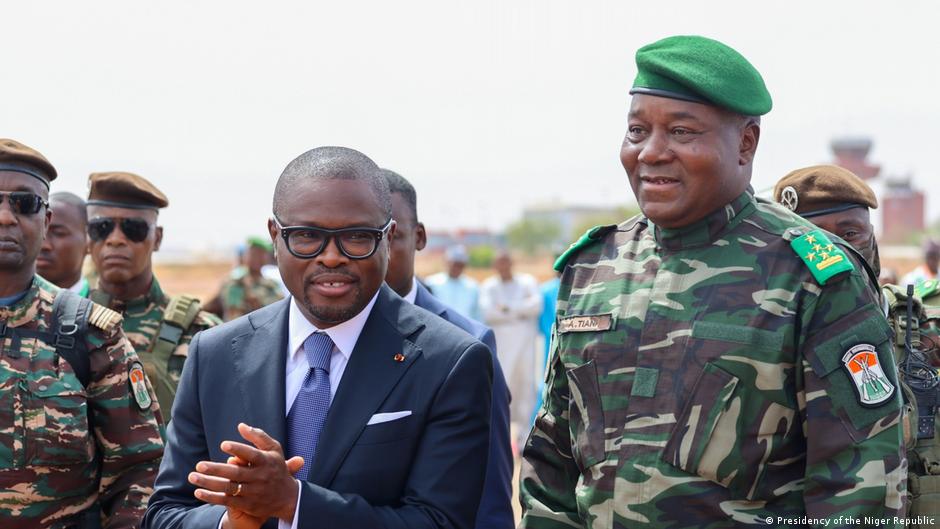
After three years of strained relations and a closed border, a joint expert committee has delivered encouraging progress toward resolving the standoff between Benin and Niger. The committee’s latest findings highlight shared ground on security protocols, transit regulations, and key legal and economic frameworks. However, Niger has set three non-negotiable conditions that must be met before political ratification can proceed—conditions that could further delay the border’s reopening.
What lies ahead for a dispute that has crippled economies and disrupted lives on both sides of the border?
three uncompromising conditions set by Niger
Nigerian authorities have outlined three critical, non-negotiable prerequisites for a sustainable reopening of the Benin-Niger border, shut since 2023:
- Mutual non-aggression pact: A formal defense and security agreement must be signed, explicitly prohibiting both nations from allowing their territories to be used as staging grounds for destabilizing actions against the other. While analyst Régis Hounkpè of InterGlobe Conseils notes this is standard practice, the three-year standoff has made such a commitment seem extraordinary.
Hounkpè emphasizes the need for pragmatic implementation: “The agreement must not be just symbolic. Both Benin and Niger need to demonstrate through action that neither will tolerate aggression or destabilization efforts originating from their soil.”
- Real-time intelligence sharing: Establishing a joint intelligence cell to monitor threats in real time—particularly terrorism and cross-border trafficking—is essential. Hounkè highlights the reciprocal nature of this measure: “Trust is the cornerstone. Both countries must be confident that no hidden agendas or destabilization plots exist on either side.”
- Transparency on foreign military presence: Niger demands full disclosure of any foreign military forces or defense partnerships Benin may have near the shared border. “This touches on sovereignty,” Hounkpè explains. “Benin is free to engage in military cooperation with any partner—France, China, Russia, or others—as long as those alliances aren’t used to threaten Niger’s security.”
Hounkpè adds a pragmatic note: “No nation benefits from exporting instability. These partnerships must serve regional stability, not undermine it.”
These demands reflect deep-seated political distrust following the 2023 military takeovers in both countries. Niger’s leaders are prioritizing territorial security and asserting their sovereignty in a region where external alliances often spark regional tensions.
economic fallout from the closed border
The border closure has paralyzed a vital trade corridor. For landlocked Niger, Benin is the primary gateway to the sea—nearly 70% of its imports pass through Cotonou’s port. This route is equally critical for Mali and Burkina Faso, also landlocked and members of the Alliance of Sahel States (AES), who rely on Benin for fuel, construction materials, and food staples like rice.
Alternative routes via Togo or Nigeria are longer, riskier, and up to 50% more expensive in logistics costs. The suspended flow of oil through the 2,000-kilometer Niger-Benin pipeline—designed to export up to 90,000 barrels daily—has cost Niger millions in lost revenue. Cotonou’s port, once a regional hub, now faces severe congestion, with container backlogs and reduced activity crippling customs revenues and local businesses.
Benin, too, is suffering. The blockade has diverted trade to neighboring ports, eroding its status as a regional logistics leader. Sectors like wholesale trade, transport, and logistics have seen revenue drops of up to 60%. Families and businesses on both sides of the border are feeling the pinch—markets are quieter, prices are rising, and communities are increasingly isolated.
human cost of isolation
The closure extends beyond economics. Families separated by the border face immense hardship. Overland travel has been replaced by perilous pirogue crossings, raising safety risks and costs. Vulnerable populations, including small traders and farmers, are hardest hit. Markets in Malanville (Benin) and Gaya (Niger) report up to 50% fewer customers, with many shops forced to close.
The economic strain has also fueled smuggling and extortion networks, further destabilizing local communities. With livelihoods at stake, the urgency to reopen the border is not just economic—it’s humanitarian.
a new chapter in regional diplomacy
The thaw in relations began with Benin’s presidential transition. President Romuald Wadagni took office in June 2026 and quickly prioritized dialogue. His visit to Niamey on June 2 marked a turning point, sparking the formation of the joint expert committee.
According to Hounkpè, the leaders of both nations are now recognizing a hard truth: “Geopolitics must yield to geography. They have no choice but to cooperate—their survival depends on it.”
He stresses the need to move beyond ideological divisions: “The focus must be on economic survival, logistical continuity, and shared security challenges. Terrorism and instability don’t respect borders.”
The most likely outcome is a phased reopening, starting with essential goods under tightened controls. If successful, Hounkpè believes the agreement could set a positive example for the AES and ECOWAS—much like the recent economic-driven rapprochement between Mali and Côte d’Ivoire.