Benin Niger border thaw raises hopes for economic revival
Benin-Niger border thaw: a thaw that could revive trade ties
A joint committee of Beninese and Nigerien experts has delivered its verdict on reopening their shared border, sparking cautious optimism. While progress has been made on security, transit logistics, and key legal and economic frameworks, Niger has set three stringent conditions it calls “non-negotiable,” potentially delaying final political approval.
What trajectory lies ahead for this three-year-old crisis, which has left deep economic and humanitarian scars across both nations?
Three “non-negotiable” prerequisites
Nigerien authorities have laid down clear, uncompromising terms for a lasting border reopening, sealed shut since 2023. These demands reflect deep-seated concerns over security and sovereignty.
- Formal defense pact: Niamey insists on a binding mutual defense agreement with Benin, explicitly prohibiting either nation from allowing its territory to be used as a launchpad for destabilizing the other.
Regis Hounkpe, senior analyst and executive director of InterGlobe Conseils, notes that while such commitments may seem routine, their explicit formalization carries weight in today’s tense climate. “The principle is self-evident—Benin won’t attack Niger, just as Niger won’t attack Benin. But given three years of frost and tension, putting this in black and white feels extraordinary. The real challenge lies in implementation. Both sides must ensure this clause is applied, not just inked on paper.”
- Real-time intelligence sharing: The second condition mandates a joint intelligence cell to facilitate instantaneous data exchange, particularly on terrorism and cross-border trafficking.
Hounkpe praises this move as reciprocity in action, emphasizing its strategic value. “This cell must serve as a safeguard, ensuring neither side harbors destabilizing ambitions. Trust is the foundation here.”
- Military transparency: The third demand is equally pivotal—full disclosure of any foreign military presence or deployments near the border, especially those involving Western partners.
“This touches on sovereignty,” Hounkpe reflects. “President Wadagni has underscored Benin’s freedom to forge international partnerships, be it with France, China, Russia, or others. The key is that these alliances aren’t weaponized to destabilize Niger. Benin’s sovereignty is non-negotiable. Pragmatically, no nation benefits from exporting instability.”
These conditions stem from profound mutual distrust, rooted in the 2023 military takeovers in both countries. Niger seeks reassurance that its sovereignty and territorial integrity remain uncompromised.
The cost of a closed border for Niger
Without meeting these prerequisites, the border remains shut—but the stakes couldn’t be higher. This closure throttles a vital trade artery linking the two nations. As a landlocked state, Niger relies on Benin as its primary maritime gateway, with nearly 70% of its imports transiting through Cotonou. The port’s role extends to neighboring AES member states—Mali and Burkina Faso—which also depend on Benin for essential supplies like construction materials, fuel, and food staples such as rice.
Alternate routes are longer, riskier, and logistical costs have surged by 30 to 50% in less than three years. The suspension of oil flows from Niger’s Agadem fields to Benin’s Sèmè-Kpodji terminal has compounded losses, depriving Niger of anticipated revenues from its 2,000 km pipeline—a project designed to export 90,000 barrels daily.
And for Benin?
Benin, too, bears the brunt of the shutdown. Transit fees once generated substantial revenue, but today, congested ports and clogged supply chains have slashed activity across logistics, wholesale trade, and transportation sectors. Customs receipts have plummeted by up to 60% in some areas, while diverted shipments now flow through Togo and Nigeria, eroding Benin’s reputation as a regional trade hub.
A shared macroeconomic imperative
Regis Hounkpe frames the mutual benefits of reopening the border in stark terms: “Reopening would restore the flow of goods, reviving Cotonou’s port vitality after three grueling years. Benin’s economy, though diversified, has suffered. But more critically, it would allow transporters, logisticians, and businesspeople on both sides to reconnect with Benin’s coastal access—a lifeline for landlocked Niger.”
Human toll of the blockade
The crisis has taken a heavy human toll. At Malanville in Benin and Gaya in Niger, market vendors report customer traffic down by nearly half. Scores of shops have shuttered, incomes have vanished, and unemployment has risen. Forced detours via Nigeria have inflated transport costs, leaving essential goods scarce and prices soaring on local markets.
Family ties fray as overland travel becomes perilous; pirogue crossings are dangerous alternatives. Isolated communities face mounting hardship, fostering smuggling and extortion networks. The economic strain has pushed many into precarious living conditions.
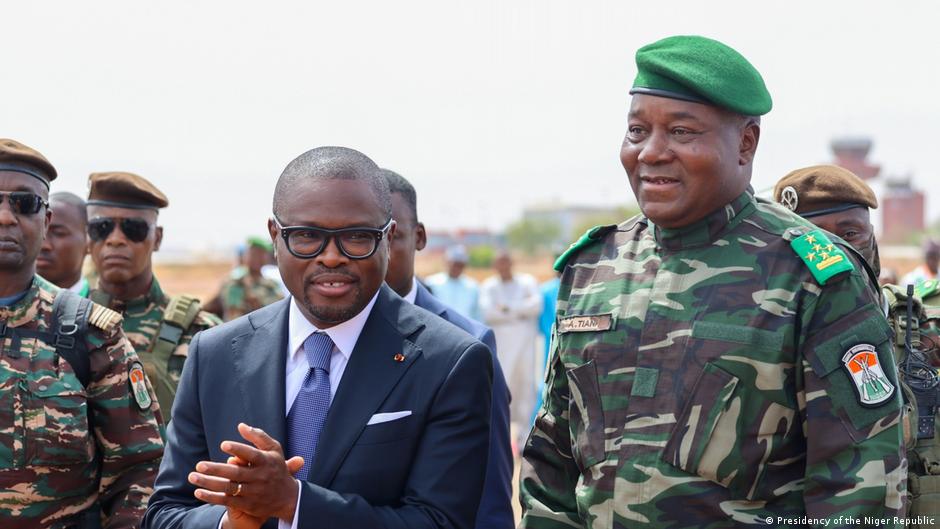
The impetus for dialogue came from economic imperatives after Romuald Wadagni’s election in Benin. Within days of his inauguration, he traveled to Niamey on June 2, 2026, reviving negotiations that culminated in the joint expert committee’s formation.
Hounkpe believes both nations must transcend political divides. “Today’s leaders are practicing pure geopolitics—what I call geography-driven politics. They’re condemned to cooperation, condemned to coexistence. Ideology must yield to pragmatism.”
“The bottom line is survival: economic, logistical, and security imperatives, including counter-terrorism efforts that threaten regional stability.”
Progressive border reopening appears likely, with priority goods allowed through under heightened scrutiny. If negotiations succeed, Hounkpe foresees ripple effects across the AES and ECOWAS. “This détente could set a precedent, much like the recent economic-driven rapprochement between Mali and Côte d’Ivoire.”
