
After three years of strained relations, a joint expert committee has delivered a breakthrough in the diplomatic standoff between Bénin and Niger. Their report outlines a framework for reopening the shared border, addressing longstanding security, transit, and legal challenges. However, Niamey’s insistence on three non-negotiable conditions may delay final political approval.
Niamey’s tough stance on border reopening
Nigerian authorities have set three conditions they insist must be met before the border with Bénin can reopen. These demands reflect deep concerns over security and sovereignty following years of diplomatic friction.
- Mutual non-aggression pact: A formal defense agreement would prohibit either nation from allowing territory to be used as a launchpad for attacks against the other.
- Shared intelligence hub: A real-time information-sharing center would focus on counterterrorism and cross-border trafficking, ensuring transparency.
- Military transparency: Complete disclosure of foreign military presence or partnerships near the border to prevent perceived threats to sovereignty.
Analyst Régis Hounkpè, executive director of InterGlobe Conseils, calls the mutual non-aggression clause “an obvious necessity” but cautions its practical enforcement will require trust-building. “Both sides must demonstrate they won’t destabilize each other,” he notes. “This isn’t just about signing papers—it’s about action.”
On intelligence sharing, Hounkpè praises the initiative as “mutually beneficial,” stressing that transparency in counterterrorism efforts is critical for regional stability. As for military transparency, he emphasizes that Bénin retains sovereign rights over partnerships but must reassure Niger that alliances won’t be used against it. “Bénin isn’t obligated to abandon its partnerships, but it must avoid actions that undermine Niger’s security,” he explains.
Economic fallout from a closed border
The border closure since 2023 has crippled trade flows, with severe consequences for both economies. Niger, a landlocked nation, relies on Bénin for 70% of its imports, including fuel, food, and construction materials. The detour through Nigeria and Togo has increased logistics costs by 30 to 50%, straining budgets and supply chains.
The Niger-Bénin pipeline, a $4.5 billion project linking Agadem’s oil fields to the port of Sèmè-Kpodji, has also faced suspension. With 90,000 barrels per day halted, the shutdown has cost Niger millions in lost revenue—an unsustainable burden for a nation already grappling with economic strain.
Meanwhile, Bénin has suffered collateral damage. The port of Cotonou, once a regional hub, now faces congestion as diverted cargo clogs its terminals. Revenue from transit fees has plummeted, with some sectors seeing a 60% drop in customs receipts. Trucking, wholesale trade, and logistics firms have slashed operations, leaving thousands unemployed.
Human cost of isolation
The crisis has devastated local communities. At Malanville and Gaya border crossings, markets have seen customer traffic halve. Shop owners shutter businesses, while families split by the closure face skyrocketing transport costs and dwindling access to essential goods. The rise in smuggling and extortion along alternative routes has further eroded stability.
“This isn’t just about economics,” Hounkpè warns. “It’s about survival. Families are separated. Vulnerable populations are pushed into precarious conditions. And the longer this drags on, the harder it becomes to rebuild.”
Diplomatic thaw and economic pragmatism
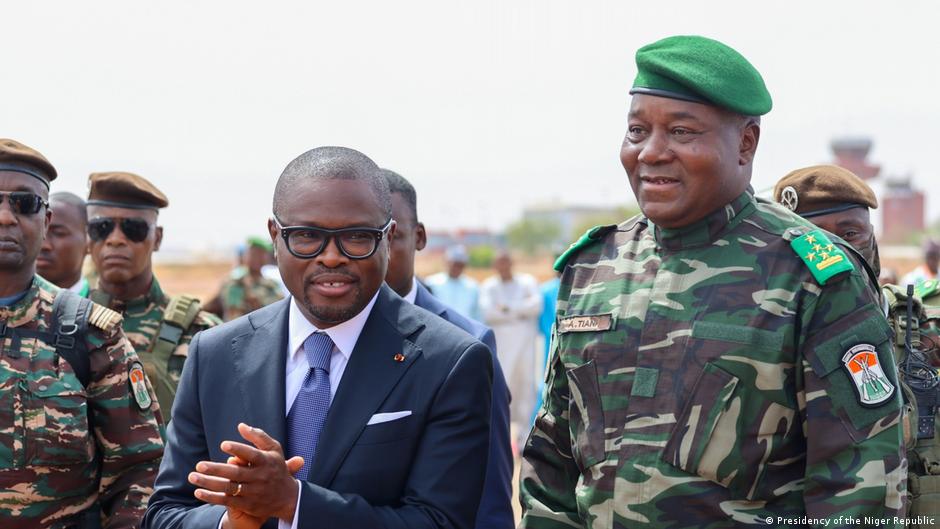
The push for dialogue gained momentum after Romuald Wadagni took office as Bénin’s president in June 2026. Days into his term, he traveled to Niamey to meet with General Abdourahamane Tiani, signaling a willingness to resolve the impasse. The joint expert committee, established shortly after, has already drafted solutions addressing security, transit, and economic cooperation.
Hounkpè believes the two leaders share a pragmatic imperative: “They’re not just negotiating borders—they’re navigating geography itself. They have no choice but to cooperate.” He dismisses ideological divides, urging focus on economic survival, logistics, and security collaboration against terrorism.
If negotiations succeed, a phased reopening could prioritize essential goods under heightened monitoring. Hounkpè even suggests this thaw might inspire broader regional cooperation within the African Union and ECOWAS, much like the recent détente between Mali and Côte d’Ivoire.