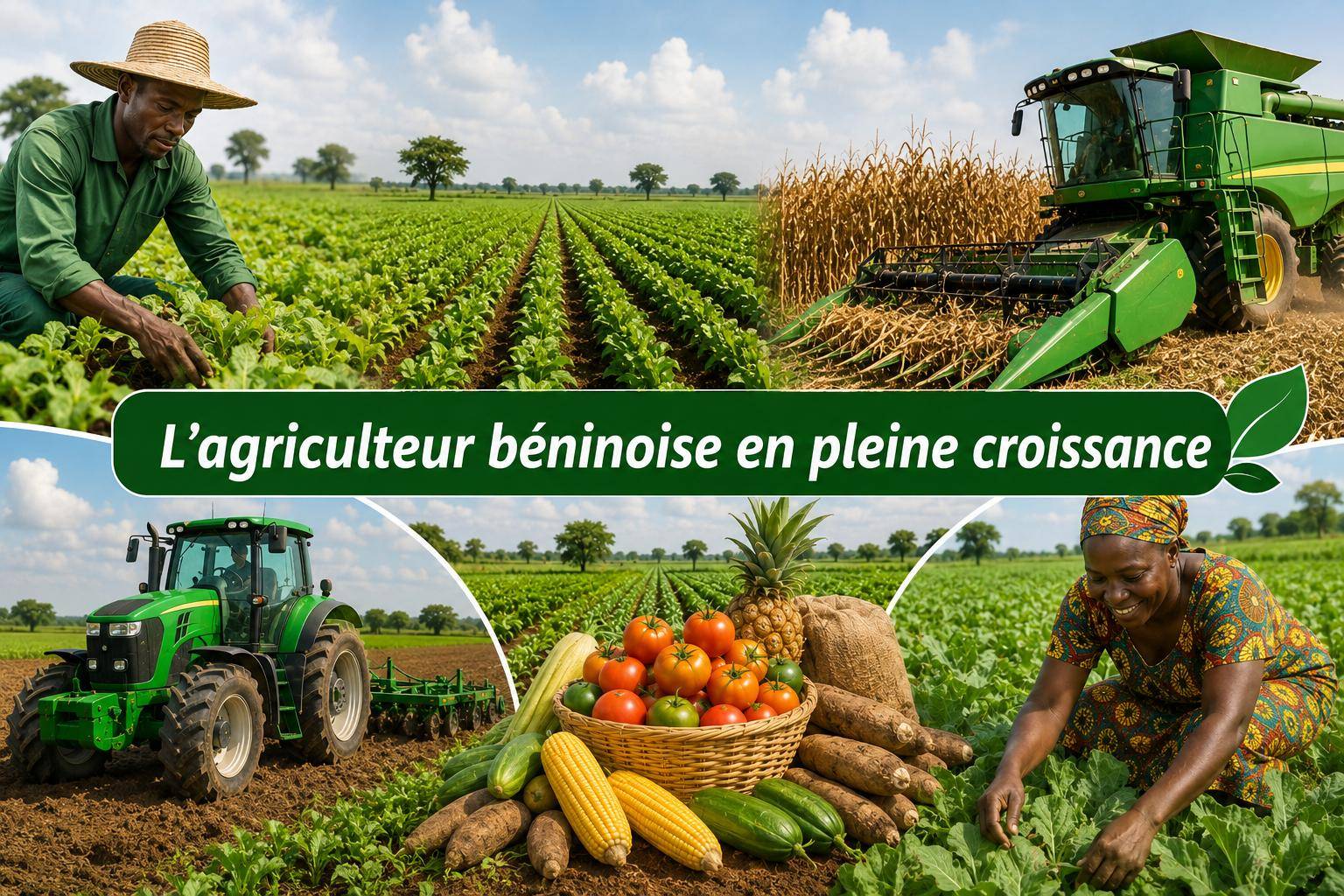
Benin agriculture revolution how government reforms boosted growth since 2016
From subsistence to success: Benin’s bold agricultural transformation
Since 2016, Benin has undergone a profound agricultural revolution. A government-led strategy combining generous subsidies, rapid mechanization, and strategic land development has catapulted the sector to historic highs. From cotton to pineapple, maize to soybeans, agriculture now drives national growth and secures food supplies across the country.
Agricultural success stories: record-breaking output across key crops
Benin’s farmlands have seen unprecedented growth under President Patrice Talon’s administration. Once struggling with low yields and outdated practices, the country now boasts production figures that set new benchmarks year after year.
The maize sector tells a powerful story. In 2016, national output barely topped 1.3 million tonnes. By 2025, it had nearly doubled to 2.5 million tonnes—far exceeding domestic demand of about 1 million tonnes. While this surplus strengthens food security, it also introduces new challenges in managing cross-border trade to keep local prices stable.
The transformation of the soybean industry is equally striking. Starting from a modest 140,000 tonnes in 2016, production climbed to 422,000 tonnes by 2022 and surged to 606,016 tonnes in the 2024–2025 season. This growth fuels local processing at the Glo-Djigbé Industrial Zone (GDIZ) and opens doors to lucrative export markets.
Rice production has also soared—from 204,000 tonnes before 2016 to 525,000 tonnes in 2022, and over 1 million tonnes by 2025. Cotton, Benin’s ‘white gold,’ remains a global leader. Annual production now consistently exceeds 640,000 tonnes, with a record 766,273 tonnes in 2021. The country is on track to become the first African nation to produce over 1 million tonnes of cotton annually.
Other key crops have flourished too. Pineapple production rose by 93%, from 244,000 tonnes to 470,000 tonnes by 2022, with projections nearing 600,000 tonnes. Cashew nut output doubled, jumping from 91,000 to 187,000 tonnes between 2016 and 2023, while yields increased by 34%. To support this expansion, the government subsidizes 500 FCFA per certified cashew sapling, reducing costs from 600 FCFA to just 100 FCFA for farmers.
110 billion FCFA in subsidies shield farmers from rising input costs
None of this progress would have been possible without bold financial intervention. Facing soaring global prices for fertilizers and chemical inputs, the government launched a sweeping subsidy program covering the 2022–2025 agricultural seasons. With a 110 billion FCFA budget, it stabilized production costs, prevented yield collapses, and safeguarded food security across Benin.
Water management and mechanization: ending outdated farming
A second pillar of the reform is infrastructure modernization. Historically dependent on rainfall, Benin’s agriculture is becoming more resilient thanks to hydro-agricultural development. Before 2016, only 6,200 hectares were irrigated—just 2% of potential land. Today, 25,440 hectares have been developed across 67 municipalities, quadrupling the previous total. The goal is to reach 50,000 hectares, strengthening sector resilience and boosting farmer incomes.
Mechanization is also accelerating change. Tractor use has more than doubled since 2016. Over 400,000 hectares are now plowed mechanically using 5,000 subsidized tractor kits. The government provided half-price financing, trained 6,000 tractor operators, and certified 300 mechanics. With plans to expand to 8,000 active kits by 2026, the sector’s mechanization rate is expected to reach 30%, cutting labor time and increasing profitability.
Restructured financing and sustainable land use
The financial architecture of Benin’s agriculture has been fully overhauled. The National Agricultural Development Fund (FNDA) now finances over 3,000 projects worth more than 19 billion FCFA. The Municipal Development Support Fund (FADeC-Agriculture) has generated 330 communal investments totaling 68 billion FCFA. These tools are continuously refined to support thousands more initiatives and ensure wider impact.
Sustainability is at the heart of the transformation. Before 2016, 80% of Benin’s soils suffered from low fertility. Now, sustainable land management has rehabilitated over 3 million hectares, restoring productivity and preventing degradation. Wetland restoration and pollution control have revitalized fisheries, with total fish production up 79%. Beninese shrimp, once excluded from European markets, are now exported competitively. Livestock sectors have also grown—meat production rose 53% and egg production 43%, with goals to meet 75% of domestic demand.
Agriculture as an economic engine
By aligning national strategies with local realities, Benin has redefined rural development. Agricultural policy now integrates market access, value addition, and environmental stewardship. In less than a decade, the government’s decisive action has turned farming from a survival activity into a dynamic, modern, and globally competitive sector. The challenge ahead is to maintain this momentum—ensuring that every producer benefits fairly from the wealth generated in the countryside.
