
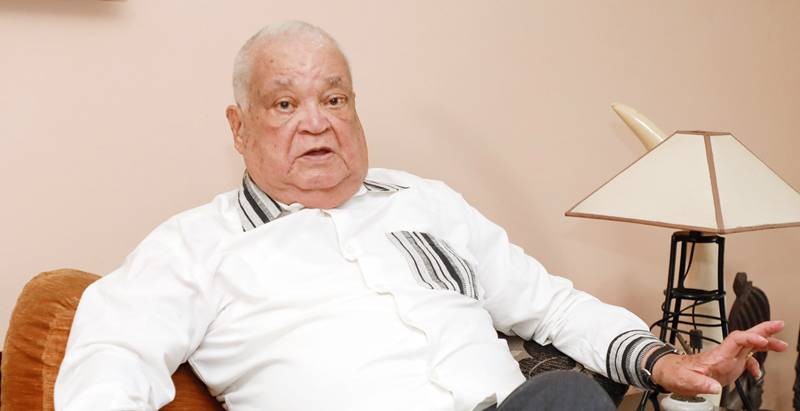
Auguste Miremont reflects on Côte d’Ivoire’s political evolution under Houphouët-Boigny and Ouattara
Ivorian statesman and media veteran Auguste Miremont, former Communication Minister (1989-1993) and former Director-General of Fraternité Matin, offers rare insights into decades of political transformation in Côte d’Ivoire.
From resistance to reflection: the making of a political memoir
For years, Auguste Miremont maintained deliberate distance from public exposure, focusing instead on private reflection. Yet after persistent encouragement from historian Michel Koffi, he agreed to document his journey in a new biography, « Auguste Miremont: From Houphouët to Ouattara, in Complete Freedom… » The title reflects not personal glorification, but a commitment to historical transmission for future generations. Miremont admits the process was neither rushed nor superficial: 30 hours of recorded dialogues over 18 months allowed for deep reflection on pivotal national moments.
Côte d’Ivoire’s modern history: stability, crisis, and resilience
Miremont’s narrative spans the leadership of Côte d’Ivoire’s most influential figures—Houphouët-Boigny, Bédié, Guéï, Gbagbo, and Ouattara—each shaping a complex legacy. He recalls Houphouët-Boigny’s era as one of remarkable regional stability, despite internal pressures. “His genius lay in listening, delaying when necessary, and acting at the precise moment,” Miremont reflects. Yet the transition to later leaders was fraught with unforeseen challenges, including the 1999 coup d’état against President Bédié, which he describes as a profound national tragedy.
The trauma of institutional collapse
Miremont vividly recounts the emotional toll of the post-Bédié era: “I wept at the airport when I learned of Robert Guéï’s death and the assassination of Minister Emile Boga Doudou during peace negotiations.” For him, the crisis wasn’t just political—it shattered the image of Côte d’Ivoire as a stable, respected model nation in West Africa. “We went from being a beacon of hope to a subject of international concern and ridicule,” he laments.
Personal bonds and political lessons
Though Miremont denies intimate access to Houphouët-Boigny, his daily work as minister and newspaper leader forged mutual respect. “He called me ‘De Miremont’—perhaps recognizing a shared sense of history,” he muses. His relationship with President Bédié remained strong, rooted in parliamentary leadership and shared friendships. Even amid political rivalry, Miremont found common ground with President Gbagbo, notably during early attempts to form a national unity government and later financial support during Gbagbo’s presidency.
Ouattara’s leadership: continuity and evolution
Miremont reserves special praise for President Alassane Ouattara, whom he credits with absorbing Houphouët-Boigny’s strategic patience, diplomacy, and timing. “Ouattara learned the art of governance from the master,” he asserts. While acknowledging Ouattara’s softer leadership style today compared to his stringent tenure as Prime Minister, Miremont highlights his unwavering dedication. “He never shirked from bold decisions, even when unpopular, and his courtesy and attention to detail—down to returning calls within 30 minutes—set him apart.”
Legacy in infrastructure and social equity
At 85, Miremont remains impressed by Ouattara’s infrastructure achievements: “From the Champs-Élysées-style boulevard in Daloa to rural roads connecting Bin-Houyé to Toulépleu, progress is visible across Côte d’Ivoire.” He also praises initiatives like the École de la deuxième chance and youth vocational programs, calling them crucial efforts to address rising living costs and unemployment. “The government understands the cost of progress,” he notes. “These programs are not just gestures—they are necessary corrections.”
Looking ahead: unity over succession
Dismissing premature talk of Ouattara’s departure, Miremont emphasizes the need to focus on ongoing development. “He has just started a new mandate. Let him finish. His vision—building a united, prosperous Côte d’Ivoire—remains within reach.” While acknowledging economic and social disparities, he stresses the importance of balanced assessment: “There is much to celebrate. The path forward demands both recognition of achievements and honest dialogue about ongoing struggles.”
Auguste Miremont’s reflections offer more than personal memoir—they provide a living archive of Côte d’Ivoire’s political soul, shaped by resilience, leadership, and an enduring belief in the nation’s future.