
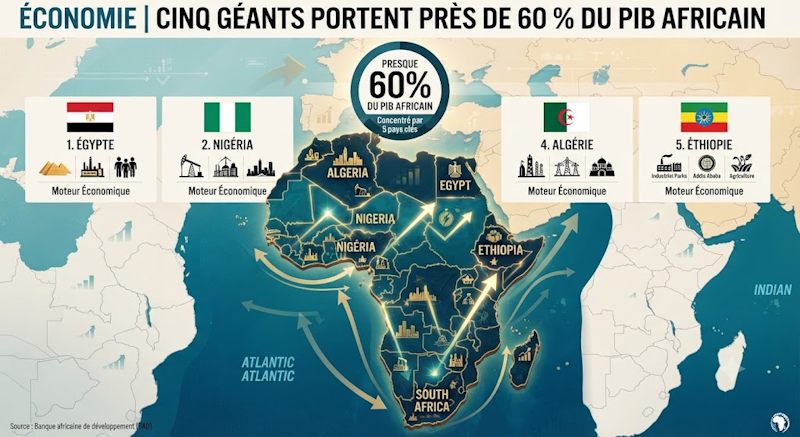
New data from African Development Bank (AfDB) reveals a striking economic reality: just five nations contribute nearly 60% of Africa’s total GDP. These powerhouse economies—Nigeria, South Africa, Egypt, Algeria, and Ethiopia—serve as the continent’s primary growth engines, shaping trade, investment, and industrial trends across Africa.
Why these nations drive Africa’s economic momentum
These countries stand out for their diverse economic strengths. Nigeria and Egypt leverage vast domestic markets and expanding industrial sectors, while South Africa remains the continent’s industrial and financial hub. Algeria’s energy wealth fuels its public investment strategy, and Ethiopia’s rapid industrialization—backed by major infrastructure projects—positions it as a rising economic force in East Africa.
Natural resources, market size, and infrastructure: the pillars of their success
- Population size and market potential: Nigeria and Egypt benefit from large, youthful populations driving consumer demand and labor supply.
- Industrial capacity: South Africa’s advanced manufacturing and financial services create ripple effects across the continent.
- Energy dominance: Algeria’s hydrocarbon reserves provide both domestic revenue and regional energy security.
- Infrastructure transformation: Ethiopia’s investments in rail, energy, and industrial parks accelerate its growth trajectory.
The widening gap: challenges for Africa’s less dominant economies
The concentration of economic power in these five nations highlights deep disparities across the continent. While their growth fuels regional development, many African countries struggle with limited industrialization, constrained access to capital, and high unemployment. Without balanced progress, the risk of economic fragmentation grows—a critical concern for policymakers and investors alike.
Looking ahead: the push for inclusive growth
Economists emphasize the urgent need for strategies that spread prosperity more evenly. Key priorities include regional integration, diversified trade partnerships, and targeted infrastructure development in smaller economies. The goal? Ensuring that Africa’s growth isn’t confined to a handful of giants but becomes a continent-wide reality.