
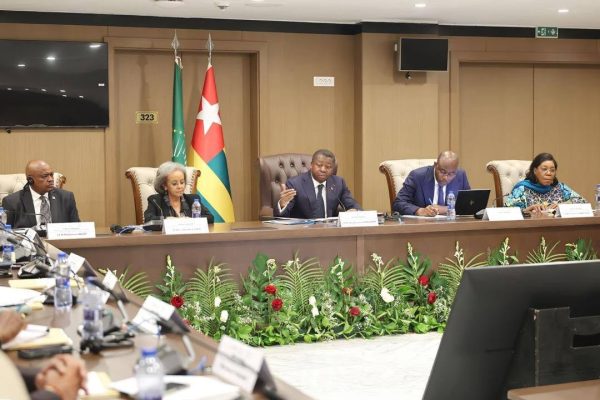
Lomé played host this past Monday to a high-level gathering focused on African-led mediation efforts addressing the ongoing crisis in the eastern Democratic Republic of Congo (DRC) and the broader Great Lakes region. The meeting, chaired by Faure Essozimna Gnassingbé—the African Union’s designated mediator—centered on a critical objective: enhancing coordination among fragmented peace initiatives.
Key participants included AU-appointed facilitators alongside representatives from the United Nations, the East African Community, the Economic Community of Central African States, the Southern African Development Community, the International Conference on the Great Lakes Region, and the International Committee of the Red Cross. Their presence underscores the intricate web of regional frameworks, institutional mandates, and parallel diplomatic endeavors woven into this complex dossier.
Structuring a unified mediation framework
This semi-annual gathering follows up on discussions held in Lomé last January, where participants first explored ways to streamline the mediation architecture and reinforce the peace process. Faure Gnassingbé highlighted progress made in organizing the mediation structure internally, emphasizing that the focus has shifted from launching new initiatives to making existing ones more coherent, visible, and effective on the ground.
The challenge in protracted crises often lies in overlapping efforts by multiple actors operating without sufficient coordination—a dynamic that can dilute the impact of diplomatic endeavors. In Lomé, the priority was clear: restore order to the process by aligning strategies and responsibilities.
Championing African-led dialogue
The AU mediator reaffirmed his commitment to advancing the mission despite persistent hurdles, stressing the need to sustain collective momentum for stability in eastern DRC, where armed violence continues to destabilize civilian populations. By prioritizing inclusive dialogue, Gnassingbé advocates for solutions rooted in African mechanisms while maintaining ties with international initiatives. This approach aims to prevent duplication and bolster the credibility of the mediation process.
Participants praised the leadership, noting it fosters trust among stakeholders and harmonizes ongoing efforts. Success, they agreed, hinges on a well-defined structure, clearly assigned roles, and rigorous follow-through on commitments.
Actionable roadmap for the second half of the year
The Lomé discussions yielded concrete outcomes, including plans to strengthen coordination between the Mediator’s Office, the facilitators’ panel, the AU Commission, and the Independent Joint Secretariat. Delegates also underscored the importance of crafting a more cohesive African contribution to the Washington and Doha processes, ensuring regional actors take ownership and implementation becomes smoother.
States and organizations involved were urged to deepen cooperation, adhering to the roles outlined in the Lomé framework adopted on January 17, 2026. A 15-day deadline was set to finalize an operational action plan, translating these resolutions into measurable steps.
Lomé’s emerging role in regional diplomacy
More broadly, the meeting reaffirmed Lomé’s growing significance as a diplomatic hub for Congolese peace talks, with Togo positioning itself as a convergence point for Great Lakes peace discussions. The true test will be whether this push for coordination translates into tangible progress on the ground. In a crisis as fluid and enduring as this one, the value of mediation lies not in declarations but in its ability to keep stakeholders engaged and steadily advance a shared roadmap.