
Gabon and EU elevate partnership to new heights
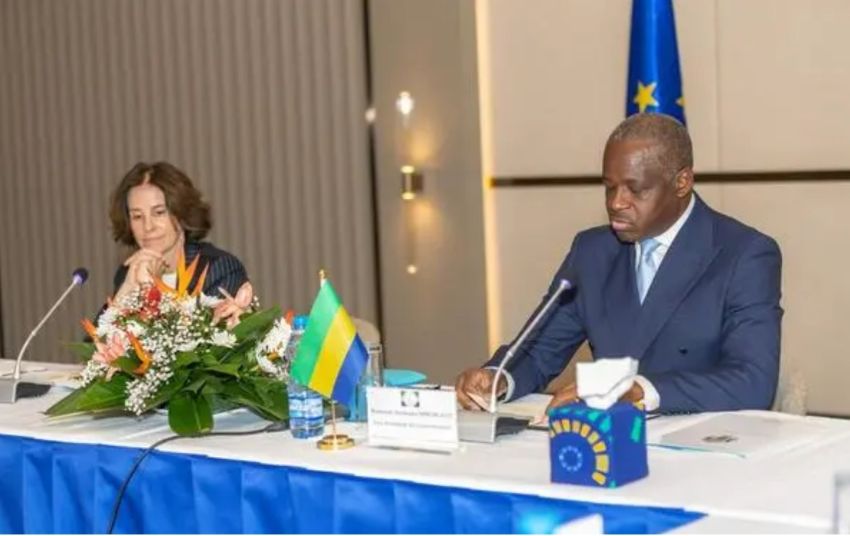
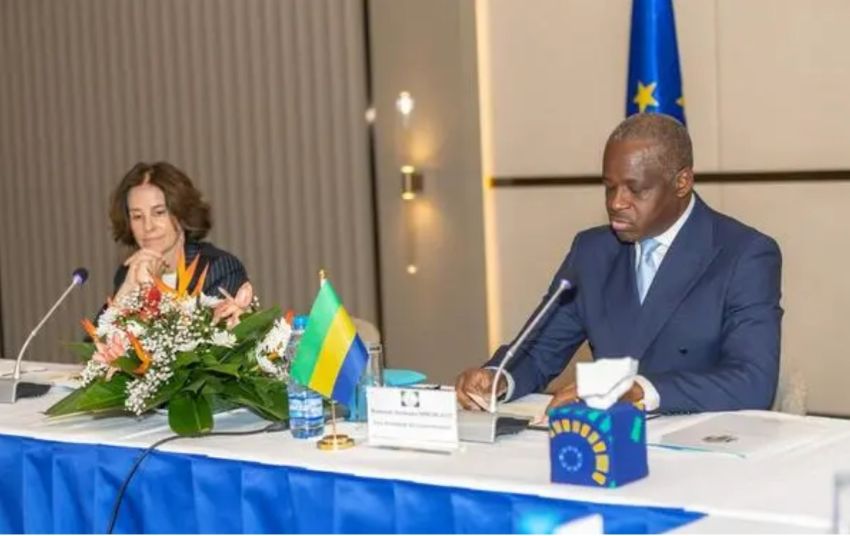
Libreville, June 9, 2026 — The strategic dialogue between Gabon and the European Union held in Libreville marks a turning point in bilateral relations, transcending traditional diplomatic formalities.
The historic meeting, convened under Gabon’s Fifth Republic born from the April 2025 presidential election, reflects Libreville’s ambition to reposition itself as an equal partner rather than a recipient of international aid. This evolving dynamic was evident during discussions at the Omar Bongo Ondimba Congress Palace, led by Vice-President of the Government Hermann Immongault and EU Ambassador to Gabon Cécile Abadie.
Rebuilding trust through institutional reforms
The second session of the Gabon-EU political dialogue carried particular weight as the first major international assessment of the new institutional cycle following 2025’s political transition. Political reforms and governance topped the agenda, with Minister of Reform and Institutional Relations François Ndong Obiang presenting the new Constitution’s pillars: national unity, citizen participation, and sustainable development.
Key innovations include the formal recognition of indigenous peoples and the integration of the diaspora into state institutions. Authorities emphasized these measures as evidence of Gabon’s commitment to building a more inclusive and representative governance framework.
The 2025 elections were also scrutinized, with Libreville touting a process described as free, credible, and peaceful, boasting over 70% voter turnout. Officials framed this participation as popular endorsement of the new institutional order, positioning Gabon as a democratic success story in Central Africa.
From aid to strategic investment
The most significant announcement came from Vice-President Immongault, who called for a fundamental shift in Gabon-EU relations: moving from a donor-recipient model to a partnership based on productive investment, local wealth creation, and human capital development.
This realignment aligns with the Samoa Agreement framework governing EU relations with African, Caribbean, and Pacific states. Gabon’s objectives are clear: attract European capital to strategic sectors including industry, infrastructure, local resource processing, renewable energy, digital technology, and vocational training.
This approach mirrors President Brice Clotaire Oligui Nguema’s economic diversification agenda, which aims to reduce reliance on raw material exports and accelerate industrialization. Ambassador Abadie echoed this sentiment, stressing the need to adapt cooperation tools to deliver concrete economic outcomes serving both parties’ interests.
Environmental leadership as a pillar of cooperation
Environmental protection emerged as another cornerstone of the dialogue. With 88% forest cover and hosting critical Congo Basin ecosystems, Gabon argued for greater financial recognition of its climate contributions. The country’s leadership emphasized that preserving these vital carbon sinks requires substantial resources, justifying enhanced international compensation mechanisms.
This position resonates in global climate discussions, where forested nations increasingly demand fair remuneration for their ecological services. The Libreville discussions also addressed regional cooperation, Central African stability, CEEAC’s role, Gulf of Guinea security, and multilateralism strengthening.
The Gabon-EU dialogue reveals a fundamental transformation: Libreville seeks to redefine its international standing as a stable, assertive, and economically ambitious nation. This new partnership model, balancing national sovereignty with international cooperation, may well set a precedent for future EU-African relations.