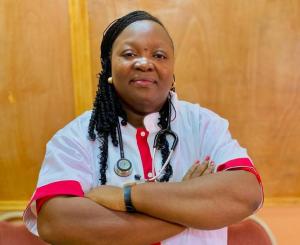
A champion for sickle cell patients: the work of Dr Gloria Damoaliga Berges in Burkina Faso
In Burkina Faso, the impact of sickle cell disease is a significant public health priority, with a prevalence rate of 4.63%. Notably, nearly 2% of newborns are diagnosed with the SS form, which is the most acute variation of the condition. This situation demands a comprehensive, multi-sector strategy involving every level of society.
Dr Gloria Damoaliga Berges, a prominent figure in civil society and Vice-President of the Centre d’Initiative contre la Drépanocytose au Burkina Faso (CID/B), has dedicated the last decade to combating this illness. She shares insights into her motivation, the progress achieved, and the persistent hurdles in the field.
The roots of a medical commitment
Early in her medical practice, Dr Berges witnessed the agonizing pain experienced by children and adolescents living with sickle cell disease. Feeling a sense of helplessness in the face of their suffering, she felt compelled to act. A pivotal moment occurred in 2015 when she was invited to help establish a specialized referral unit at her hospital, an initiative supported by the CID/B. This experience solidified her lifelong mission.
Understanding the persistence of the disease
As a hereditary condition, sickle cell disease occurs when both parents carry the hemoglobin S gene. In such cases, there is a 25% chance during each pregnancy that the child will be born with a major sickle cell syndrome. A primary reason for the continued prevalence is that many couples remain unaware of their electrophoresis status before starting a family. Dr Berges emphasizes the urgent need for pre-marital and pre-conception screening awareness.
Impact at the community level
Addressing the lack of public knowledge is a core part of her work. Dr Berges organizes awareness campaigns and mass screening events across Burkina Faso. Between January and July 2024, she coordinated a massive effort that screened nearly 15,000 children across five regions. These community-based initiatives are also vital for dismantling the social stigma frequently linked to the disease.
Innovative tools and collaborative support
Dr Berges has been instrumental in several key projects, including:
- Implementing neonatal screening programs in health facilities.
- Training medical staff on specialized pain management for sickle cell patients.
- Launching “Drépa Minute,” a free hotline (80001350) providing information in local languages.
The CID/B works in close coordination with the Ministry of Health and the Direction de la prévention et du contrôle des maladies non transmissibles (DPCM). This work is bolstered by international partners such as the French Development Agency (AFD), the Pierre Fabre Foundation, and the Principality of Monaco.
Patients receive holistic care that includes medical treatment, psychological support, and socio-economic assistance. With 11 regional branches, the center offers support groups, therapeutic education, and even income-generating activities to help patients achieve financial independence. Furthermore, the association advocates for universal health insurance to improve treatment accessibility.
Shifting perceptions and future challenges
Reflecting on her journey, Dr Berges notes that sickle cell disease is now a recognized priority in national health policies. The Ministry of Health has developed a dedicated strategic plan to mobilize resources. Public and medical awareness has grown, leading to better diagnosis and more specialized training.
Social perceptions are also changing. Once viewed by some as a curse, the disease is now understood as a manageable condition. Many patients are now leading fulfilling lives, pursuing careers, and starting families thanks to consistent medical follow-up.
However, significant obstacles remain. Access to diagnostic tools in remote areas is limited, and there is a critical need for consistent supplies of medications like hydroxyurea, specialized painkillers, and vaccines. Blood transfusions for complications also remain a challenge.
Dr Berges concludes that it is time for the “silent cry” of patients to be heard through increased investment in early screening and a unified response from all health partners. She remains committed to using her voice to bring hope and dignity to those affected by sickle cell disease in Burkina Faso.
