Women’s leadership in Senegal lags despite democratic progress
Senegal’s democratic promise vs. reality of female representation
Despite Senegal’s reputation as a democratic leader in West Africa, persistent gaps in female political representation reveal systemic challenges. With only 18 women leading municipalities out of 558 and just 3 women heading departmental councils out of 43, the country’s commitment to gender parity faces a stark test.
Female leadership remains critically low in Senegal’s local governance. Recent legislative elections underscored this disparity: women accounted for just 13% of list heads and saw their share in the National Assembly drop from 44.2% to 41%. These figures are more than statistics—they reflect deep-rooted barriers to political participation, from cultural resistance to unequal access to resources and media visibility.
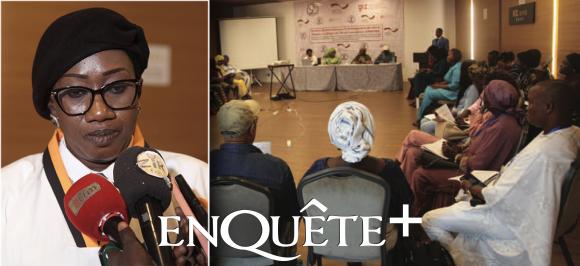
At a two-day seminar on women’s political participation organized by the Réseau des femmes leaders pour le développement (RFLD), Bator Seck, the network’s focal point in Senegal, highlighted the contrast between legal advances and ground realities. While Senegal has a constitutional guarantee of gender equality (2001) and a landmark parity law (2010), these achievements have not translated into proportional representation in leadership roles.
Structural barriers and systemic resistance
“Women in Senegal are the backbone of communities—leading initiatives, driving local economies, and championing social change,” Seck emphasized. “Yet, they remain sidelined in decision-making spaces. This isn’t about capability—it’s about systemic exclusion.”
The RFLD’s initiative, part of the Afrofeminist Initiative for Human Rights Development in Francophone West Africa (supported by the BMZ’s SEA-T program and GIZ), brings together 30 women leaders—parliamentarians, party heads, local officials, activists, and civil society leaders. Their mission: to strengthen female political engagement through shared experiences, strategic analysis, and collective advocacy.
“Democracy cannot be complete when half the population is underrepresented,” Seck stated. “Senegal’s future must be built with women, not just for them.”
Beyond policy: empowering women to claim their space
Maman Diouf Fall, representing Senegal’s Ministry of Family and Social Solidarity, pointed to a second layer of challenges: self-confidence and access to training.
“Many women possess the skills and legitimacy to lead, but societal pressures and lack of structured support hold them back,” she noted. Women often face barriers in accessing leadership training, particularly in rural areas where training programs are scarce. Mentorship and intergenerational networks are also critical, she added, to guide young women into leadership roles.
“Political participation demands financial autonomy, professional stability, and the ability to balance public, family, and social responsibilities,” Fall stressed. “Without these pillars, progress will remain limited.”
The Ministry has launched initiatives to address these gaps, including leadership training, civic education, and support for vulnerable groups. These efforts aim to foster resilience, protect girls’ rights, and combat issues like child marriage and gender-based violence.
“Real change requires continuous social transformation,” Fall concluded. “We must create an environment where women can participate fully, freely, and effectively in public life.”
Paving the way for inclusive governance
The RFLD’s work, alongside government and community partners, reflects a growing recognition: gender equality in politics is not just a moral imperative but a strategic necessity. Without equitable representation, Senegal risks missing out on the full potential of its citizens.
As the seminar highlighted, the path forward demands more than policy—it requires cultural shifts, targeted investments in women’s empowerment, and unwavering commitment to breaking down barriers.
