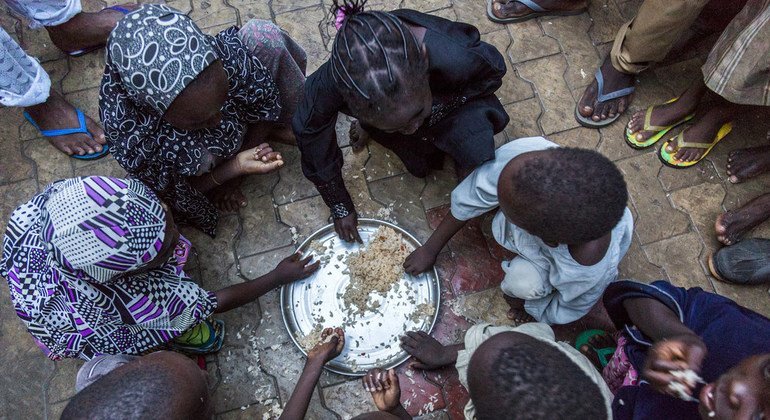
West africa hunger crisis: millions face famine as violence and budget cuts escalate
West Africa Hunger Crisis: Millions Face Famine as Violence and Budget Cuts Escalate
The United Nations World Food Programme (WFP) warns that 55 million people across West and Central Africa are at risk of critical famine this summer, including over 13 million children.
Escalating violence and severe budget cuts have plunged entire communities into a dire food emergency. The WFP urgently requires $453 million over the next six months to prevent a humanitarian catastrophe.
Rising Hunger and Malnutrition in the Sahel
A recent regional analysis reveals that three million people will face emergency-level food insecurity (Phase 4 on the IPC scale) this year—more than double the 1.5 million affected in 2020. Four countries—Nigeria, Chad, Cameroon, and Niger—account for 77% of the region’s food insecurity crisis.
In Nigeria’s Borno State, 15,000 people risk experiencing catastrophic famine (IPC-5) for the first time in nearly a decade.
Budget Cuts Deepen Humanitarian Collapse
WFP’s Deputy Regional Director for West and Central Africa, Sarah Longford, warns: “Reduced funding in 2025 has intensified hunger and malnutrition across the region. When needs outpace resources, desperation grows, pushing vulnerable populations toward despair.”
Mali, Nigeria, and Cameroon: A Crisis Unfolding
Mali
- Food ration cuts have spiked acute famine by 64% in some areas.
- Regions receiving full rations saw a 34% reduction in malnutrition.
- 1.5 million Malians remain at risk of severe food shortages due to persistent insecurity and disrupted supply chains.
Nigeria
- Budget shortfalls forced WFP to slash nutrition programs, impacting 300,000 children.
- Malnutrition levels have worsened from “severe” to “critical” in northern states.
- Only 72,000 people can receive aid in February 2026, down from 1.3 million in 2025.
Cameroon
Over half a million vulnerable people may lose access to life-saving assistance if emergency funding isn’t secured in the coming weeks.
13 Million Children at Risk of Starvation
WFP’s Food Security and Nutrition Analysis Director, Jean Martin Bauer, warns that 13 million children in the region face severe malnutrition risks this year. He emphasizes: “When we talk about IPC 5, it means immediate mortality risks. People are dying of hunger.”
Breaking the Cycle of Hunger
WFP calls for urgent investment in resilience-building programs, anticipatory measures, and community empowerment to prevent recurring famine cycles. Their strategy includes:
- Rehabilitating 300,000 hectares of degraded land since 2018, restoring arable farmland.
- Improving climate resilience for four million people.
- Expanding school feeding programs and social protection systems.
Solutions Exist—But Funding is Urgently Needed
“The solutions are proven and effective,” Bauer states. “They just aren’t funded yet.” The WFP requires $453 million immediately to sustain critical humanitarian aid across the region.
Longford adds: “Without urgent support, hunger will fuel more displacement, instability, and conflict across West Africa.”
