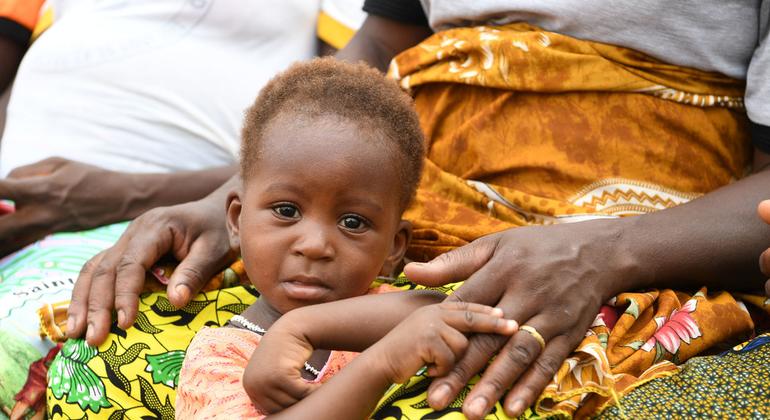
West africa faces escalating humanitarian crisis as un seeks $5.1 billion in aid
The United Nations and its partners are urgently calling for $5.1 billion to address the worsening humanitarian crisis in West and Central Africa, part of a broader $33 billion global appeal for 2026. The funds aim to support 24 million of the most vulnerable individuals across the region.
With over 42 million people projected to require life-saving assistance in 2026, the situation is dire in countries like Burkina Faso, Cameroon, Mali, Niger, Nigeria, Central African Republic, Democratic Republic of the Congo, and Chad.
« Without immediate resources, families will face heightened hunger, displacement, and protection risks, deepening suffering across West and Central Africa, » warns Charles Bernimolin, Head of the UN Office for the Coordination of Humanitarian Affairs (OCHA) Regional Office for West and Central Africa.
escalating violence and environmental disasters fuel displacement
The humanitarian crisis in Mali, along with persistent conflicts in the Central Sahel and the Lake Chad Basin, continues to displace millions. Violence in Burkina Faso, Niger, and Mali is spilling into neighboring countries such as Benin, Côte d’Ivoire, Ghana, Togo, and Mauritania. The conflict in Sudan further exacerbates the displacement crisis.
Currently, 12.7 million people are internally displaced, while 3.7 million are refugees or asylum seekers. Women and children, often forced to flee multiple times, face heightened risks, including gender-based violence and exploitation, with reports of rape and survival sex.
The crisis is compounded by climate change, as extreme weather events in 2025 affected over 2 million people across 12 countries, destroying crops, homes, and critical infrastructure like schools and health centers. The Democratic Republic of the Congo was particularly hard-hit, with over 830,000 people affected.
funding shortages worsen humanitarian response gaps
Despite generous donor contributions in 2025, severe funding deficits have crippled humanitarian operations. Of the $7.8 billion required, only $1.8 billion—just 24%—was received. These shortfalls have forced aid agencies to scale back operations, making difficult choices about where and whom to assist.
In the Central African Republic, the number of people receiving cash assistance plummeted by 75%, severely limiting their ability to meet urgent needs. In the Democratic Republic of the Congo, where conflict has triggered new waves of displacement, 85% of those targeted for shelter assistance received no support.
By the end of 2025, humanitarian workers had provided some form of assistance to 19 million people in West and Central Africa. However, millions more remain without aid due to insufficient funding.
As the crisis deepens, the UN and its partners are urging immediate action to bridge the funding gap and prevent further suffering in a region already grappling with multiple overlapping emergencies.
