
Venance konan examines the fading ideals of modern panafricanism

As South Africa’s courts prepare to rule on Kémi Séba’s fate, the activist’s recent arrest in Johannesburg—while attempting to enter Zimbabwe illegally—raises a critical question: is the controversial figure, with his 1.5 million social media followers, truly the face of modern panafricanism? Writer Venance Konan explores the movement’s evolution and its current contradictions.
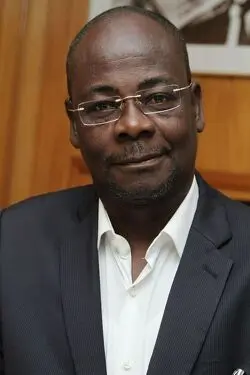
Kémi Séba, whose real name is Stellio Gilles Robert Capo Chichi, holds dual citizenship in Bénin and Niger through a diplomatic passport. His recent arrest in South Africa alongside his 18-year-old son and a far-right South African apartheid sympathizer, François Van der Merwe, has sparked debate about his panafricanist credentials. While he leads the NGO « Urgences panafricanistes », his virulent anti-French rhetoric, opposition to the CFA franc, and antisemitic remarks have overshadowed his activism. These stances led to the revocation of his French nationality. According to reports, Séba was attempting to travel to Zimbabwe—possibly onward to Europe—when arrested. He faces charges in Bénin for « glorifying state security crimes and inciting rebellion » after publicly supporting soldiers involved in a failed December coup. An international arrest warrant has been issued for him.
Russian propaganda and support for Sahel dictators
Kémi Séba joins figures like Franklin Nyamsi and Nathalie Yamb as the loudest voices of panafricanism in Francophone Africa. Their shared opposition to French influence, however, comes with troubling alliances. All three have become prominent propagandists for Russia on the continent and vocal supporters of the military juntas in the Alliance of Sahel States (AES)—Mali, Burkina Faso, and Niger. Does this new panafricanism mean replacing French dominance with Russian control while backing authoritarian regimes that openly reject democracy?
From anticolonial roots to fractured ideals
The panafricanist movement emerged in the early 20th century among Black intellectuals in the Americas and Caribbean, later fueling anticolonial struggles across Africa. Leaders like Kwame Nkrumah of Ghana, Sékou Touré of Guinea, and Patrice Lumumba of the Democratic Republic of Congo embodied its ideals. The Federation of Black African Students in France (FEANF), founded in 1950, became a key force for decolonization and continental unity, though French authorities suppressed it by the 1980s.
The independence of Ghana in 1957 and most African nations by 1960 were seen as panafricanism’s triumphs. The creation of the Organization of African Unity (OAU) in 1963 marked progress toward unity, but post-independence nationalism fractured these ambitions. Secessionist movements emerged in Eritrea, Sudan, Biafra, and Casamance. In 2002, Libyan leader Muammar Gaddafi attempted to revive the OAU as the African Union (AU), but the project stalled after his 2011 overthrow. The AU’s 2001 New Partnership for Africa’s Development (NEPAD) also faded into obscurity.
Hypocrisy in modern panafricanist claims
Today, panafricanism is often invoked rhetorically. Political leaders across Africa brand themselves as panafricanists, yet many countries either wage civil wars—like in the Horn of Africa or the Great Lakes region—or actively discriminate against African migrants, as seen in South Africa. In West Africa, tensions persist between Sahelian AES states and ECOWAS neighbors.
Konan questions the authenticity of today’s self-proclaimed panafricanists. Séba, Nyamsi, and Yamb—all facing sanctions or legal troubles in Europe for their anti-Western rhetoric—claim persecution while aligning with Russian interests. Is this liberation or merely exchanging one domination for another? The human rights violations by Russian-backed forces in the Sahel speak for themselves. Where is the panafricanism in supporting dictatorships that silence dissent through imprisonment, disappearances, or violence?
According to leaked phone conversations, Séba has accused Nyamsi and Yamb of opportunism, alleging they are now on the payroll of Faure Gnassingbé, Togo’s president. Ironically, Séba himself has expressed regret over losing his French nationality. This panafricanism, Konan argues, is a distorted, corrupted version—little more than a facade. With global powers preying on Africa’s divisions, the continent’s survival may depend on genuine unity. The time for authentic panafricanism is not just urgent; it is existential.
