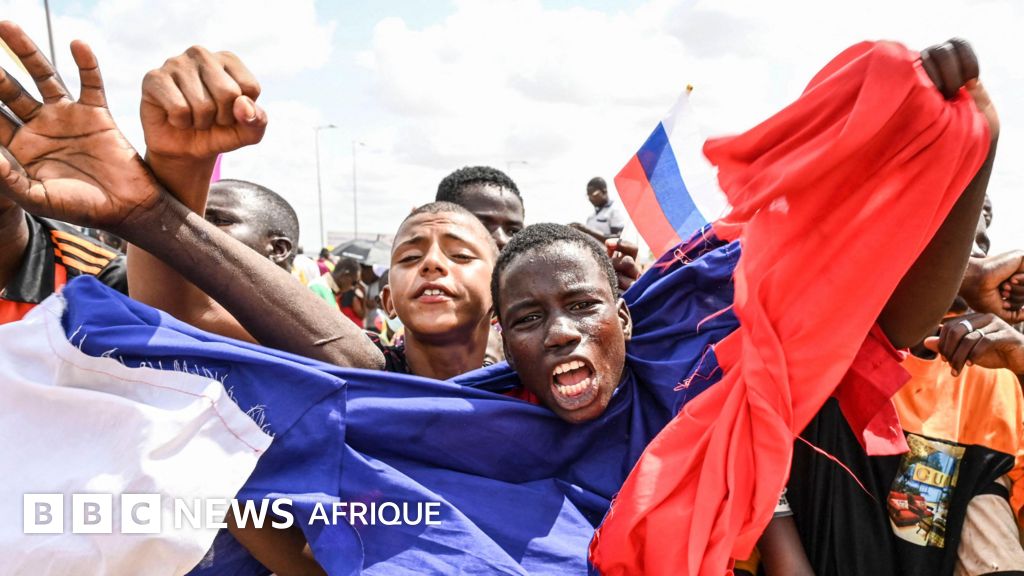
Us military cooperation with Sahel military juntas after Russia pivot
In a significant shift in foreign policy, the United States has signaled its willingness to engage directly with military-led governments in the Sahel region—specifically Mali, Burkina Faso, and Niger—despite their pivot toward Russia and departure from traditional alliances with France and the West.
The announcement came as Nick Checker, head of the U.S. State Department’s Bureau of African Affairs, prepared for a high-level visit to Bamako, Mali. The stated goal of the trip is to affirm Washington’s respect for Mali’s sovereignty and to explore a new framework for bilateral cooperation, moving beyond past political tensions.
In parallel, U.S. officials have expressed openness to working with neighboring Burkina Faso and Niger—both of which have experienced coups and realigned their security partnerships away from Europe—on shared priorities in security and economic development. Notably absent from the diplomatic agenda is any immediate emphasis on democracy or human rights, a departure from the Biden administration’s previous stance.
tactical realignment or strategic pivot?
This policy reversal follows a period of growing distance between the U.S. and these West African nations after a series of coups displaced democratically elected leaders between 2020 and 2023. Among those affected is former Nigerien President Mohamed Bazoum, who remains under house arrest more than two years after his removal.
The shift became clearly visible in recent months, particularly since the return of Donald Trump to the White House. The administration has moved decisively to reduce U.S. development engagement in the region, including the closure of USAID operations shortly after Trump’s inauguration. Development, governance, and human rights initiatives have since taken a backseat to a more narrowly focused security agenda centered on counterterrorism and resource security.
from democracy promotion to pragmatic partnership
The rhetoric from senior U.S. officials reflects this new pragmatism. Massad Boulos, Senior Advisor for African Affairs under Trump, stated in a 2024 interview with Le Monde: « While democracy is always valued, our policy is not to interfere in the internal affairs of other countries. Peoples are free to choose the system that suits them. » This marks a clear break from the democratic conditionalities previously imposed by Washington.
Commander Ibrahim Traoré of Burkina Faso has positioned himself as a leading voice against « imperialism » and « neocolonialism, » leveraging social media campaigns to build regional support. The U.S. appears to accept this rhetoric in exchange for cooperation on counterterrorism objectives.
security priorities in the Sahel: fighting terrorism and protecting resources
The primary driver of U.S. engagement is the escalating threat posed by Islamist militant groups across the Sahel. The region—stretching from the southern edge of the Sahara to the Gulf of Guinea—has become a global hotspot for terrorism, accounting for nearly half of all terrorism-related deaths worldwide in recent years.
The so-called « tri-border » zone—where Mali, Burkina Faso, and Niger converge—remains a critical battleground. The Islamic State’s West Africa Province (ISWAP), particularly its Sahel branch known as the Islamic State in the Greater Sahara (ISGS), continues to conduct deadly attacks. Recent violence culminated in an assault on Niamey’s international airport, underscoring the persistent and evolving threat.
Beyond security, Washington is also concerned about the protection of strategic mineral resources. The Sahel is a major gold producer, and Mali holds significant lithium reserves—essential for electric vehicle batteries and certain pharmaceuticals—while Niger is a top global supplier of uranium, a key input for nuclear energy.
Following the coup in Niger, the military government nationalized the country’s main uranium mine, previously operated by the French firm Orano, and has since signaled interest in deepening cooperation with Moscow. U.S. officials view this development with caution, wary of allowing Russia to become the sole external security partner in the region.
Russia’s growing footprint and u.s. response
Russia has expanded its influence in the Sahel through the Wagner Group and other security contractors, deploying approximately 1,000 personnel in Mali and smaller contingents in Burkina Faso and Niger. While these deployments provide immediate support to fragile governments, they have also been linked to allegations of human rights abuses, particularly in Mali.
Despite these concerns, U.S. diplomats and military leaders have adopted a more accommodating tone. Rudolph Attalah, a senior counterterrorism official, recently visited Bamako and indicated that Washington is « at ease » with Russia’s military presence, as long as it contributes to stability.
However, the U.S. is intent on balancing Moscow’s influence with its own security partnership. General John Brennan, Deputy Commander of U.S. Africa Command (AFRICOM), confirmed in late 2025 that the U.S. continues to provide Mali, Burkina Faso, and Niger with intelligence support and may supply additional arms. Yet, Washington has ruled out redeploying combat troops or reopening drone bases such as the one in Agadez, Niger, which housed around 800 U.S. personnel until their expulsion by the junta in 2024 following U.S. pressure for a democratic transition.
regional fragmentation and new alliances
The three juntas—Mali, Burkina Faso, and Niger—have formally withdrawn from the Economic Community of West African States (ECOWAS) and are forming a new alliance called the Alliance of Sahel States (AES). This withdrawal has relieved them of ECOWAS membership obligations, including commitments to democratic governance and human rights.
With their departure, ECOWAS has lost leverage over internal governance in these countries. Yet, regional cooperation on counterterrorism remains a shared priority. Militant groups are increasingly crossing borders, threatening neighboring states such as Benin, Nigeria, Togo, Ghana, and Côte d’Ivoire.
The U.S. sees an opportunity to provide critical intelligence and logistical support to these governments, potentially enabling rapid gains against jihadist networks. However, history suggests that military solutions alone are insufficient. The decade-long deployment of French forces in the Sahel, backed by advanced technology, ultimately failed to restore lasting peace due to deep-seated social, economic, and governance challenges.
As the Sahel faces one of its most complex security crises, the U.S. approach combines pragmatism with caution: supporting partners where it matters most—on the battlefield—while avoiding broader entanglements in governance or human rights debates that could undermine fragile alliances.
