unrest shakes Gabon’s freemasonry as succession battle intensifies
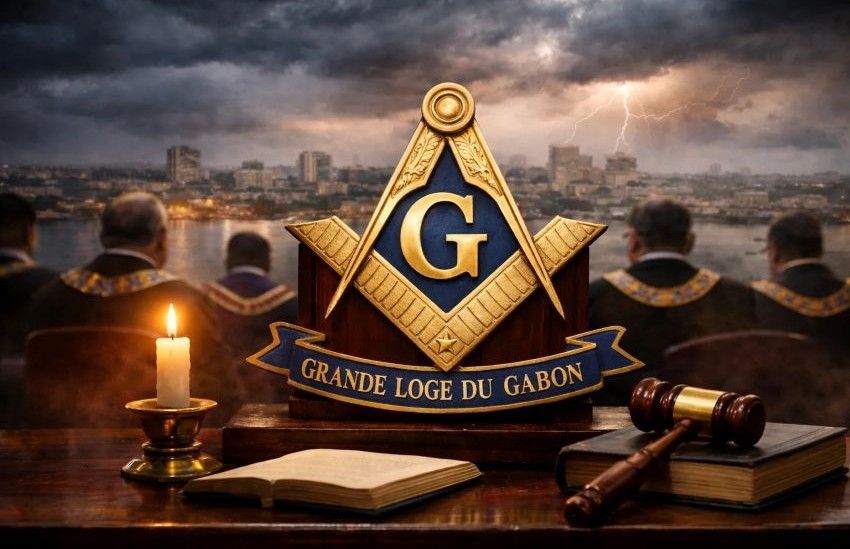
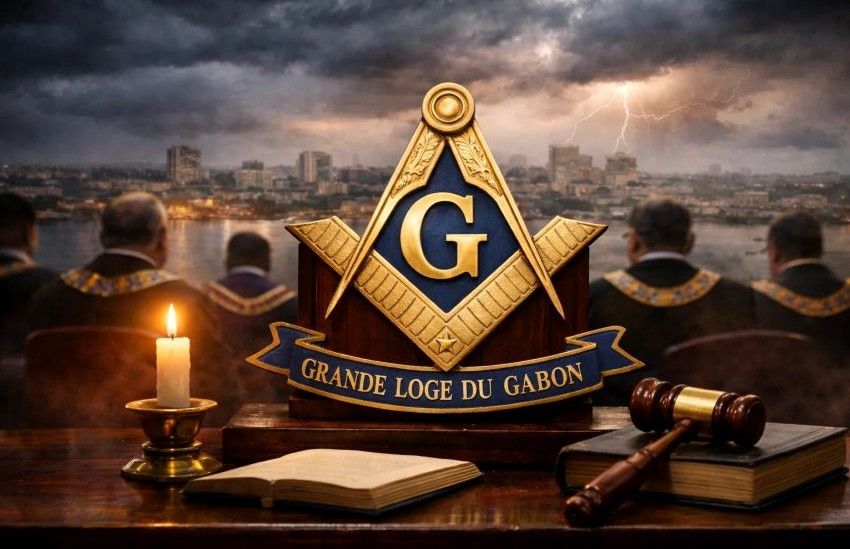
The once-revered Grand Lodge of Gabon (GLG)—long known for its discretion and political influence—now faces its most turbulent period in decades. As the country’s most powerful masonic institution prepares for a pivotal general assembly, internal fractures have erupted into a full-blown crisis, revealing deep divisions over succession, financial transparency, and leadership legitimacy.
The tension within Gabon’s masonic circles has reached unprecedented levels. Once a symbol of moral elevation and brotherhood, the GLG now struggles with declining membership, leadership disputes, and a growing exodus of disillusioned members. The crisis extends far beyond lodge walls, reshaping power dynamics across the nation.
the end of an established order
For years, Gabon’s political and masonic leadership operated in close alignment. When the Head of State also served as Grand Master, individual ambitions remained subordinate to an unchallenged hierarchy. That equilibrium shattered after August 30, 2023.
Contrary to expectations, newly elected President Brice Clotaire Oligui Nguema chose not to assume the Grand Master role. Instead, Jacques-Denis Tsanga was installed in February 2024—a decision that disrupted a long-standing tradition. While some view this as a move toward institutional independence, others see it as the catalyst for internal power struggles.
a succession revealing deep fractures
Three years into his tenure, Jacques-Denis Tsanga faces mounting criticism. Supporters praise his reforms in provincial lodge organization, asset management, and international networking. Detractors, however, accuse him of centralizing power, operating opaquely, and mishandling sensitive matters.
Hard numbers underscore the institution’s decline. Of approximately 600 registered members, only 200 remain actively engaged. A wave of suspensions, resignations, and expulsions has fostered an atmosphere of distrust and uncertainty. The upcoming general assembly looms as a decisive moment—one that will determine whether the GLG can restore cohesion or further fragment.
power seeks a new center of gravity
The current crisis extends beyond Gabon’s masonic community, reflecting broader shifts in the nation’s power structures. Historically, the GLG’s close ties to the presidency ensured stability. Today, its growing autonomy has exposed vulnerabilities long concealed by centralized authority.
The paradox is striking: critics who once condemned the fusion of political and masonic power now recognize its stabilizing role. Conversely, the GLG’s newfound independence has unleashed rivalries that were previously contained. The central question is no longer about choosing a leader, but whether the institution can forge a consensus in an increasingly fragmented landscape.
For an order that once thrived on secrecy, this period of upheaval carries symbolic weight. It demonstrates that even the most entrenched institutions must confront a fundamental challenge: maintaining unity when authority is no longer absolute.