
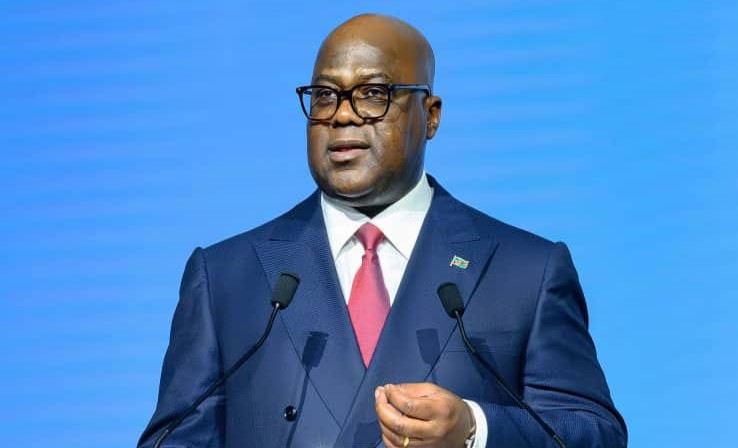
Tshisekedi outlines bold water access targets for DRC at N’Djamena summit
The Congolese President, addressing a gathering of African leaders and international partners in Chad’s capital, underscored his country’s vast water resources while stressing the urgent need to convert this potential into tangible benefits for citizens.
Ambitious goals for water and sanitation by 2035
Beyond expanding access to clean drinking water, the Democratic Republic of the Congo (DRC) has set a parallel target: ensuring 50% coverage in sanitation and hygiene services by 2035. These dual objectives are designed not only to curb waterborne diseases but also to elevate living standards across the country.
The President also outlined broader social infrastructure ambitions. By 2035, the government aims to provide reliable water, sanitation, and hygiene access in 80% of schools and health facilities. This initiative is intended to improve community well-being and strengthen foundational social services.
“Ensuring adequate water, sanitation, and hygiene infrastructure in 80% of schools and health centers is a top priority—especially in environments where exposure to health risks is high,” he emphasized.
To achieve these milestones, Kinshasa is rallying all stakeholders. The strategy hinges on a mix of public funding, private investment, and international support to bridge critical infrastructure gaps.
Five pathways to revolutionize Africa’s water sector
The Congolese leader proposed a five-point roadmap to address continental water challenges:
- Policy integration: Aligning national strategies with regional frameworks to create cohesive, scalable solutions.
- Stronger governance: Building transparent, accountable institutions to manage water resources effectively.
- Project preparedness: Developing technically sound and financially viable projects to attract investment.
- Local industrialization: Boosting domestic production of essential water equipment like pipes, pumps, and treatment systems.
- Sustainable financing: Mobilizing long-term capital through bankable initiatives aligned with global standards.
Tshisekedi emphasized the urgency of fostering a homegrown water industry, arguing that Africa must reduce reliance on imports by manufacturing critical components locally. “We need to produce pipes, meters, irrigation systems, and digital solutions right here on the continent,” he stated. This shift, he noted, would not only cut costs but also spur job creation and industrial growth.
The President framed these efforts as part of a broader vision: a future where Africa achieves universal water access, robust governance, and a self-sustaining water industry capable of supporting economic expansion.