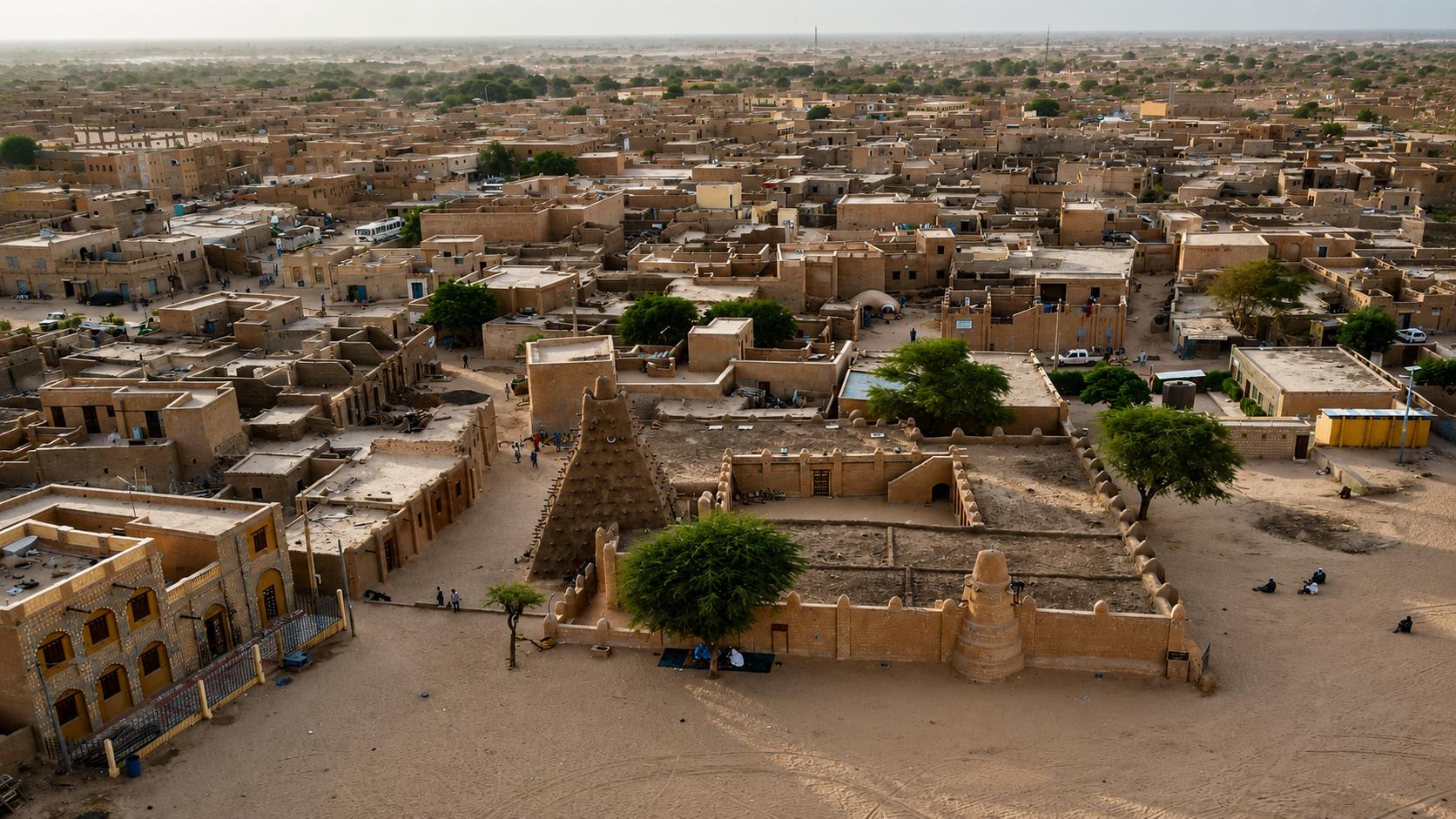
Tombouctou struggles under energy and water shortages amid Mali crisis
Isolated from the rest of Mali due to persistent insecurity, the historic city of Tombouctou faces an unprecedented humanitarian crisis. Deprived of electricity and running water because of a severe fuel shortage, life in this ancient desert jewel has ground to a halt, exposing deep flaws in both logistics and security that now threaten its civilian population.
The mercury in Tombouctou regularly climbs above 40 degrees Celsius, yet households remain sweltering in the stifling heat. Fans remain still, refrigerators stand silent, and taps run dry. The local thermal power plant, operated by the state-owned Énergie du Mali (EDM-SA), has been completely shut down. With no fuel to power its generators, the city has been plunged into technological darkness, dragging down the Société malienne de gestion de l’eau potable (Somagep) with it.
More than an infrastructure failure: an invisible blockade
This is no longer just a crisis of infrastructure—it is an invisible blockade strangling the daily lives of tens of thousands of residents. The fuel shortage, now stretching beyond a month, has morphed into a strategic weapon, cutting off Tombouctou from essential supplies and isolating it further.
The logistics blockade: when fuel becomes a weapon of war
While Bamako grapples with routine power cuts, Tombouctou endures a double burden: geographic isolation and spiraling insecurity. The current emergency stems directly from a crippling lack of fuel, a situation that has worsened due to deliberate targeting of supply routes.
- JNIM’s stranglehold: For months, jihadist forces of the Groupe de soutien à l’islam et aux musulmans have enforced a suffocating blockade on the main roads leading north. Fuel tankers that once supplied the city are routinely ambushed, delayed, or allowed through only sporadically under heavy military escort.
- The exorbitant cost of improvisation: With regular supply lines severed, Tombouctou now relies on informal networks or slow-moving military convoys. The price of a liter of fuel on the black market has skyrocketed, rendering private generators and small businesses financially unviable.
A health emergency unfolding
Without electricity, the cold chain has collapsed, jeopardizing the storage of essential food supplies and life-saving medications. At the regional hospital in Tombouctou, conditions are nearing catastrophic levels. Medical staff are forced to prioritize only the most critical emergencies, relying on the dim light of mobile phones or makeshift solar setups that are far from adequate for the facility’s needs.
A state absent from the periphery
In response, local authorities have launched emergency water distribution campaigns using tanker trucks to mitigate the crisis. But these stopgap measures, reminiscent of humanitarian aid, do little to mask the growing frustration among residents. People in Tombouctou feel abandoned, treated as an afterthought by authorities in the capital. Promises to secure key routes and restore energy autonomy remain unfulfilled, leaving both Somagep and EDM helpless against the relentless blackouts.
The government’s approach has focused almost exclusively on military escorts to protect fuel convoys, yet this strategy has failed to ensure the continuity of basic services. Until the roads are truly secured and fuel deliveries can reach northern Mali safely, the ancient city will continue to flicker like a dying ember—one neighborhood at a time.
Tombouctou cannot survive indefinitely on empty generators. If Mali is to prove its capacity to govern its entire territory, restoring public services is just as vital as reclaiming territory from armed groups.
