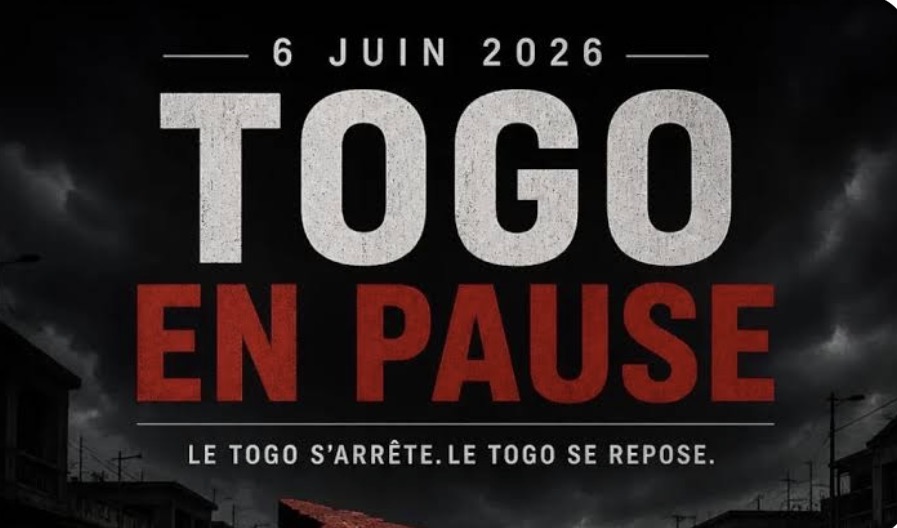
Togo’s silent revolution: why the 6 June protest calls for a system pause
On 6 June 2026, Togo will witness more than a protest—it will be a deliberate pause, a strategic withdrawal from a political system that has defined the nation since 1967. Instead of marching through the streets, the people of Togo, led by the M66 movement and supported by a united opposition, are choosing to step out of a script they refuse to endorse.
Elections, institutions, and official narratives have long lost credibility. Power circulates within a tight circle of loyalty—military, political, and ethnic—never allowing renewal. Crackdowns on dissent, restricted freedoms, and institutionalized repression aren’t anomalies; they are the system’s operating system, designed to endure.
A generation stepping away from inherited injustice
The youth of Togo have inherited a country where choices are made without their voice. They’ve seen protests broken up, leaders silenced, and media muzzled. They’ve lived with territorial inequities, social fractures, and persistent marginalization. Yet, they refuse to accept this as fate.
With the « Togo en Pause » initiative, they are not just calling for attention—they are creating absence. By staying home, closing businesses, and halting daily routines, they send a clear message: « If you won’t listen, notice what you lose. » Every locked door, every empty market stall, and every quiet street on 6 June will speak louder than any slogan.
A regime built on exclusion
For over six decades, Togo’s power structure has been locked in place by a militarized, ethnic, and administrative elite. Key roles in the military, security forces, public administration, and state-owned enterprises are reserved for those bound by loyalty—not merit. Behind the facade of modernization and international cooperation, the foundations remain unchanged. Poverty persists, inequality deepens, and opportunities stay out of reach for most.
The collective realization is growing: what has been normalized is not acceptable.
A movement that unites across divides
The strength of this call lies in its inclusivity. Workers, traders, students, civil servants, craftspeople, farmers, and the diaspora—all are invited to participate by withdrawing their participation from a system that thrives on their compliance. This is not a protest of presence, but one of absence: a refusal to play a role in a charade that yields no real change.
On 6 June, the act of staying home is not passive—it is an act of defiance. It rejects political rituals that go nowhere, broken promises that pile up, and cycles that never break. It declares, « We are not extras in your political theater. »
A test of collective courage
Choosing to pause means facing real stakes: lost income, potential retaliation, and the weight of uncertainty. It challenges years of conditioned resignation, fueled by fear and division. The day asks a fundamental question: do we continue to endure a system that offers no future, or do we risk stepping into the unknown for the possibility of change?
The message of 6 June doesn’t belong to any single group or slogan. It is rooted in decades of unheard frustrations and suppressed voices. It reflects a will that spans generations—a will to say enough is enough.
A moment of truth, not the end
« Togo en Pause » is not a beginning or an ending—it is a moment of clarity. On that day, the people of Togo will demonstrate, not through noise, but through silence, that they no longer wish to sustain a system that has dominated the country for over sixty years.
On 6 June, Togo will come to a standstill.
Not to surrender—but to rise.
