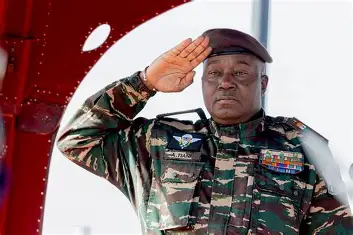
Three years after the coup: how Niger’s governance crisis deepened instability
On July 26, 2023, General Abdourahamane Tiani justified his seizure of power in Niamey by vowing to rescue Niger from what he described as an uncontrollable security crisis. Three years later, the reality has starkly contrasted with those initial assurances. Instead of stability, the country now grapples with unrelenting insecurity, economic stagnation, frayed diplomatic ties and shrinking fiscal space for the state. A closer examination of key indicators reveals a nation trapped in a spiral of interlinked crises.
Security promises unmet: violence spreads despite military focus
The junta’s central justification for the takeover rested on a single pledge: to restore security more effectively than the civilian government it replaced. Yet the security situation has only deteriorated further.
Armed groups linked to the Jama’at Nusrat ul-Islam wal Muslimin (JNIM) and the Islamic State in the Greater Sahara (ISGS) continue to expand their operational reach across multiple regions. Their tactics have shifted from isolated military outposts to more sophisticated and damaging strikes:
- ambushes on military and supply convoys;
- attacks on civilian villages and communities;
- disruptions to major road networks;
- targeting of critical economic infrastructure;
- attacks on supply chains and trade routes.
In many areas, communities now live under near-constant threat, severely restricting movement for both citizens and public services. The consequences are severe:
- abandonment of farmland due to unchecked violence;
- sharp decline in domestic trade;
- closures of schools in conflict-affected zones;
- restricted access to healthcare facilities;
- rapid increase in internally displaced persons.
Rural populations, in particular, bear the brunt of a conflict that shows no signs of abating despite the change in leadership.
Military spending rises, but battlefield gains remain elusive
Since the coup, a significant portion of public funds has been redirected toward the defense sector. Yet despite higher expenditures, there has been no decisive shift in the military balance on the ground.
The armed forces are stretched across multiple fronts, facing:
- an enormous territory that is difficult to patrol;
- highly mobile terrorist cells operating across borders;
- logistical bottlenecks that hinder rapid response;
- chronic fatigue and equipment strain among troops.
Each new attack underscores the limitations of a purely military approach to a crisis rooted in economic hardship, social grievances and territorial neglect.
Economic lifelines severed: borders closed, prices soaring
Niger remains heavily dependent on regional trade, and the prolonged closure of the border with Bénin has dealt a severe blow to the economy. The once-thriving Cotonou–Niamey corridor, a decades-old trade artery, now operates under severe constraints, leading to:
- longer delivery times for essential goods;
- steep increases in transportation costs;
- frequent shortages of critical supplies;
- broad-based price inflation affecting households.
Rising costs have eroded purchasing power, particularly for food, medicine, construction materials and daily consumer goods. Families across the country are feeling the squeeze.
Border communities bear the brunt
Towns like Gaya, long dependent on cross-border commerce, have seen commercial activity plummet. Among the hardest hit are:
- transporters and logistics operators;
- customs brokers and warehouse workers;
- small-scale traders and market vendors;
- hospitality businesses tied to road traffic.
The contraction in trade has also reduced state revenue, further constraining public investment in development.
Investment climate cools under uncertainty
The political and diplomatic turbulence has created an inhospitable environment for both domestic and foreign investors. Businesses seek:
- predictable regulations;
- stable institutions;
- clear legal frameworks;
- reliable commercial ties.
Yet Niger now presents a high-risk profile marked by:
- recurrent sanctions and diplomatic friction;
- persistent logistical bottlenecks;
- elevated security risks;
- regulatory unpredictability.
This climate has slowed the inflow of new capital and prompted some operators to postpone or cancel projects.
The stalled Niger-Bénin oil pipeline: a symbol of missed opportunities
The Agadem–Sèmè oil pipeline, once hailed as a transformative economic project, now lies at the heart of regional tensions. Petroleum revenues were expected to fund national development. Instead, the ongoing standoff with Cotonou has placed the project’s viability in jeopardy.
Uncertainty surrounding this infrastructure sends a discouraging signal to international investors, who favor long-term stability for capital-intensive ventures. What was meant to be a driver of growth has become a source of diplomatic friction.
Diplomatic realignment yields few dividends
The military-led administration has overhauled Niger’s foreign policy, severing long-standing partnerships with Western nations while forging closer ties with Russia and joining the Alliance of Sahel States alongside Mali and Burkina Faso.
The stated goal is to reclaim national sovereignty. Yet this reorientation has done little to resolve the country’s core challenges. Instead, Niger now faces:
- reduced access to international financing;
- declining technical cooperation with former partners;
- strained dialogue with neighboring states;
- limited participation in regional mechanisms.
Claimed sovereignty thus comes at the cost of new economic and diplomatic constraints.
Changing faces of dependence
The withdrawal of French forces was presented as a milestone in achieving full strategic autonomy. Yet military cooperation with Russian partners has intensified, raising a critical question: has Niger truly eliminated external dependence, or merely exchanged one form of reliance for another?
On the ground, national security still relies in part on foreign support, complicating the narrative of total strategic independence.
Political messaging over substance
Facing persistent hardships, the government has increasingly turned to a narrative centered on external adversaries—particularly tensions with the Economic Community of West African States (ECOWAS), Bénin, or France—to rally public support. While this discourse reinforces a narrative of national resilience, it does little to address the daily struggles of citizens, including:
- persistent inflation;
- youth unemployment;
- deteriorating public services;
- declining purchasing power;
- food insecurity.
For many Nigeriens, tangible outcomes now carry more weight than political rhetoric.
Public services buckle under fiscal strain
The surge in defense spending has placed immense pressure on the national budget, leaving social sectors underfunded. The consequences are visible across key services:
- overcrowded and under-resourced schools;
- medical facilities struggling with supply shortages;
- delays in public infrastructure projects;
- declining quality of local services.
This creates a dangerous cycle: as military costs rise, development investments shrink—just when they are most needed to address the root causes of insecurity.
A society pushed to its limits
Beyond macroeconomic indicators, the crisis is felt in the daily lives of citizens. Households confront a mounting burden:
- rising prices for essential goods;
- fewer job opportunities, especially in border regions;
- declining incomes;
- deep uncertainty about the future.
This convergence of pressures is eroding social cohesion and increasing vulnerability among the most marginalized.
The paradox of power: promises unfulfilled
Three years after the coup, Niger stands at a paradoxical crossroads. The junta arrived promising to restore security, defend national sovereignty and improve living conditions. Yet the evidence points to a different reality: persistent insecurity, economic decline, fiscal strain and growing diplomatic isolation. The concentration of resources on military efforts, compounded by regional tensions and structural economic weaknesses, has created a web of crises where each challenge amplifies the others—making a breakthrough increasingly elusive.
