
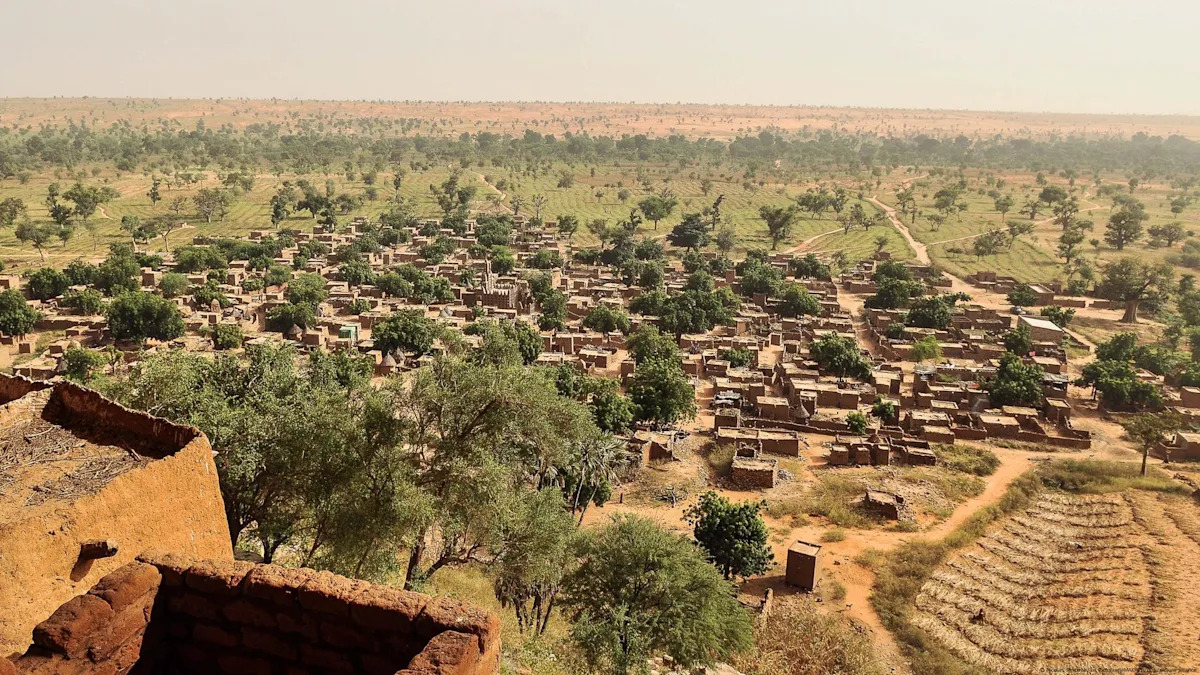
In the heart of central Mali, within the Bankass district, a wave of displaced Dogon families is making a cautious homecoming. Thousands have begun returning to their villages, a move facilitated by local agreements struck between rural communities and the Group for the Support of Islam and Muslims (JNIM), an Al-Qaeda-affiliated jihadist faction active in the region.
This return follows a period of prolonged displacement, as families fled their homes due to escalating violence. Now, with the onset of the rainy season in June, many are eager to resume agricultural activities. However, this reunion with their land comes with stringent conditions imposed by the armed groups overseeing the area.
Strict dress codes and education bans shape daily life
The agreements require villagers to adhere to a set of religious and social rules. Among these, women must wear the veil, while men are expected to wear shorts—a departure from traditional attire. Additionally, public schools teaching Western curricula remain closed, as the militants enforce their interpretation of Islamic law, known as Sharia, as the foundation of local governance.
An educator from Bare Darsalam, who requested anonymity, shared his perspective on returning after seven years away. His family stayed behind as he ventured back to assess the situation firsthand. He expressed hesitation about rebuilding the school, which was destroyed in 2019, and uncertainty about adopting the new dress codes and social norms.
« Our school was demolished during the 2019 displacement. Even if we rebuilt it, we wouldn’t agree to reopen it under these conditions. We’ve resumed our farming activities only because the mayor of Bankass provided assurances. Right now, we’re not wearing shorts, and we haven’t brought our wives back to see how these rules will affect them. »
Agricultural revival brings cautious optimism
Allaye Guindo, the mayor of Bankass, confirmed that the local agreements have encouraged a significant number of displaced individuals to return. Thirteen villages, including those in Kani Bozon and Dimbal, are now welcoming residents back. With the rains providing essential water for crops, many have already started tilling their fields.
Guindo emphasized the fragile nature of this peace, noting that customary authorities and local leaders must comply with the militants’ demands to maintain the fragile stability. The enforcement of Sharia as the guiding principle for these agreements underscores the complex balance between survival and resistance in a region under jihadist influence.
While the return marks a step toward normalcy, the future remains uncertain. Villagers are navigating a landscape where their freedom to live, work, and educate their children is now dictated by the very groups that once drove them from their homes.