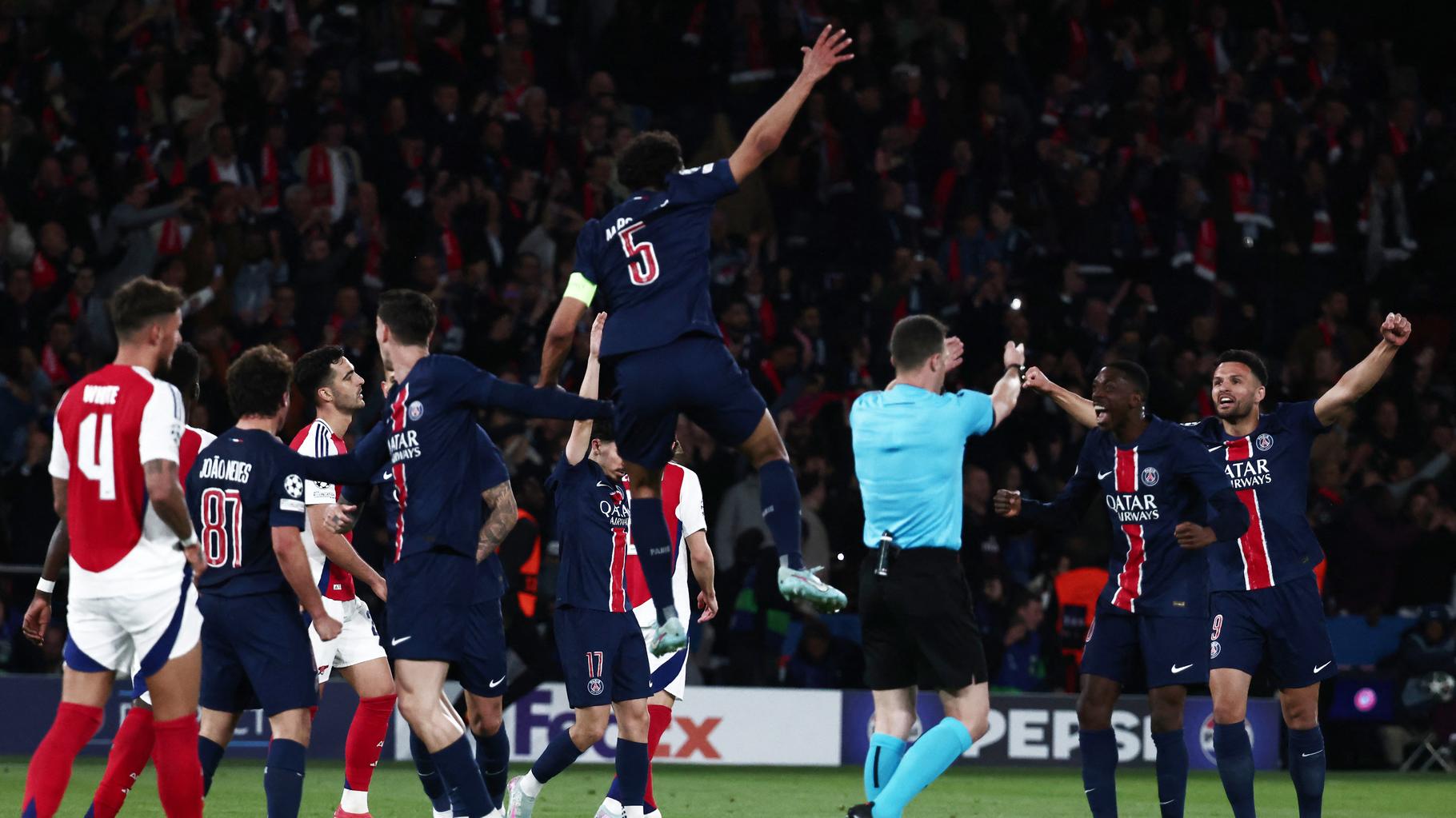
The champions league final: arsenal’s pragmatism meets Paris’s flair in budapest
• Paris Saint-Germain is set to compete in its second consecutive Champions League final this Saturday, May 30th, in Budapest, facing English rivals Arsenal.
• Led by stars like Dembélé and Kvaratskhelia, and guided by coach Luis Enrique, PSG has dazzled with its offensive play and commanding victories, including a memorable semi-final triumph over Bayern Munich.
• Arsenal, conversely, relies on a formidable defense, clinical set pieces, and ruthless efficiency, a style that has earned them the moniker “boring Arsenal.”
The stage is set for a captivating Champions League final this Saturday, May 30th, at 6 PM in Budapest, as the champions of France and England prepare to clash. It’s a compelling narrative of contrasting styles: Arsenal, often dubbed the pragmatic, against a flamboyant Paris Saint-Germain. This showdown between two distinct philosophies, two influential coaches, and ultimately two exceptionally capable teams promises an unforgettable battle for European supremacy.
Describing Paris Saint-Germain’s relentless form since January 2025 almost defies superlatives. Their crushing 5-0 victory in the previous Champions League final against Inter Milan (a campaign that saw Arsenal eliminated in the semi-finals), coupled with two dominant quarter-final performances against Liverpool this year, and especially their epic 5-4 win over Bayern Munich in early April, have left an indelible mark. These achievements have firmly established the Parisians as the continent’s, and arguably the world’s, premier footballing force.
Fireworks versus restraint
Spearheaded by French Ballon d’Or winner Ousmane Dembélé, the artistic Georgian Khvicha Kvaratskhelia, and the solid Ecuadorian Willian Pacho, all orchestrated by the tactical genius of coach Luis Enrique, PSG appears virtually unstoppable. They possess an uncanny ability to elevate their performance to unparalleled heights, particularly when the stakes are highest and the collective will of the squad is aligned.
In stark contrast, Arsenal has carved out its success through an unwavering pragmatism and a remarkable knack for neutralizing opponents’ strengths. Anchored by an unyielding backline featuring central defenders William Saliba and Gabriel, who expertly shield goalkeeper David Raya—arguably the season’s standout custodian—the Gunners have perfected the art of securing narrow victories. Their impressive European journey this year boasts an unbeaten record of eleven wins and three draws.
While PSG stormed through the Champions League playoffs to the final with high-scoring displays—netting five against Monaco, eight against Chelsea, four against Liverpool, and six against Bayern Munich—Arsenal’s path was characterized by hard-fought, slender victories. They navigated past Bayer Leverkusen in the round of sixteen, overcame Sporting Portugal in the quarter-finals with a dramatic 1-0 away win (a 91st-minute goal) followed by a goalless draw, and edged past Atlético Madrid 2-1 on aggregate in the semi-finals.
Coaches reflecting their teams’ identities
This pattern of consistent positive results, achieved without flashy displays but with unwavering reliability, extends to the Premier League, where Arsenal clinched their first title in 22 years. While flawless against lesser teams, the Gunners faced tougher challenges against the league’s giants. Their record against Manchester United, Liverpool, Manchester City, and Chelsea stands at two wins, three draws, and three losses, alongside a League Cup final defeat to the Citizens. Nevertheless, their sheer consistency proved decisive in the domestic campaign.
Far from PSG’s breathtaking attacking surges and intricate collective play, the English side leverages different strengths. Their formidable defense is a cornerstone, complemented by an extraordinary efficiency from set pieces. This strategic focus has been a talking point throughout the season: under the guidance of dedicated set-piece coach Nicolas Jover (who reportedly receives bonuses for every goal scored from these situations), Arsenal outscores every other team from free kicks and corners. This often leads the London club to deliberately provoke such situations rather than engaging in open, expansive play.
This fundamental dichotomy between the two finalists is perfectly embodied by their respective coaches. On the Parisian side, Luis Enrique has, through a string of victories, firmly established his methods, becoming a guiding figure for his entire squad and an embodiment of his team’s identity—a rare feat for any coach. At Arsenal, Mikel Arteta serves as a lightning rod for his players, frequently challenging journalists in press conferences who dare to criticize, and staunchly defending wins irrespective of how they are achieved. He has even embraced the persistent
