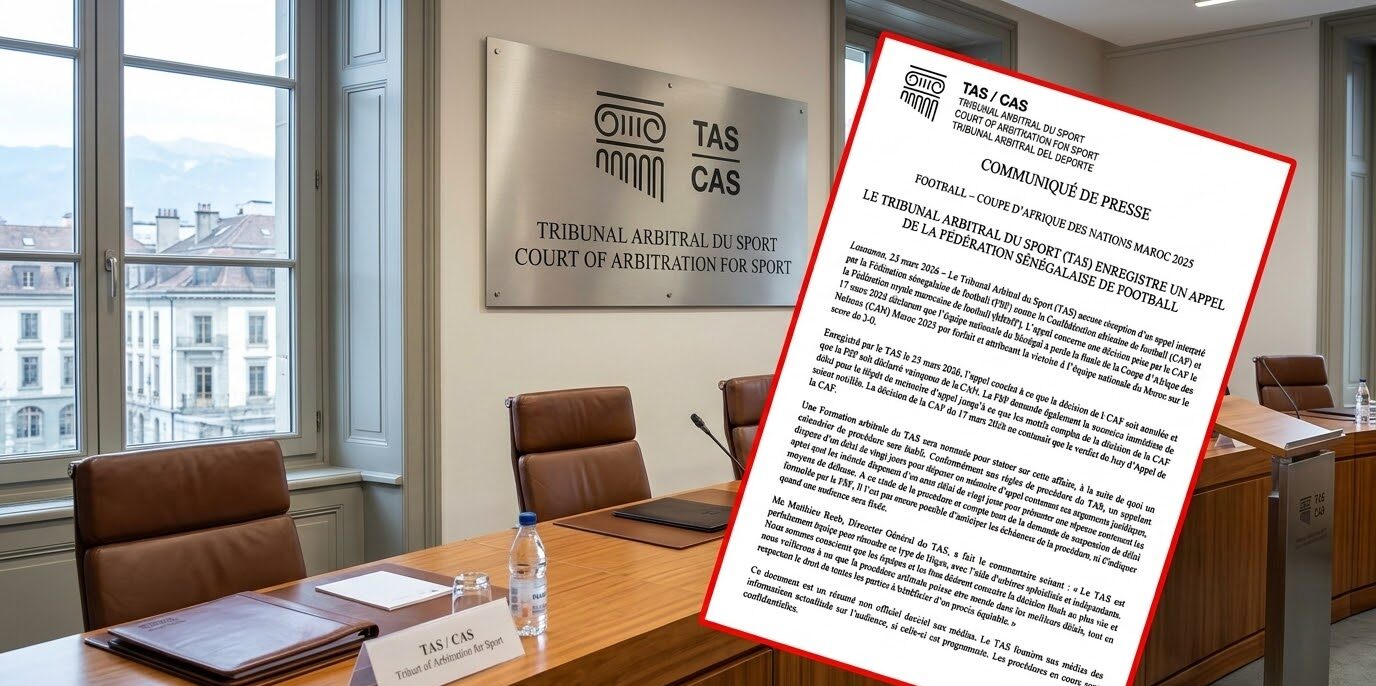
TAS latest update: Morocco-Senegal football dispute escalates
Tribunal Arbitral du Sport delivers fresh ruling in Morocco vs Senegal case

Key developments in the long-standing football dispute
The Tribunal Arbitral du Sport (TAS) has advanced proceedings in the high-profile case between Senegal and Morocco. After receiving the appeal brief from the Senegalese Football Federation (FSF), the international sports court has set a strict deadline for Morocco’s football governing body, the Royal Moroccan Football Federation (FRMF), to submit its formal defense.
This procedural step marks a significant milestone in resolving the contentious football row that has captured attention across West Africa. The TAS’s involvement signals the intensification of legal maneuvers in what has become one of the most watched sports arbitration cases in the region.
What this means for both nations
The escalating legal battle between Senegal and Morocco has far-reaching implications for football governance in Africa. With both federations submitting detailed legal arguments, the TAS now has a clearer roadmap to deliberate on critical issues surrounding:
- Alleged violations of FIFA regulations in player eligibility and transfer protocols
- Disputes over match outcomes that may have affected qualification for major tournaments
- Potential sanctions or compensatory measures aimed at restoring fairness
As the clock ticks toward the defense submission deadline, football stakeholders in both countries are closely monitoring every development, aware that the TAS ruling could redefine competitive football dynamics in the region.
Next steps in the arbitration process
The TAS has communicated the exact timeline for the next phase, giving the FRMF a finite window to compile and file their counterarguments. Once all submissions are received, the tribunal will schedule hearings where both sides can present oral arguments before reaching a final decision.
While the precise date for the defense filing remains confidential, industry insiders anticipate rapid progress given the high stakes involved. The tribunal’s decision is expected to be binding, with potential ripple effects across African football governance and international competitions.
