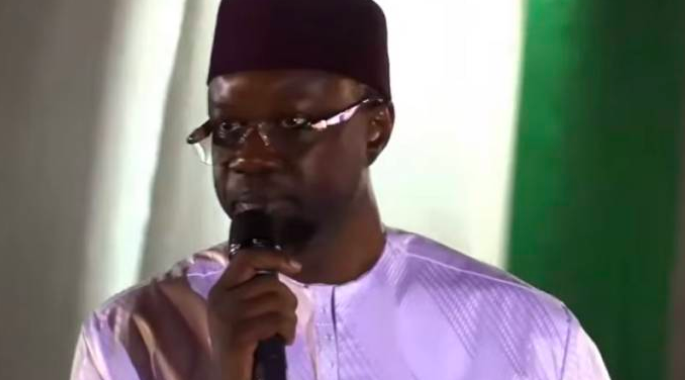
Sonko slams president Faye’s leadership from Touba podium
From the sacred grounds of Touba on Sunday, July 12, 2026, Ousmane Sonko, President of the National Assembly and leader of the Pastef party, delivered a scathing critique of President Bassirou Diomaye Faye’s governance. Addressing a packed crowd during the unveiling of his party’s new headquarters, Sonko framed his remarks within the moral and spiritual legacy of the Mouride brotherhood, amplifying his message with religious undertones.
The former Prime Minister spared no criticism, painting a stark picture of an executive in disarray. He accused President Faye of leadership failures, describing his administration as “febrile” and dangerously isolated. According to Sonko, the head of state has become a captive to political factions—some within the opposition—who are steering him away from his former mentor’s principles.
Warnings of constitutional intervention
Sonko didn’t stop at verbal attacks. He issued an explicit warning, vowing to systematically challenge any future legislation proposed by the executive branch by referring it to the Constitutional Council. This move signals a potential escalation in the ongoing political tensions between the ruling party and the opposition.
Divisions in the executive: a growing concern
The speech in Touba also highlighted growing rifts within the government. Sonko’s allegations of presidential influence by external forces—including opposition groups—underscore the fragility of the current administration’s cohesion. His remarks suggest that the political landscape in Senegal is entering a more confrontational phase, with Sonko positioning himself as a moral arbiter against what he perceives as misguided governance.
As the dust settles on this high-profile confrontation, the nation watches closely to see how these tensions will shape the political trajectory of Senegal in the coming months.
