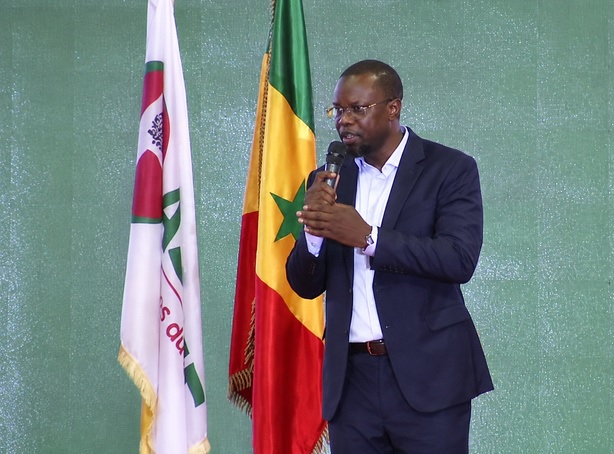
Sonko redefines political strategy at Pastef congress in Dakar
The Pastef-Les Patriotes (Pastef), the ruling parliamentary majority in Senegal, concluded its first national congress since its establishment in 2014 over the weekend of June 6-7 in Dakar. The event marked a pivotal moment for the party to redefine its political direction amid a shifting national landscape, with Ousmane Sonko at the helm as president and leader of the majority bloc.
Thousands of party supporters gathered at the Dakar Arena on Sunday, June 7, to witness the culmination of the first ordinary congress of Pastef-Les Patriotes. Sonko, confirmed as party president and leader, outlined a three-pillar strategic roadmap: ideological consolidation, direct engagement with the executive branch, and securing the electoral calendar. He reflected on what he termed the “first phase of clarification,” initiated after the historic November 8 rally, stating, “Politically, Pastef remains the same and emerges from this process stronger.”
While acknowledging “surprises and disappointments” during this period, Sonko claimed no personal setbacks. He proudly attributed key national battles to his movement—fighting corruption, championing justice, renegotiating contracts, and preserving the parliamentary majority.
In a sharp critique of governance, Sonko directly challenged the presidency. “This country has suffered enough from conspiracies and schemes,” he declared, urging all institutions to adhere strictly to constitutional roles and resist manipulation for personal ambitions. His warning was clear: “Even if the president seeks to satisfy political ambitions, institutions must not be weakened.”
Addressing concerns over potential institutional crises, Sonko framed Senegal’s political stability through a democratic lens. “There is no institutional crisis in Senegal. The people have chosen to entrust the presidency to one leader and the National Assembly to another.”
Securing local elections against delays
Sonko firmly shut the door on any postponement of local elections, combining political resolve with procedural arguments. “Pastef will never agree to a delay in local elections,” he asserted, emphasizing constitutional constraints: “To do so, the executive would need Assembly approval and a habilitation law.”
The closing remarks of the congress signaled a reconfiguration of Senegal’s political scene, with Sonko positioning Pastef as a decisive force in shaping the nation’s governance.
