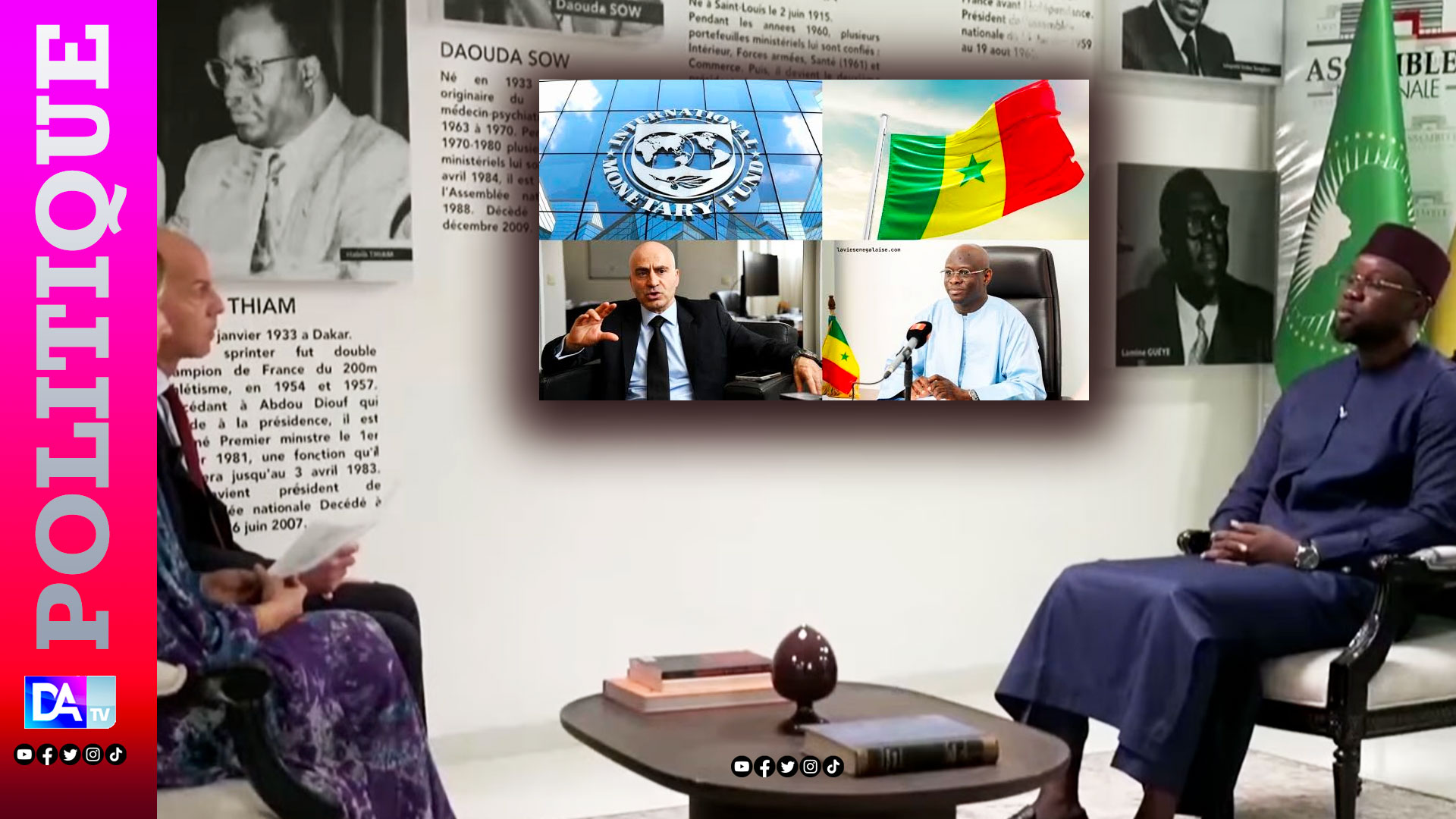
Sonko on debt management and IMF talks: pragmatic approach to Senegal’s financial future
In a candid assessment of Senegal’s economic landscape, Ousmane Sonko has outlined a pragmatic stance on national debt management and ongoing negotiations with the International Monetary Fund (IMF). Addressing concerns about potential debt restructuring and the implications of an upcoming IMF mission in Dakar, the President of the National Assembly drew clear distinctions between ideological rigidity and adaptive governance.
Balancing debt restructuring with systemic reform
Sonko dismissed the notion of absolute financial dogmatism, emphasizing a case-by-case evaluation of Senegal’s economic challenges. « We are not locked into rigid positions. Each scenario must be examined with clarity and realism, » he stated. While serving as Prime Minister, he firmly opposed reckless debt restructuring, arguing that the nation’s fiscal stability did not warrant such measures. « The conditions simply weren’t met—we were not in default and met all obligations punctually », he recalled.
Now in a legislative role, Sonko has reiterated his stance, warning against compromises that sacrifice long-term structural change for short-term numerical gains. « If any decision threatens to undermine systemic transformation in favor of fleeting financial ratios, we will oppose it vehemently », he declared, vowing to leverage the Assembly’s authority to block such measures.
Transparency as a cornerstone of debt governance
Critics have questioned Sonko’s continued reliance on international lenders despite his advocacy for economic sovereignty. He defended his administration’s commitment to transparency, noting that concealing fiscal realities would only compound future crises. « We chose honesty over opacity, knowing full well that hidden truths would resurface eventually », he explained, drawing parallels to the European debt crisis as a cautionary tale.
He underscored that debt refinancing is a universal practice, asserting that Senegal’s approach adheres to orthodox financial management while safeguarding developmental priorities.
Confronting the specter of odious debt
The most revealing segment of his remarks centered on the contentious issue of odious debt—loans incurred under questionable circumstances. Sonko admitted that while he had previously labeled portions of Senegal’s debt as odious, institutional constraints limited his ability to act unilaterally as Prime Minister. « The Prime Minister’s powers in this country are inherently constrained », he admitted, contrasting his advocacy as a party leader with the practical limitations of executive authority.
He clarified that his views aligned with those of President Diomaye Faye, asserting that their discussions had consistently reinforced a shared commitment to the issue. « The president confirmed that the stance on debt has not wavered », he noted.
Calling for political courage on debt cancellation
Looking ahead, Sonko urged the current administration to demonstrate bold leadership in addressing odious debt. « This debate demands political courage », he stressed, urging officials to confront the issue head-on and consider partial cancellation where justified. His remarks serve as both a challenge to the government and a test of consistency for a leader who once spearheaded its economic policies.
