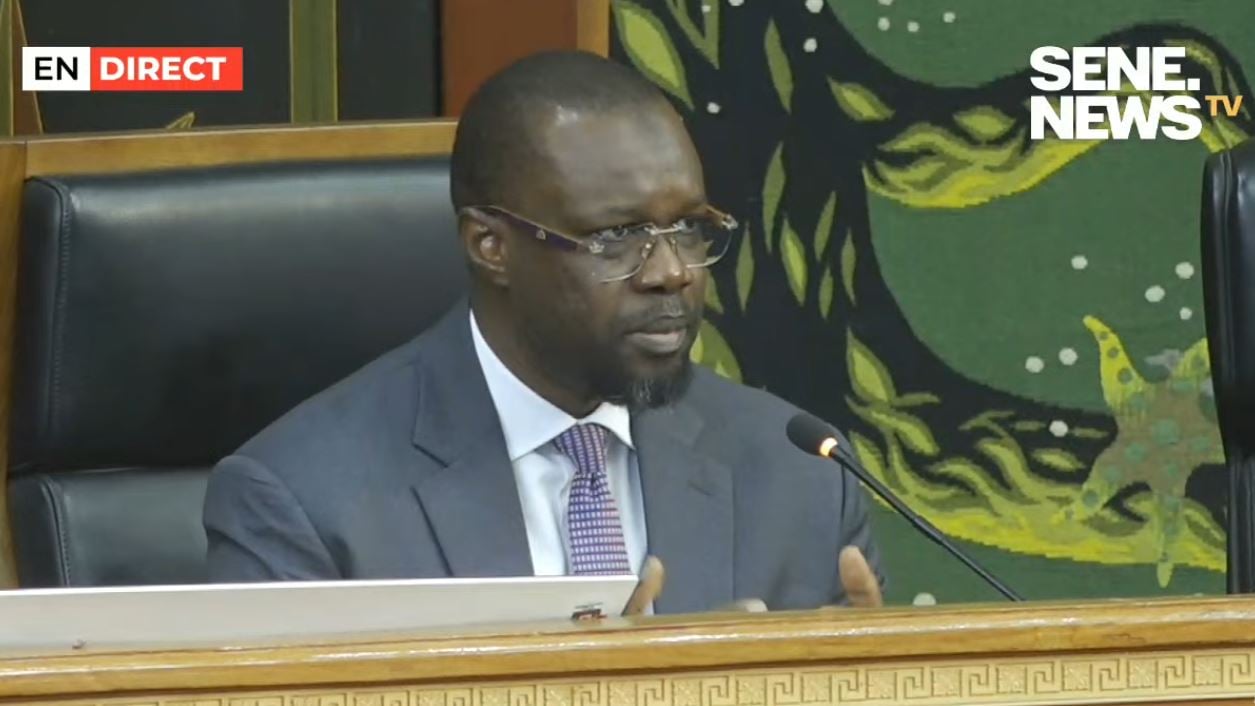
Sonko explains moral split with faye over governance differences
Ousmane Sonko sheds light on his political break with Bassirou Diomaye Faye
Freshly elected as President of the National Assembly, Ousmane Sonko addresses the political rift with Bassirou Diomaye Faye, framing their divergence as a clash between ethics and governance rather than personal rivalry.
Days after his removal from the Prime Minister’s office and his election to the Assembly’s top position, Ousmane Sonko delivered a thought-provoking speech outlining the core reasons behind his split with the head of state. Far from framing the conflict as a power struggle, Sonko emphasized its deeper implications for the nation’s future.
The former Prime Minister anchored his argument in philosophy, asserting that the heart of the matter lies not in leadership disputes but in the fundamental role of politics itself. Drawing from Aristotle’s teachings, he described governance as the highest art when practiced for the collective good. For Sonko, a nation’s survival hinges on leaders who prioritize virtue and public interest over personal gain.
Sonko expanded his critique by recalling the legacy of Senegal’s first post-independence leader, Mamadou Dia, who warned against conflating state power with private interests. According to Sonko, true sovereignty demands more than political structures—it requires moral, economic, and social integrity. « A nation may possess symbols of unity and functioning institutions, yet remain enslaved by practices that strip the Republic of its meaning, » he warned.
In a broader reflection on contemporary political crises, Sonko argued that nations falter not only from material deprivation but from a « moral fatigue. » When institutions serve personal ambition rather than the people, the very spirit of governance erodes. While avoiding direct accusations, his message underscored a fundamental disagreement with the president over the ethical foundations of power.
