
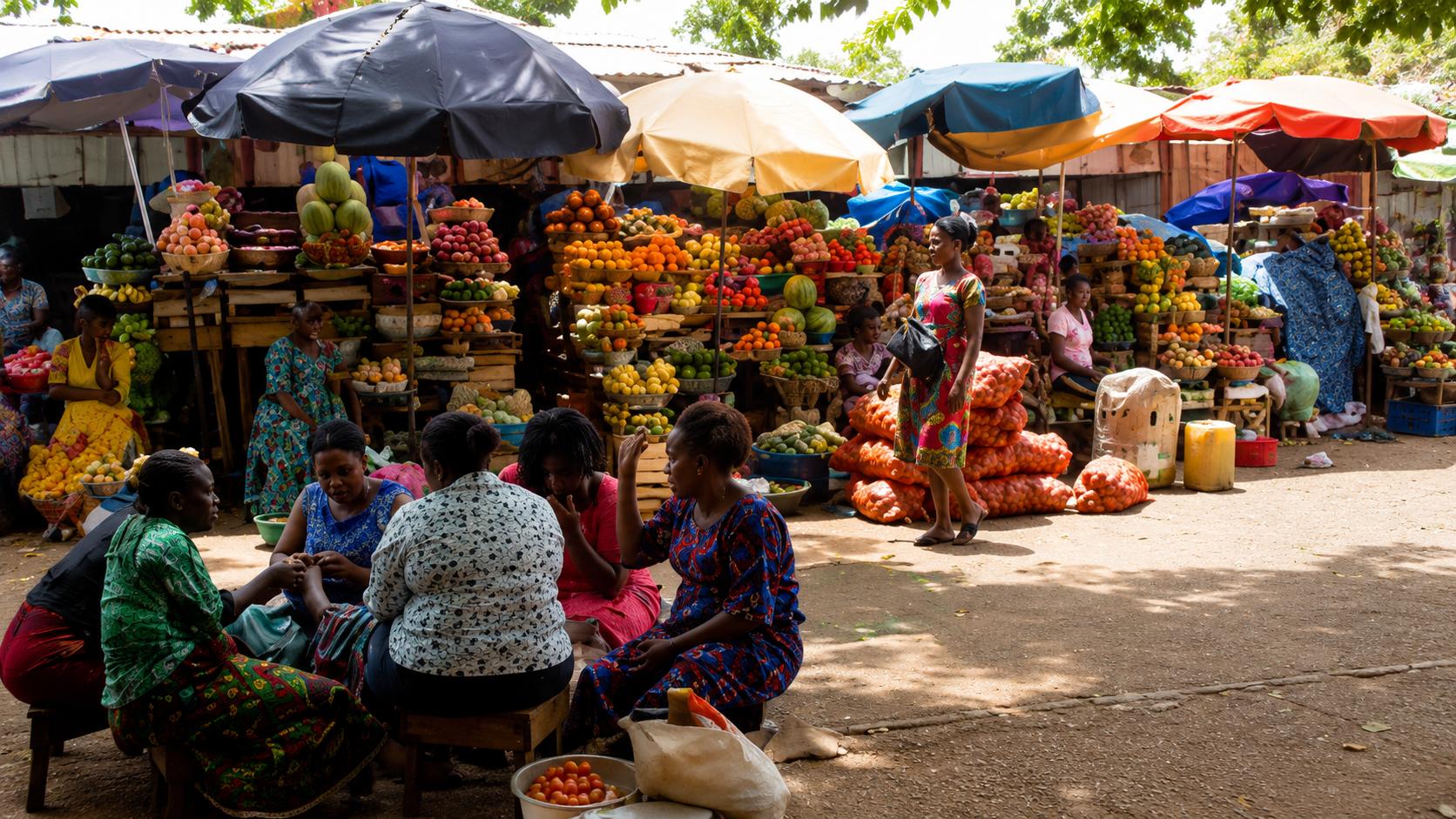
While official reports from the Central Bank of West African States (BCEAO) highlight an average inflation rate of 0.0% across the region, this figure feels like a distant fantasy for households in the Sahel. In Mali, Niger, and Burkina Faso, the much-touted economic calm in the air-conditioned offices of Dakar has failed to cross the borders of the Alliance of Sahel States (AES).
The illusion of economic relief in the Sahel
Although global commodity prices have dipped and favorable weather patterns have eased pressure along the coastal belt, the heart of the Sahel remains trapped in a cycle of relentless price hikes. Governments in Bamako, Niamey, and Ouagadougou consistently pin the blame on external forces or shadowy conspiracies, conveniently sidestepping the very real consequences of their own policy decisions. The disconnect between official narratives and ground realities is stark, leaving citizens to grapple with the harsh economic fallout.
The military-first trap and collapsing supply chains
The primary driver of inflation in the Sahel isn’t just insecurity—it’s the failure of current transition strategies to deliver on their promises. Despite bold declarations about reclaiming lost territories, critical trade routes remain paralyzed. Armed groups continue to enforce blockades, not just as tactical moves, but as glaring evidence of these regimes’ inability to safeguard essential economic lifelines.
By diverting the bulk of national budgets toward military spending and arms purchases, authorities have systematically undermined investments in storage infrastructure and agricultural support. Expanding restrictions on land access have choked local production, leaving markets starved of essential goods. The over-militarization of the economy hasn’t restored security—but it has succeeded in suffocating the food supply.
Empty sovereignty promises and rising costs
The AES’s bold claims of economic independence and ideological rupture crumble under the weight of soaring prices. Efforts to bypass traditional trade networks in favor of “politically correct” alternatives have only driven up costs for consumers. Bypassing natural regional ports for geopolitical reasons means longer, costlier, and more complicated supply chains—with households bearing the brunt at the marketplace.
Centralized and often heavy-handed control over distribution networks has backfired. Price controls and coercive measures against traditional operators have stifled private enterprise, creating artificial shortages and fueling a black market where prices spiral out of control.
Monetary policy vs. hard economic truths
The BCEAO’s credit-tightening measures are proving ineffective against structural inflation. Rising interest rates can’t resolve real shortages or reopen blocked roads. Yet the deeper issue lies in the fiscal strangulation gripping these states. By distancing themselves from regional solidarity mechanisms and international partners, Mali, Niger, and Burkina Faso have slashed their financial maneuverability. With budgets drained by security spending and transitional governance, governments lack the resources to implement meaningful social safety nets or subsidies to cushion the blow of high living costs.
Until the AES leadership shifts from a rhetoric of victimization and political rupture to pragmatic economic governance—and until real security is restored for economic actors—the crushing burden of inflation will keep eroding the livelihoods of Sahelian families. The UEMOA’s inflation statistics may paint a rosy picture on paper, but for those living through the crisis, the numbers couldn’t be more disconnected from reality.